
Key Takeaways
- Hair absorbs moisture from the air, which changes its shape.
- High humidity breaks inner bonds and causes frizz.
- Dry winter air creates static and leads to breakage.
- Sun, salt, chlorine, and hard water weaken hair over time.
- Small changes in your routine protect any style in any weather.
Weather shapes your hair before you even step outside. A fresh blowout can flatten within minutes on a humid day. Winter air can turn a smooth style into a static mess. Many people blame their products or their skills. However, as industry experts at NewJerseyStylist warn, the real culprit is often the air itself. This guide explains how climate and humidity affect hair styling. It breaks down the science in simple terms. Additionally, it offers practical fixes for every season. By the end, you will know exactly why your hair behaves the way it does. More importantly, you will know how to fight back.
Why Hair Reacts to Weather: The Science
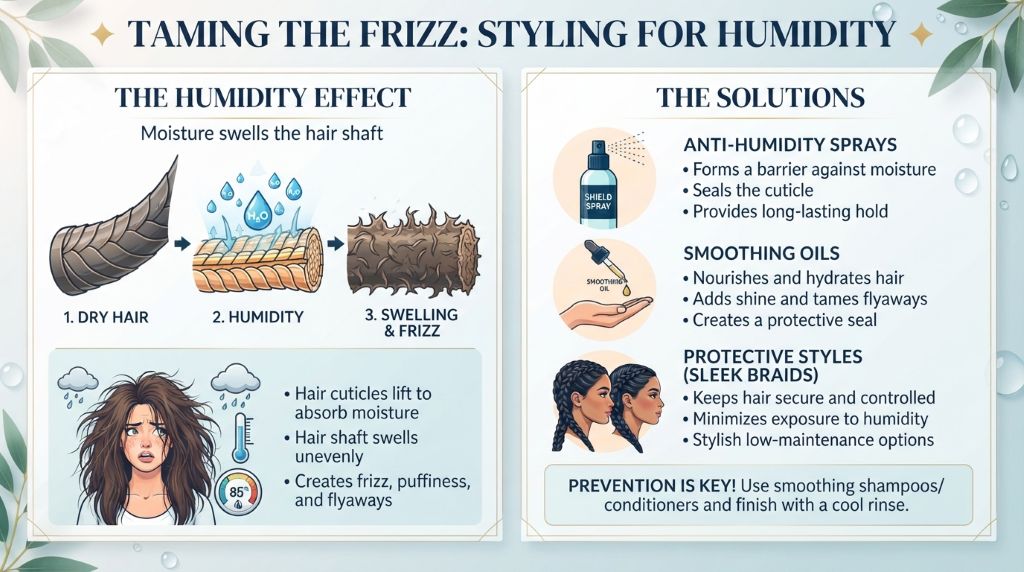
Every strand of hair has an outer layer called the cuticle. Inside sits the cortex, which holds keratin proteins and delicate bonds. Hair is hygroscopic. This simply means it pulls moisture from the air or releases it, depending on the environment. At normal room humidity, hair holds about 7 to 14 percent of its weight in water. In very humid air, it can absorb close to one-third of its weight. Hair scientists have documented this water uptake for decades.
As water enters the cortex, temporary hydrogen bonds break and reform. Therefore, the strand changes shape. Straight hair bends and lifts. Curly hair tightens or puffs up. Moreover, strands do not absorb water evenly. Uneven swelling causes kinks and bends along the shaft. Research on hair fibers also shows that friction between strands rises in humid conditions. As a result, tangles and frizz increase.
In short, your hair constantly trades moisture with the air. Therefore, no styling product can fully block this exchange. However, the right techniques can slow it down. Understanding this process is the first step toward weather-proof styling.
Humidity and Frizz: What Really Happens
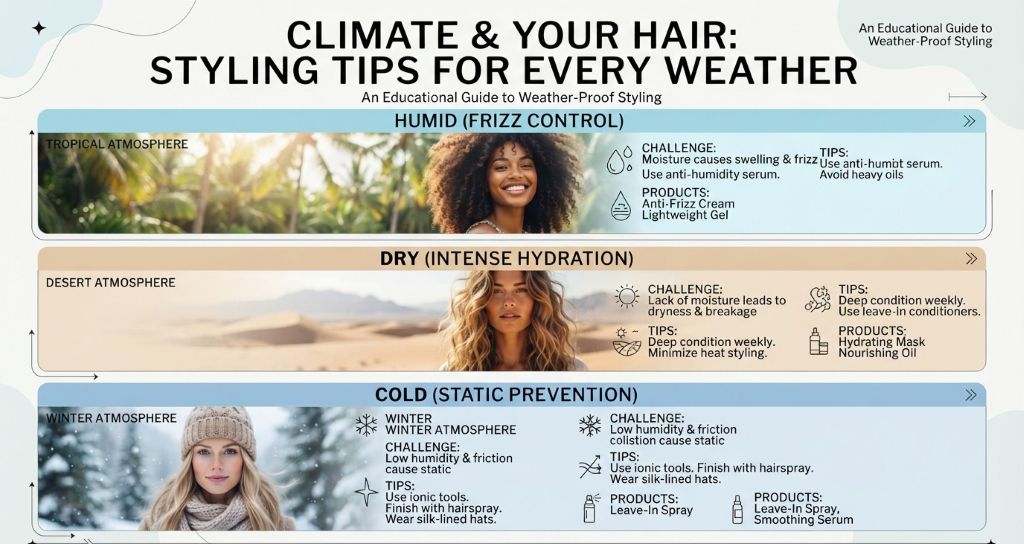
Frizz is the most visible sign of humid weather. Here is what happens on a humid day. Water molecules slip under the cuticle and enter the cortex. The strand swells and returns to its natural pattern. This is why a straightened style reverts within hours. Additionally, the lifted cuticle reflects light unevenly, so hair looks dull rather than shiny.
Curly and wavy hair suffers most. The American Academy of Dermatology notes that curly hair has a naturally lifted cuticle. Therefore, moisture enters faster and frizz appears sooner. Fine hair has problems too, since extra water weighs it down and removes volume.
Consider these practical steps:
- Seal the cuticle with a rinse-out conditioner after every wash.
- Blot hair dry with a microfiber towel instead of rubbing it.
- Apply a leave-in cream with anti-humidity polymers before styling.
- Avoid touching your hair during the day, since hands add moisture.
- Skip brushing dry hair, which spreads frizz and breaks strands.
Furthermore, some weather apps now show a frizz forecast based on dew point. Checking it takes seconds and helps you plan your style. High dew point means expect frizz. Therefore, choose updos or braids on those days instead of fighting your texture.
Cold, Dry Air and Static: Winter’s Impact
Winter brings the opposite problem. Cold air holds very little moisture. Indoor heating dries it even further. Research on static electricity shows that charge builds up quickly when relative humidity drops below about 30 percent. At that level, moisture can no longer carry charge away from your hair. Therefore, strands gain the same charge and push away from each other. The result is flyaway hair that refuses to lie flat.
Dry air also pulls water out of your hair. Dehydrated strands lose flexibility and snap more easily. Additionally, hats, scarves, and sweaters add friction, which builds even more static charge. Many people notice more split ends and breakage between November and March for this reason.
Fortunately, simple habits restore balance:
- Run a humidifier at home and aim for 40 to 50 percent humidity.
- Use a richer conditioner or weekly hair mask during winter.
- Switch to a wooden or boar-bristle brush instead of plastic.
- Apply a light leave-in oil to seal moisture into the ends.
- Line wool hats with satin to reduce friction and static.
Moreover, avoid leaving home with damp hair in winter. Wet hair can actually freeze in extreme cold, which weakens the strand. Therefore, dry it fully before heading out.
Sun, Salt, and Water Quality
Climate affects hair beyond humidity alone. Sunlight is a quiet but powerful enemy. Studies in the Journal of Cosmetic Science show that UV rays break down keratin protein and strip color from hair. Sun-exposed strands feel rough, dry, and weak. Light-colored and chemically treated hair suffers the most damage.
Salt water adds another challenge. Salt draws moisture out of the strand. Therefore, beach days often leave hair feeling stiff and straw-like. Chlorine has a similar drying effect. It can also deposit minerals that give blonde hair a green tint.
Water quality matters just as much at home. Hard water contains high levels of calcium and magnesium. A 2016 study in the International Journal of Trichology found that hair washed in hard water showed reduced thickness compared with hair washed in distilled water. Mineral buildup also dulls shine and makes hair harder to style.
Protect your hair with these habits:
- Use hair products with UV filters before outdoor activities.
- Wear a hat during long days in direct sun.
- Rinse hair with fresh water before and after swimming.
- Use a clarifying shampoo once a week to remove buildup.
- Install a shower filter if your local water is hard.
Therefore, full climate protection means more than fighting frizz. It also means guarding against sun, salt, and minerals.
How to Style Hair for Any Climate
Smart styling starts before you plug in a single tool. First, check the weather and dew point. Then adjust your routine to match. In humid climates, wash at night and dry hair completely before bed. Damp hair absorbs humid air, so any remaining wetness invites frizz. Additionally, choose styles that work with your texture. Braids, buns, and twists look better in humidity than rigid blowouts.
In dry or cold climates, focus on moisture. Add a weekly deep-conditioning treatment. Furthermore, use a heat protectant every time you style. Heated tools cause extra damage to already dry strands.
Follow this simple climate checklist:
- Check the forecast before wash day, not after.
- Match your products to the season, lighter in summer and richer in winter.
- Dry hair fully before leaving home in any climate.
- Use heat protection indoors and out.
- Choose flexible styles, such as loose waves, over stiff sets.
- Trim every 8 to 12 weeks to remove weather-worn ends.
One extra tip involves humectants. Ingredients like glycerin pull in moisture. They work well in moderate weather. However, in extreme humidity, they can attract too much water and worsen frizz. Therefore, switch to silicone-based sealants during muggy spells. Small adjustments like these make a big difference over time.
Conclusion
Your hair lives in constant conversation with the air around it. Humidity pushes water in and creates frizz. Winter pulls moisture out and creates static. Sun, salt, and hard water add slow, hidden damage. However, none of this means you must surrender to bad hair days. Now you understand the causes. Therefore, you can choose smarter products, better timing, and smarter styles. Professional wedding hair stylists also understand how seasonal conditions can affect hair and can help you choose styles and products that keep your hair looking polished for special occasions. Protect your hair the way you protect your skin, season by season.
Start today. Check tomorrow’s humidity forecast and pick one tip from this guide. Try it for a week and watch the difference. Your hair, and your mirror, will thank you.
FAQs
1. Why does my hair frizz in humid weather?
Hair absorbs water from the air, swells, and returns to its natural pattern. This bends strands and creates frizz.
2. Does cold weather damage hair?
Yes. Cold, dry air removes moisture, which causes static, brittleness, and extra breakage.
3. What humidity level is best for hair?
Moderate humidity between 40 and 60 percent keeps hair balanced and easiest to style.
4. Can hard water really affect my hair?
Yes. Minerals in hard water build up on strands and reduce thickness, shine, and softness.
5. How do I keep a blowout in humid weather?
Dry your hair fully, seal it with an anti-humidity product, and avoid touching it during the day.