
Key Takeaways
- Pipe lifespan varies by material, ranging from twenty to over one hundred years.
- Frequent leaks, discoloration, and low pressure signal aging pipes.
- Older homes often have outdated materials like galvanized steel or polybutylene.
- Replacing pipes early prevents costly water damage and health risks.
- A professional inspection helps determine the right time for replacement.
Plumbing pipes don’t last forever, even with proper care. However, as the building and maintenance specialists at NewHouseProject.com warn, many homeowners don’t realize their pipes are failing until costly damage occurs. Therefore, understanding pipe lifespan and warning signs helps you plan ahead. This guide covers when to replace old plumbing pipes and why timing matters. You’ll also learn what factors affect your pipes’ lifespan.
Understanding Pipe Material Lifespan
Different pipe materials have varying lifespans based on their composition. Knowing what type of pipes your home has helps predict replacement timing. Additionally, this knowledge helps you budget for future plumbing projects.
Galvanized steel pipes typically last between twenty and fifty years. These pipes were common in homes built before the 1960s. However, they corrode internally over time, restricting water flow significantly.
Copper pipes offer a longer lifespan, often lasting fifty years or more. This material resists corrosion better than steel. Additionally, copper remains a popular choice for modern plumbing installations.
Consider these common pipe materials and their typical lifespans:
- Galvanized steel: twenty to fifty years, prone to internal corrosion.
- Copper: fifty years or more, resistant to most corrosion.
- PVC: twenty-five to forty years, used mainly for drain lines.
- PEX: forty years or more, flexible and resistant to freezing.
- Polybutylene: ten to fifteen years, prone to unexpected failure.
According to the National Association of Home Builders, copper and PEX piping generally offer the longest service life among common residential materials. This makes them preferred choices for modern replacements.
Polybutylene pipes deserve special attention since they were widely used between 1978 and 1995. This material breaks down when exposed to chlorine in municipal water. Therefore, homes with polybutylene pipes often need replacement sooner than expected.
Knowing your home’s pipe material helps you anticipate replacement needs. Additionally, this information helps professionals recommend the right timeline for your situation.
Signs Your Pipes Need Replacement
Aging pipes typically show warning signs before complete failure occurs. Recognizing these signs early helps you plan replacement before an emergency happens. Additionally, addressing issues proactively often costs less than emergency repairs.
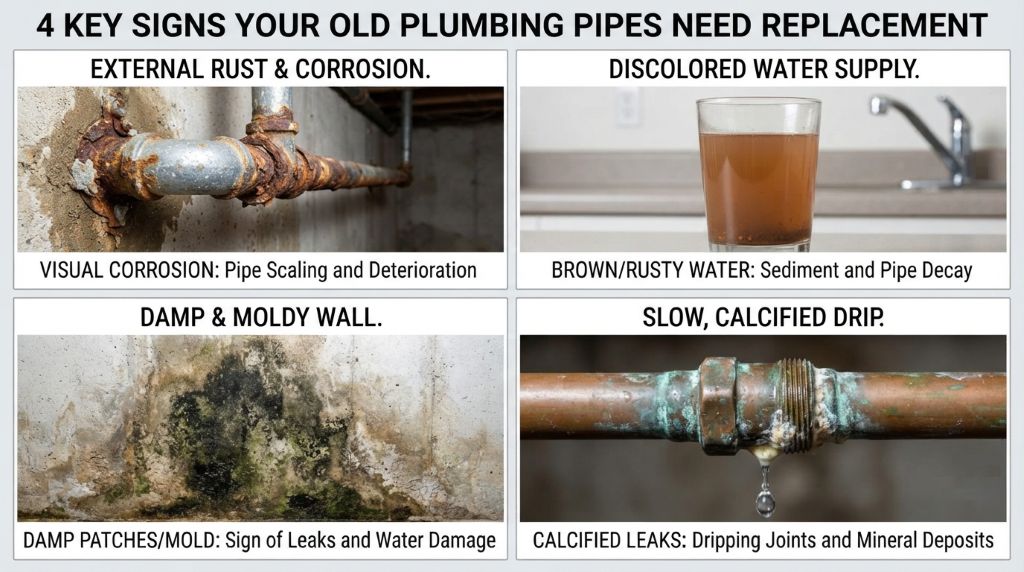
Frequent leaks are one of the clearest signs of failing pipes. If you’re calling a plumber repeatedly for different leaks, replacement may be more cost-effective than ongoing repairs. Additionally, leaks in multiple locations suggest widespread pipe deterioration.
Discolored water is another common warning sign. Brown or rusty water often indicates internal pipe corrosion. Additionally, this discoloration typically worsens over time as pipes continue deteriorating.
Watch for these signs that indicate pipe replacement is needed:
- Recurring leaks in different areas of the plumbing system.
- Discolored or rusty water, especially after periods of non-use.
- Low water pressure throughout the house without other explanation.
- Visible corrosion or dimpling on exposed pipes.
- Unpleasant metallic or sulfur smell in tap water.
Low water pressure throughout the entire house often points to significant internal corrosion. This buildup restricts water flow through narrowed pipe openings. Therefore, this widespread issue differs from isolated fixture problems.
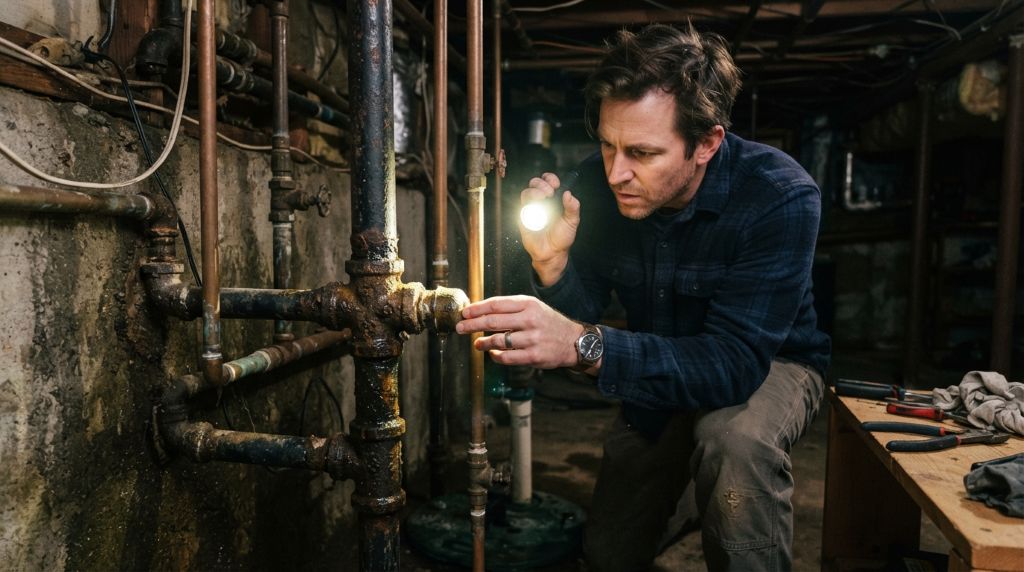
Visible corrosion on exposed pipes, such as those in basements, offers a clear warning sign. Dimpling or flaking on the pipe’s exterior indicates internal deterioration as well. Additionally, catching this visible damage early prevents unexpected pipe bursts.
Noticing multiple signs together strengthens the case for replacement rather than continued repairs. Therefore, tracking these patterns helps you make an informed decision.
Health and Safety Concerns With Old Pipes
Beyond inconvenience, old pipes can pose genuine health risks to your household. Certain materials release harmful substances into your water supply. Therefore, understanding these risks helps prioritize replacement for safety reasons.
Lead pipes present the most serious health concern among older plumbing materials. Homes built before 1986 may still contain lead pipes or lead solder. According to the Centers for Disease Control and Prevention, lead exposure through drinking water can cause significant health problems, especially in children.
Polybutylene pipes also raise safety concerns due to their tendency to fail suddenly. This material can weaken internally without visible warning signs. Therefore, sudden pipe bursts can cause extensive water damage and mold growth.
Consider these health and safety factors when evaluating old pipes:
- Lead pipes or lead solder in homes built before 1986.
- Polybutylene pipes installed between 1978 and 1995.
- Corroded pipes potentially introducing rust particles into drinking water.
- Mold growth risk from chronic hidden leaks in old pipes.
- Reduced water quality affecting taste and safety over time.
Testing your water for lead content provides peace of mind if you’re uncertain about your pipe materials. Many local health departments offer free or low-cost testing services. Additionally, this testing helps identify whether replacement is a health priority.
Chronic leaks from old pipes also create conditions for mold growth within walls and floors. This hidden mold can affect indoor air quality and household health. Therefore, addressing pipe issues promptly protects more than just your plumbing system.
Prioritizing pipe replacement for health reasons often makes sense even without complete failure. Therefore, don’t wait for a health issue before addressing known risks.
Cost Considerations for Pipe Replacement
Replacing plumbing pipes represents a significant investment for most homeowners. However, understanding the costs helps you plan and budget effectively. Additionally, weighing replacement against ongoing repair costs clarifies the better long-term choice.
Whole-house repiping costs vary based on home size, pipe material, and accessibility. Additionally, labor costs differ significantly by region and project complexity. Getting multiple quotes helps you understand fair pricing for your specific situation.
Several factors influence the overall cost of pipe replacement:
- Home size and the number of bathrooms and fixtures.
- Chosen pipe material, since copper costs more than PEX.
- Accessibility of pipes, since walls and floors add labor costs.
- Age and layout of the home affecting installation complexity.
- Regional labor rates and permit requirements.
While repiping requires upfront investment, it often saves money compared to repeated repairs. Frequent plumber visits for recurring leaks add up significantly over time. Therefore, calculating your annual repair costs helps clarify whether replacement makes financial sense.
Additionally, updated pipes can improve your home’s value and appeal to future buyers. Many buyers specifically ask about pipe age and material during home inspections. Therefore, this investment often pays off beyond just improved water quality.
Some homeowners choose partial repiping to spread costs over time. This approach addresses the most problematic sections first. However, a professional plumber can help determine whether partial or complete replacement suits your situation better.
How to Decide: Repair or Replace?
Deciding between ongoing repairs and full pipe replacement depends on several factors. Therefore, evaluating your specific situation helps guide this important decision. A professional inspection often provides the clearest answer.
Consider the age of your plumbing system as a starting point. Pipes approaching or exceeding their expected lifespan often warrant replacement consideration. Additionally, homes with known problem materials, like polybutylene, should prioritize replacement.
Frequency of repairs also plays a significant role in this decision. If you’re addressing plumbing issues multiple times per year, replacement likely offers better long-term value. Therefore, tracking repair frequency helps clarify the right choice.
Ask these questions when deciding between repair and replacement:
- How old are my current pipes, and what material are they?
- How often have I needed plumbing repairs in the past year?
- Are my pipes made from a known problematic material?
- Would replacement improve my home’s value or safety?
- What do professional plumbers recommend after inspection?
A professional plumbing inspection provides valuable insight into your pipes’ actual condition. This assessment often includes camera inspections for hidden pipe sections. Additionally, professionals can identify problems before they become visible emergencies.
Weighing the cost of continued repairs against replacement helps clarify the better financial choice. Therefore, gathering this information supports a confident, informed decision. Ultimately, addressing aging pipes proactively protects your home and family long-term.
Conclusion
Knowing when to replace old plumbing pipes protects your home from costly damage. Pipe material, age, and visible warning signs all guide this important decision. Additionally, health concerns like lead exposure make some replacements a safety priority. Therefore, staying informed about your plumbing system helps you act at the right time. A professional inspection remains the best way to confirm whether replacement is necessary and can also help you focus on preventing common plumbing problems at home before they lead to more serious damage.
Concerned about your home’s aging pipes? Contact a licensed plumber today for a thorough inspection and expert advice.
Frequently Asked Questions
How long do copper pipes typically last?
Copper pipes generally last fifty years or more with proper maintenance and care.
Are polybutylene pipes dangerous?
Yes, polybutylene pipes can fail suddenly and often need earlier replacement than other materials.
What are signs my pipes need replacing?
Frequent leaks, discolored water, low pressure, and visible corrosion all signal replacement time.
Is repiping a whole house expensive?
Costs vary widely, but repiping often saves money compared to repeated repair expenses.
Can old pipes affect my water quality?
Yes, corroded or lead pipes can introduce harmful particles into your drinking water.