
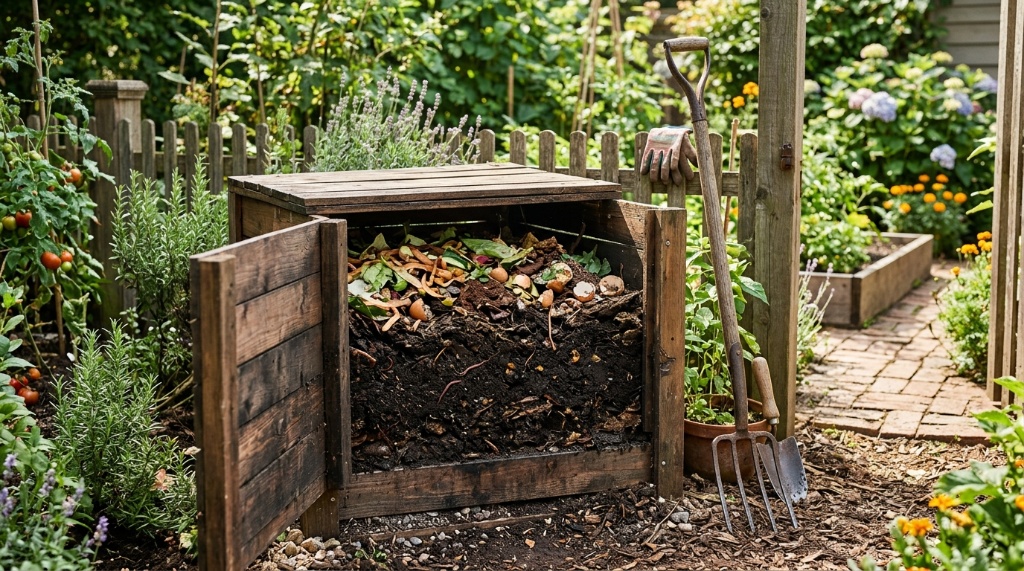
You’ve done the work—collected kitchen scraps, turned the pile, waited patiently—and now you have a bin full of dark, crumbly compost. The question is: what do you actually do with it to make your garden noticeably better? Knowing how to apply compost correctly matters as much as making it. Whether you’re just starting with a system like using a Geobin for home composting or you’ve been composting for years, the way you use that finished material determines whether your soil improves or just gets a thin brown layer on top.
Quick Answer
Apply finished compost as a 1–3 inch layer on top of garden beds in fall or early spring, then mix it into the top 6–8 inches of soil or let earthworms incorporate it naturally. For established plants, use 1–2 inches as mulch. Compost improves soil structure, water retention, and nutrient availability, but it works best when used consistently over multiple seasons rather than as a one-time fix.
Key Takeaways
- Finished compost should be dark, crumbly, and smell earthy—if it still has recognizable food scraps or smells sour, it needs more time.
- Apply 1–3 inches to garden beds and mix into the top 6–8 inches of soil for the best results in vegetable gardens.
- Compost works as both a soil amendment (mixed in) and a mulch (layered on top)—the right choice depends on your goal.
- Timing matters: fall application gives compost time to integrate before spring planting, while spring application provides immediate benefits.
- Compost is not a complete fertilizer—it improves soil health and provides moderate nutrients, but heavy-feeding plants may still need additional inputs.
How to Tell When Your Compost Is Actually Finished
Using unfinished compost can harm your garden. It can tie up nitrogen as microbes continue breaking it down, burn plant roots from excess heat, or introduce pathogens. Before you apply anything, make sure your compost has fully cured.
Finished compost has these characteristics:
- Color: Dark brown to nearly black
- Texture: Crumbly and loose, similar to good potting soil
- Smell: Earthy and mild, like forest floor—not sour, ammonia-like, or rotting
- Original materials: You shouldn’t recognize food scraps, grass clippings, or leaves—everything should have broken down
- Temperature: Cool to the touch, not warm
If your compost still has visible food scraps or smells unpleasant, give it more time. Turn it to add oxygen, adjust moisture if needed, and wait another few weeks. The extra patience prevents problems later.
When to Apply Compost to Your Garden
Timing affects how much benefit your plants receive from compost. Each application window has trade-offs.
| Timing | Best For | Considerations |
|---|---|---|
| Fall application | Vegetable beds, new garden areas | Compost has months to integrate into soil; earthworms do the mixing for you |
| Early spring | All garden types | Apply 2–4 weeks before planting; gives nutrients time to become available |
| Growing season | Established plants, containers | Use as side-dress or mulch; avoid disturbing roots |
Fall is often the easiest time to apply compost. Spread it on beds after you’ve cleared summer crops, and let winter weather and soil organisms work it in. By spring, the soil is ready.
Spring application works well too, but apply it at least two to four weeks before planting. This gives the compost time to settle and nutrients time to become available to plants, Before you start prepping your beds, make sure you have the right equipment by checking out our dallas garden tools guide tested & rated for texas gardens.
How Much Compost to Use
More compost isn’t always better. Excessively thick layers can smother soil, create drainage issues, or provide more nutrients than plants can use efficiently. The right amount depends on your soil and what you’re growing.
For Vegetable Gardens
Apply 1–3 inches of compost across the bed surface, then mix it into the top 6–8 inches of soil. If your soil is heavy clay or very sandy, use the higher end—3 inches. For already-decent soil, 1–2 inches maintains fertility.
New garden beds benefit from a more generous application. Spread 3–4 inches and till or fork it into the top 8–10 inches.
For Flower Beds and Perennials
Use 1–2 inches as a top dressing around established plants. You don’t need to mix it in—earthworms and rain will incorporate it over time. Keep compost a few inches away from plant stems to prevent rot.
For Containers
Mix finished compost with potting soil at a ratio of about 1 part compost to 3 parts potting mix. Pure compost in containers can be too heavy and hold too much moisture.
For Lawns
Compost top-dressing works on lawns too. Apply a thin layer—about ¼ to ½ inch—and rake it into the grass. This improves soil under the turf without smothering it.
Two Ways to Apply Compost: Amendment vs. Mulch
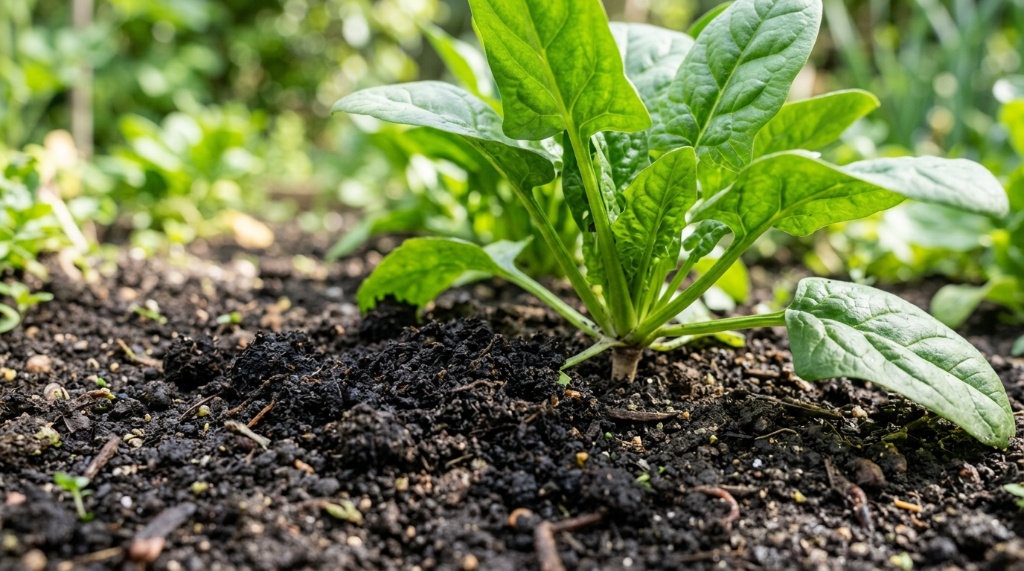
You can use compost two different ways, and each serves a distinct purpose.
As a soil amendment: Mix compost into the top 6–8 inches of soil. This improves soil structure, adds organic matter, feeds soil microbes, and increases water-holding capacity. Use this method when preparing beds for planting.
As mulch: Spread 1–2 inches on the soil surface around plants. This suppresses weeds, retains moisture, and slowly releases nutrients as it breaks down. Use this method for established plants and during the growing season.
Many gardeners do both—working compost into beds before planting and using additional compost as mulch later in the season.
Common Mistakes When Using Homemade Compost
Even experienced gardeners make these errors. Avoiding them helps you get the most from your compost.
- Using unfinished compost: This can harm plants and attract pests. Wait until it’s fully cured.
- Applying too thick a layer: More than 3–4 inches can smother soil and create drainage problems.
- Mixing compost into the root zone of established plants: This disturbs roots. Use compost as mulch around existing plants instead.
- Treating compost as complete fertilizer: Compost provides moderate nutrients but may not meet the demands of heavy feeders like tomatoes or corn.
- Skipping compost in sandy or clay soil: These soil types benefit most from compost’s ability to improve structure and water retention.
- Not letting compost sit after application: Freshly applied compost needs time to integrate. Apply before planting, not at planting time.
What Compost Actually Does for Your Soil
Compost improves soil in several ways, but understanding what it can and can’t do helps you set realistic expectations.
Improves soil structure: In clay soil, compost creates space between particles, improving drainage and aeration. In sandy soil, it helps particles bind together, increasing water retention.
Feeds soil life: Compost introduces beneficial bacteria, fungi, and other organisms that break down organic matter and make nutrients available to plants.
Increases water-holding capacity: Every 1% increase in organic matter helps soil hold significantly more water. This matters most during dry spells.
Provides nutrients slowly: Compost releases nitrogen, phosphorus, potassium, and micronutrients gradually as it decomposes. This is gentler than synthetic fertilizers but also slower-acting.
Buffers soil pH: Compost helps moderate pH extremes, though it doesn’t dramatically change soil pH on its own.
What compost won’t do: fix severely compacted soil overnight, replace all fertilizer needs for heavy feeders, or correct serious nutrient deficiencies immediately. It’s a long-term investment in soil health.
Frequently Asked Questions
Can I put compost on top of the soil without mixing it in?
Yes. Using compost as mulch—layering it on the surface—is a valid technique. Earthworms and soil organisms will gradually incorporate it. This works especially well around established plants where you don’t want to disturb roots.
How often should I add compost to my garden?
Once or twice a year is typical for most gardens. Fall application after clearing crops and spring application before planting cover most situations. Sandy or clay soils may benefit from more frequent, lighter applications.
Is homemade compost as good as store-bought?
Quality varies based on what you compost and how you manage the pile, but well-made homemade compost is often equal to or better than commercial products. You control the inputs and know exactly what’s in it.
Can compost burn my plants?
Finished, properly cured compost won’t burn plants—it’s too low in soluble nutrients. Unfinished compost can cause problems, but the risk comes from microbial activity and nitrogen tie-up, not from nutrient burn in the traditional sense.
What plants benefit most from compost?
Almost all plants benefit, but heavy feeders like tomatoes, peppers, squash, and roses show the most improvement. Native plants adapted to poor soil may need less compost than vegetables or ornamental flowers.
Can I use compost in winter?
You can apply compost in winter as long as the ground isn’t frozen. It will sit on the surface until temperatures warm and soil organisms become active again. Fall application before the ground freezes is often more effective.
Conclusion
Using homemade compost effectively comes down to timing, quantity, and method. Apply 1–3 inches to garden beds, mix it into the top few inches of soil for amendments, or layer it on top as mulch around established plants. Make sure your compost is fully finished before using it, and apply it in fall or early spring for the best results. Compost improves soil gradually—expect to see meaningful changes after two or three seasons of consistent use. Start with one bed, see how your plants respond, and expand from there.