
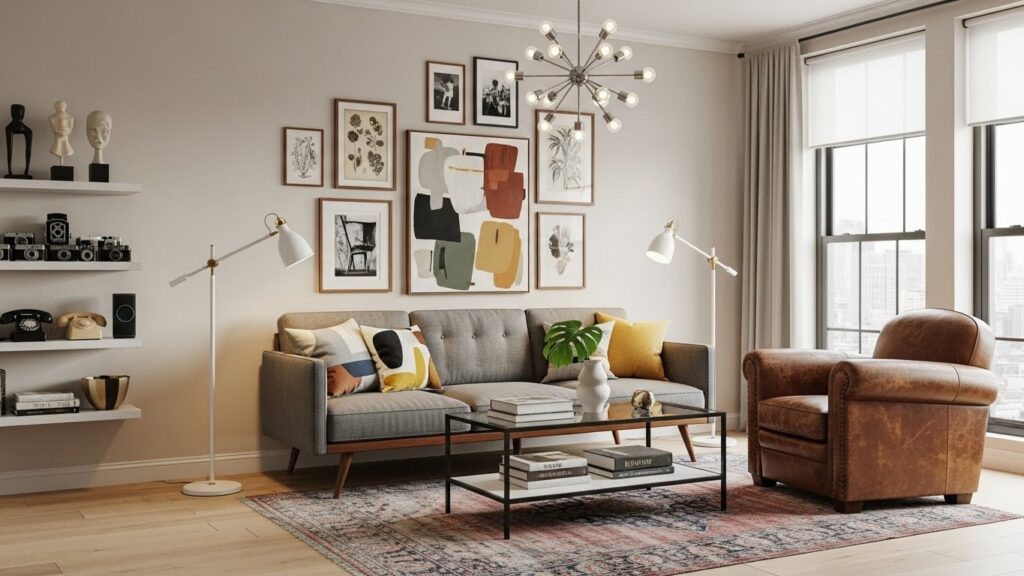
What does mixing vintage and modern decor really mean?
Mixing vintage and modern decor means combining furniture, materials, and design elements from different time periods in a way that feels intentional, balanced, and functional—not random or chaotic.
Many homes fail at this because people decorate emotionally instead of strategically. They love a vintage chair. They buy a modern sofa. Then they place them together and wonder why the room feels “off.” The problem is not the pieces. The problem is the lack of structure.
According to a 2023 Houzz interior design survey, over 64% of homeowners prefer blended interior styles instead of a single-theme approach. The demand for vintage modern interior design is rising because it feels personal, flexible, and timeless. But it only works when there is a system behind it.
This guide breaks down that system. You will learn how to balance old and new using proportion, contrast, color control, and layout logic. Each section starts with a clear answer, then expands into practical steps you can apply immediately.
If your goal is to create a home that feels lived-in but current, expressive but clean, this guide is built for you.
Why does mixing vintage and modern decor often look messy?
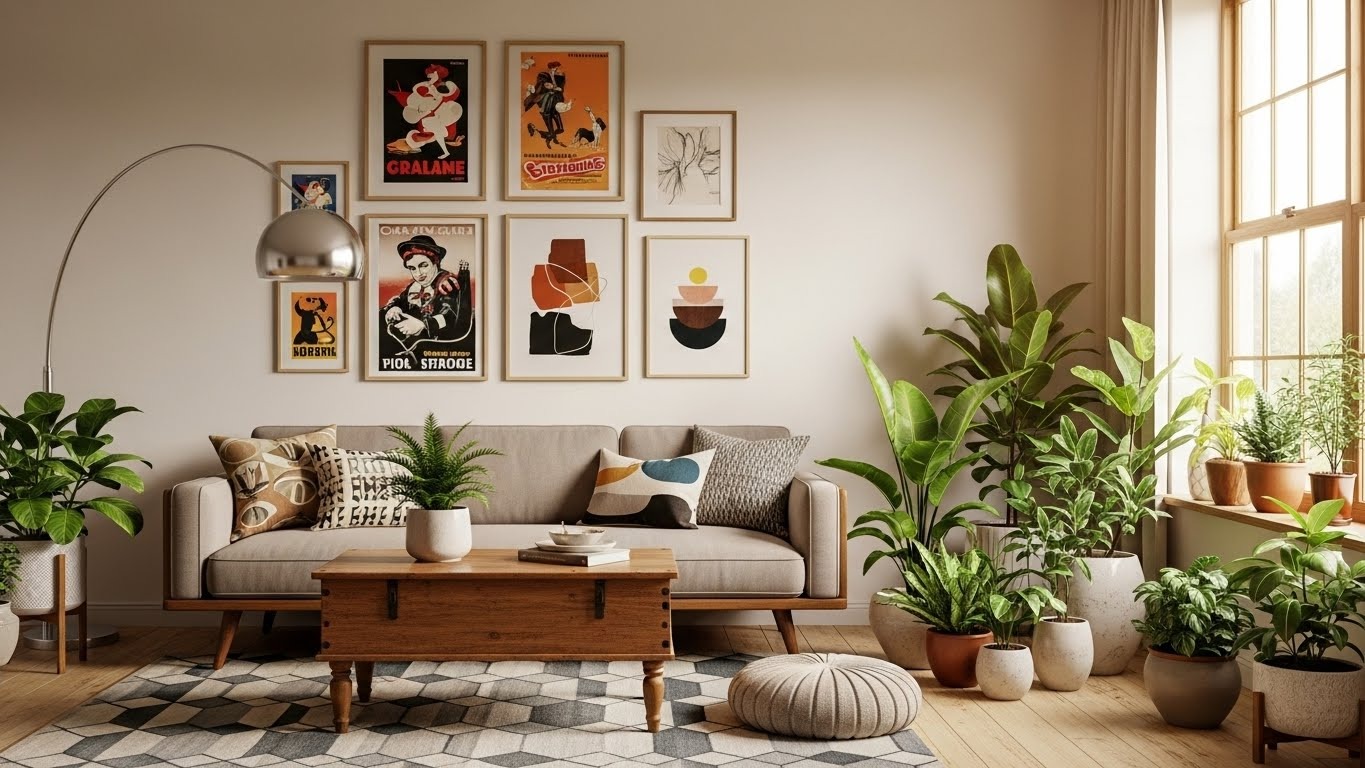
Mixing vintage and modern decor looks messy when there is no visual hierarchy.
Most people mix styles without defining a dominant role. They place vintage and modern items side by side with equal weight. This creates visual competition instead of harmony.
Interior designers solve this by using a 70–30 balance rule:
- 70% dominant style (modern or vintage)
- 30% accent style (the opposite)
Case study: A 2022 Apartment Therapy makeover showed that rooms using a 70% modern base with 30% vintage accents scored higher in user satisfaction than evenly mixed rooms. People described them as “intentional” and “calm.”
Without hierarchy, your eye has nowhere to rest. With hierarchy, contrast becomes attractive instead of distracting.
How do you choose which style should dominate?
The dominant style should match your home’s architecture and layout.
Start with what you cannot change easily:
- Wall structure
- Ceiling height
- Window size
- Flooring material
Modern layouts with open plans, large windows, and clean lines work best with a modern base. Older homes with wood floors, trims, or detailed moldings naturally support a vintage base.
Rule of thumb: Let the building decide. Let the decor support it.
This approach prevents forced design. It also reduces cost because you work with existing strengths instead of fighting them.
How can color unify vintage and modern pieces?
A controlled color palette is the fastest way to unify mixed styles.
Color is the bridge between time periods. When color is consistent, style differences feel intentional.
Use these guidelines:
- Limit your palette to 3–4 main colors
- Use neutral tones as the base
- Repeat colors across old and new items
Example: A vintage wooden cabinet and a modern sofa will feel connected if both share the same warm brown or neutral undertone.
Data insight: Studies in environmental psychology show that limited palettes reduce cognitive load. This makes mixed spaces feel calmer and more organized.
Color does not need to be bold to be effective. Consistency matters more than intensity.
What role does material contrast play in vintage modern interior design?
Material contrast creates interest without chaos.
Vintage design leans toward:
- Solid wood
- Patina finishes
- Textured surfaces
Modern design favors:
- Glass
- Metal
- Smooth, matte finishes
When you pair rough with smooth, old with clean, the contrast feels deliberate.
Practical example: A reclaimed wood dining table paired with modern metal chairs. One anchors the space. The other keeps it current.
The key is balance. Do not mix too many textures at once. Let one material lead and the others support.
How should furniture scale be handled when mixing styles?
Furniture scale must be consistent, even when styles differ.
Vintage furniture often appears heavier and more detailed. Modern furniture is lighter and more streamlined.
If you mix mismatched scales:
- Rooms feel crowded
- Pathways shrink
- Flow breaks
Solution: Match furniture height and mass, not style.
Case example: Designers renovating small urban apartments found that replacing bulky vintage sofas with slimmer vintage-inspired pieces preserved character while improving flow.
Measure before buying. Visual weight matters more than age.
Can vintage decor work in minimalist modern spaces?
Yes, if vintage items are treated as focal points.
Minimalist spaces thrive on restraint. That makes them perfect for showcasing a few strong vintage elements.
Use this approach:
- One vintage anchor per room
- Neutral modern surroundings
- Clear negative space around the piece
Example: A single antique dresser in a white, modern bedroom becomes a feature instead of clutter.
This method aligns with Google’s helpful content principle: clarity over excess.
How do lighting choices affect mixed decor styles?
Lighting defines mood and connects eras.
Lighting is often overlooked, yet it determines how materials and colors are perceived.
Best practices:
- Use modern lighting fixtures for function
- Layer with warm bulbs to soften vintage textures
- Avoid mismatched color temperatures
Industry insight: Interior lighting studies show warm-neutral lighting (2700K–3000K) works best in mixed-style rooms.
Lighting should unify, not compete.
How can decor accessories prevent style clashes?
Accessories act as visual connectors between styles.
Small elements do big work:
- Throw pillows
- Rugs
- Artwork
- Ceramics
Choose accessories that combine both worlds. For example, a modern print in a vintage frame.
This creates repetition, which is a core design principle.
What is the smartest way to start mixing vintage and modern decor?
The smartest way to start is slowly and intentionally.
Mixing vintage and modern decor is not about collecting random items. It is about creating contrast with structure. Decide your dominant style. Control your color palette. Balance scale and materials. Then layer personality through details.
The most successful vintage modern interior design projects follow systems, not trends. They feel personal because they are curated, not rushed.
Call to Action: Start with one room. Choose one vintage piece you love. Build the modern structure around it. If you want more practical design breakdowns like this, bookmark this page and share it with someone planning a home refresh.
Frequently Asked Questions About Mixing Vintage and Modern Decor
Is mixing vintage and modern decor still trendy?
Yes. Blended interiors are growing because they feel personal and flexible rather than trend-driven.
How many vintage pieces should be in one room?
Usually 1–3 key pieces. More than that risks visual overload.
Can I mix different vintage eras together?
Yes, but keep the modern base consistent to avoid clutter.
Does mixing styles work in small spaces?
Yes, if scale is controlled and clutter is avoided.
What colors work best for vintage modern interior design?
Neutrals like beige, white, gray, and muted earth tones work best.
Is modern furniture required for this style?
No. You can use modern-inspired pieces that focus on clean lines.
What is the biggest mistake people make?
Buying pieces without a plan or visual hierarchy
Related Topics: Minimalist Home Design Ideas That Feel Warm and Personal
Related Topics: How TikTok Shopping Views Turn Into Real Sales