

The right flowers do more than look beautiful. They should suit the recipient, the reason for sending them, and the space where they will be displayed. In Boston, MA, that might mean a bright little vase for a Back Bay apartment, a graceful sympathy arrangement for a family home, or a long-lasting plant for a Seaport office.
For help making those details feel simple, order flowers online Boston, MA through Rouvalis Flowers, a Boston florist that creates bespoke floral designs and plants and hand delivers throughout Greater Boston. With experience serving local homes, workplaces, celebrations, and sympathy occasions since 1981, Rouvalis Flowers offers a useful point of reference when a generic bouquet does not feel personal enough.
Start With the Occasion
The occasion should set the emotional direction before you choose individual stems. Consider the message first, then match the color, scale, and style to it.
- Birthdays: Choose cheerful seasonal flowers, a favorite bloom, or lively colors such as yellow, coral, pink, and peach.
- Anniversaries: Roses, ranunculus, and refined mixed arrangements can create a romantic feeling without relying on one predictable look.
- Sympathy: Soft neutrals, whites, gentle greens, and graceful shapes often feel calm and considerate.
- Housewarmings: Orchids, green plants, or a textural arrangement can help make a new space feel settled.
- Thank-you gifts: A medium-sized bouquet in warm, welcoming tones is thoughtful without overwhelming the recipient.
- Corporate settings: Select polished, structured designs that look professional and avoid an overly romantic message.
Match the Arrangement to the Room
A bouquet should work with its surroundings, not compete with them. Boston homes range from compact brownstone rooms to open-concept condos, so placement matters as much as the flowers themselves.
Dining Tables and Entryways
For a dining table, use a low arrangement that keeps sightlines open during meals and conversation. An entryway can handle more height because the design is meant to create an immediate impression. In a narrow hall, choose a vessel with a stable base and leave enough surface space for keys, mail, or everyday essentials.
Living Rooms, Bedrooms, and Offices
In a living room, take cues from the furniture, artwork, and natural light. A bold bouquet can bring energy to a clean, neutral room, while a room with patterned textiles may benefit from a simpler palette. Bedrooms usually suit softer colors and lighter fragrances. For an office, a compact vase or plant adds interest without taking over the desk or conference table.
Let Boston’s Seasons Guide Your Choices
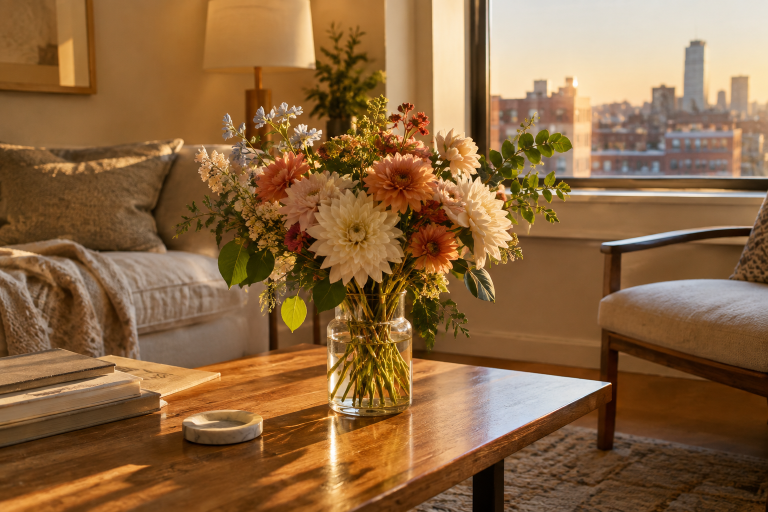
Seasonal availability changes throughout the year, so asking what looks best that week is often more useful than insisting on a specific flower. Spring arrangements feature tulips, ranunculus, anemones, lilac, and greens. Summer is for garden roses, hydrangeas, dahlias, lisianthus, and airy flowers. Fall favors chrysanthemums, amaranth, berries, grasses, dahlias, and warm foliage. In winter, white flowers, greens, burgundy accents, evergreens, berries, and amaryllis reflect the season. Seasonal design links arrangements to the moment, like a warm May weekend or December holidays.
Choose a Color Palette Before Naming the Flowers
Start with two or three colors, then let the flower selection follow. This approach makes it easier to coordinate with a recipient’s taste or home décor.
- Soft and peaceful: White, cream, pale blue, and lavender.
- Warm and welcoming: Peach, apricot, coral, and yellow.
- Romantic: Red, blush, burgundy, plum, and soft pink.
- Modern: White and green with one saturated accent color.
- Seasonal: Colors inspired by spring buds, summer gardens, autumn leaves, or winter evergreens.
Color often carries the mood more clearly than a specific flower name. A well-composed mix of seasonal stems in the right palette can feel more intentional than an arrangement built around a single requested variety.
Think About Scent, Allergies, and Pets
Appearance is only part of a successful floral gift. Ask whether the recipient enjoys fragrance, especially when sending flowers to a small apartment, hospital room, or shared office. If you are unsure, request a lower-scent design. It is also wise to consider pets before selecting flowers or plants. Some common varieties can be harmful if chewed or ingested, so households with cats should review which plants are toxic or non-toxic to cats and keep arrangements out of reach.
Know What Fresh Flowers Should Look Like
When shopping in person or choosing a florist, look for firm stems, healthy green leaves, clear color, and flowers without slimy or damaged areas. For a wide variety of blooms, those just beginning to open can offer more time to enjoy them at home. Clean water and a suitable vase also matter.
Once flowers arrive, a clean container, fresh water, and regular water changes can support their vase life. Guidance on caring for cut flowers at home also recommends keeping foliage out of the water and placing arrangements away from direct heat and drafts.
Pick a Size That Fits the Setting
Size should reflect the available space and the occasion. Petite arrangements work well on desks, bedside tables, and small kitchen counters. Medium designs are versatile for birthdays, thank-you gifts, and everyday celebrations. Larger arrangements are best reserved for spacious entryways, formal gatherings, milestone events, or homes with a clear display area. A plant can be an excellent alternative for someone who prefers a living piece of décor.
A Five-Step Process for Choosing Flowers in Boston
- Identify the occasion and the message you want the gift to convey.
- Think about where the flowers will live, including room size, light, and available surface space.
- Select a general color palette that suits the recipient and setting.
- Ask which flowers are fresh and seasonally strong at the time of delivery.
- Confirm timing, care needs, scent preferences, allergies, and pet considerations.
Common Mistakes to Avoid
Do not choose an arrangement only because it looks dramatic in a product photo. Avoid ignoring the recipient’s available space, sending strongly scented flowers without context, or requesting a difficult-to-source flower at the last minute. For major holidays, sympathy occasions, and events, planning ahead gives the florist more flexibility to create something appropriate. Include care instructions whenever possible so the recipient can enjoy the flowers longer.
Choose the Person, Place, and Moment
The best flower choice is not automatically the largest or most expensive one. It is the arrangement that feels right for the recipient’s life, the Boston season, and the occasion at hand. A thoughtful seasonal bouquet, a low centerpiece that welcomes conversation, or a carefully chosen plant can all communicate care when the selection fits the moment.