
Key Takeaways
- Spooling your reel the right way prevents line twist and tangles.
- Matching line weight to your reel size improves casting distance.
- The arbor knot is the easiest and most reliable way to start.
- Filling your spool to the right level boosts casting performance.
- Checking line direction before spooling saves you time and frustration.
Attaching fishing line to a spinning reel seems simple. However, as angling experts at CrazyFishingGear.com warn, many anglers get it wrong. Poor line attachment causes twists, tangles, and lost fish. This guide walks you through every step. You will learn how to do it correctly, every time.
Why Proper Line Attachment Matters
Getting your line on the reel correctly changes your whole fishing experience. Incorrect spooling leads to line twist. This twist causes wind knots and tangles mid-cast. It can also weaken your line over time.
A poorly spooled reel reduces your casting distance too. Loose line wobbles on the spool during a cast. This wobble creates friction, which slows your lure down. Additionally, uneven line lay can cause your drag system to work poorly. This matters most when a big fish makes a run.
Correct spooling also protects your investment. Fishing line and reels cost money. Therefore, treating them right extends their lifespan. A reel with fresh, properly loaded line performs better in every situation. This is true whether you fish lakes, rivers, or the open ocean.
Many beginners skip this step or rush through it. As a result, they blame their gear for problems that spooling caused. Learning this skill now saves you headaches later. It also builds confidence for tougher fishing conditions ahead. Once you master it, you will never think twice about it again.
Gather Your Tools and Materials
Before you start, collect everything you need. Having supplies ready makes the process smooth and quick. Here is what you should gather:
- A spinning reel and matching rod
- Fresh fishing line (monofilament, fluorocarbon, or braid)
- Scissors or a line clipper
- A pencil or rod to hold the line spool
- A helper, or a chair to hold the spool steady
Choosing the right line matters just as much as the tools. Monofilament stretches and floats, which suits beginners well. Fluorocarbon sinks and resists abrasion, ideal for clear water. Braid offers strength and sensitivity but needs a leader for many setups.
Check your reel’s spool for its line capacity rating. This information usually appears printed on the spool itself. Match your line’s pound test to this rating. Overfilling or underfilling causes casting problems down the road.
Also inspect your line for damage before spooling. Old, cracked, or discolored line breaks easily under pressure. Therefore, always start with fresh line for the best results. This small step prevents lost fish and wasted trips later.
Step-by-Step Guide to Spooling Your Reel
Follow these steps in order for a clean, tangle-free setup.
- Open the bail arm on your spinning reel fully.
- Tie the line to the spool using an arbor knot.
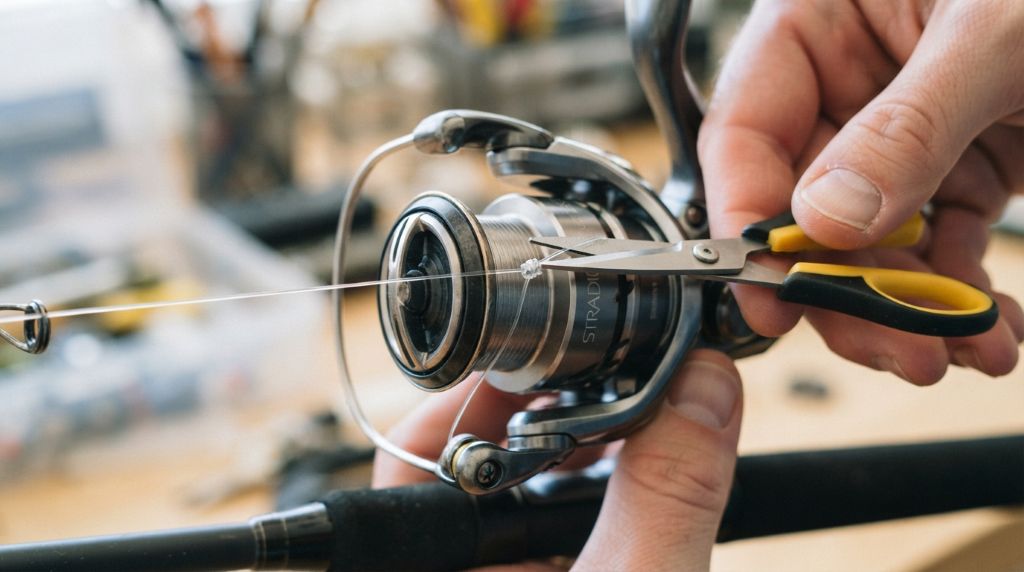
- Trim the tag end close to the knot.
- Close the bail arm to lock the line in place.
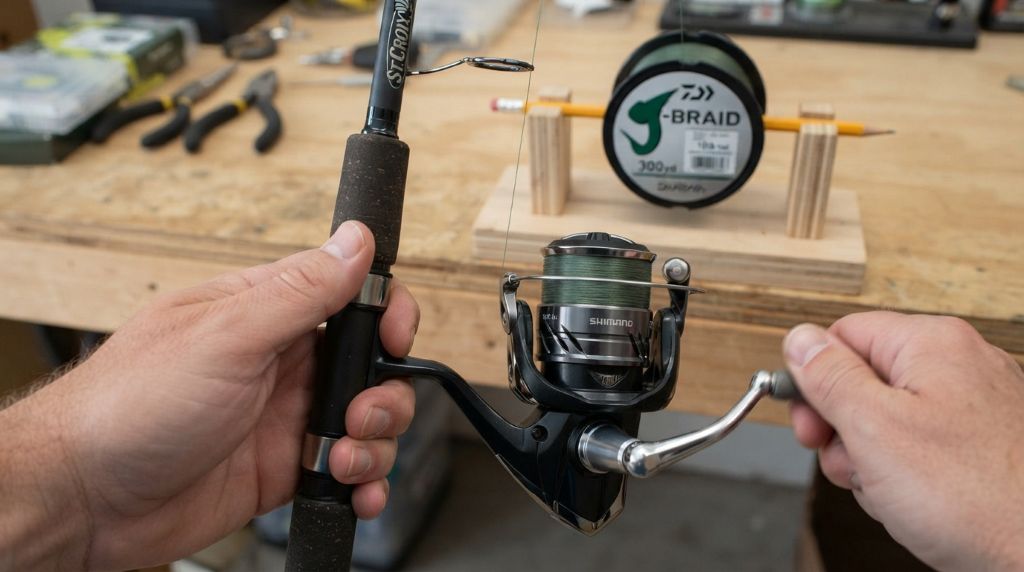
- Place the new line spool on the floor or a pencil.
- Check that the line comes off in the same direction as the reel spool turns.
- Reel slowly while keeping light tension with your fingers.
- Fill the spool until the line sits about one-eighth inch from the edge.
- Cut the line from the spool once you reach the right fill level.
- Attach your leader, swivel, or lure using your preferred knot.
Step six deserves extra attention. If the line comes off the spool backward, it will twist as you reel. To test this, reel a few turns and watch the line. If loops or curls appear, flip the spool over. This single check prevents most common spooling problems.
Keep steady pressure on the line throughout the process. Loose winding creates a soft, uneven spool. This leads to poor casts and possible tangles during a fight with a fish.
Tying the Arbor Knot Correctly
The arbor knot secures your line to the reel spool. It is simple, strong, and quick to tie. Follow these steps carefully:
- Wrap the line around the spool’s arbor once.
- Tie an overhand knot around the main line.
- Tie a second overhand knot at the very end of the tag.
- Pull the main line to slide the first knot down to the spool.
- Snug the knot against the spool until it locks.
- Trim the excess tag end close to the knot.
This knot works because the two overhand knots jam against each other. Consequently, the line locks tight around the spool arbor. It will not slip, even under heavy drag pressure.
Some anglers add a drop of water to the knot before tightening it. This reduces friction and heat, which can weaken certain line types. Fluorocarbon and braid benefit most from this small trick.
Avoid pulling too hard while tightening monofilament line. Excessive force can create heat that damages the line’s structure. Instead, pull firmly but steadily until the knot sits snug. Once secure, you are ready to fill the spool with confidence.
Common Mistakes to Avoid
Even experienced anglers make spooling errors sometimes. Awareness of these mistakes helps you avoid them entirely.
- Overfilling the spool, which causes line to spill off during casts
- Underfilling the spool, which reduces casting distance significantly
- Spooling line in the wrong direction, causing constant twist
- Using old or damaged line that snaps under pressure
- Skipping tension while winding, leading to a loose, baggy spool
- Choosing line that does not match your reel’s size rating
Loose spooling is one of the most frequent errors anglers make. Without tension, the line sits unevenly across the spool. This unevenness causes birds’ nests and wind knots during casting. Firm, steady pressure while reeling solves this problem completely.
Another common issue involves line memory. Line sitting too long on a store spool can develop coils. If your line looks curly right out of the package, stretch it gently first. Some anglers run it through water before spooling to help it relax.
Finally, do not ignore your reel’s manual. Manufacturers list ideal line weights and capacities for each model. Following these guidelines keeps your gear working properly for years.
Conclusion
Attaching fishing line to your spinning reel does not need to feel complicated. With the right tools, a steady hand, and these simple steps, you can spool your reel like a professional. Proper technique reduces tangles, improves casting distance, and protects your gear over time. It also helps you avoid these common mistakes when rigging lines and leaders, ensuring your setup performs smoothly and reliably on the water.
Take your time with each step, especially checking line direction and knot tension. These small details make the biggest difference in your results. Now grab your reel and give it a try. Head out to the water and enjoy a smoother, more successful day of fishing.
Frequently Asked Questions
How often should I change my fishing line?
Change monofilament line every three to six months with regular use. Braid and fluorocarbon last longer, often a full year or more.
What pound test line should I use for a spinning reel?
Match your line weight to your reel size and target fish. Most freshwater setups work well with six to twelve-pound test line.
Why does my line keep twisting after spooling?
Your line likely came off the spool backward during loading. Reverse the spool direction and refill your reel to fix this.
Can I use braid on any spinning reel?
Yes, but you should add a monofilament or fluorocarbon backing first. This backing prevents braid from slipping on the spool.
How full should I fill my spinning reel spool?
Fill your spool to about one-eighth inch from the rim. This level allows smooth casts without line spilling off.