
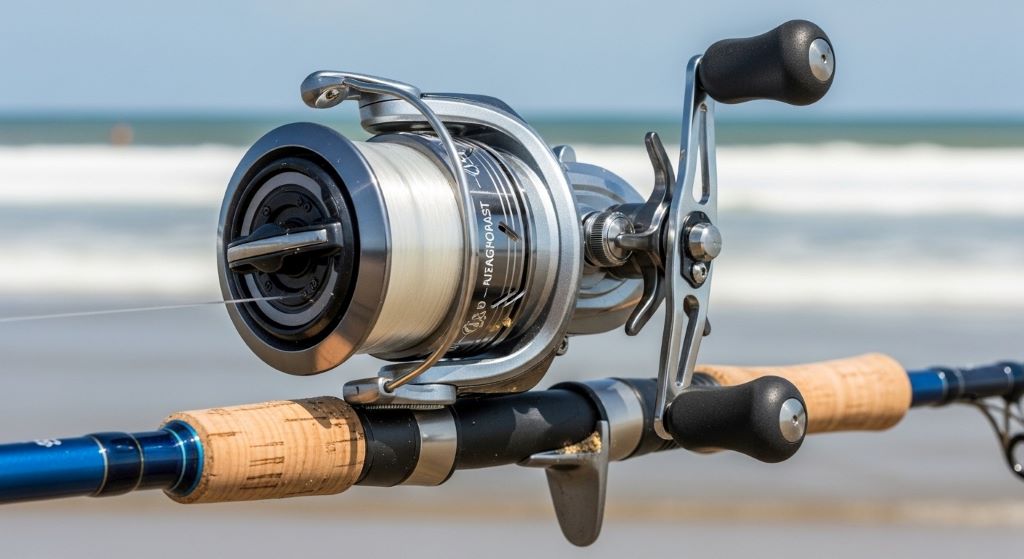
Standing on the beach with your rod in hand, watching waves roll in, you know that your success depends heavily on the equipment you’ve chosen. Surf fishing presents unique challenges that demand specialized gear. The fish you’re targeting often feed beyond the breaking waves, making distance casting absolutely essential.
Choosing the right spinning reel for surf fishing can feel overwhelming. Countless options flood the market, each claiming to be the perfect solution. However, understanding what makes a reel suitable for beach conditions will help you make an informed decision that improves your fishing experience and success rate.
This comprehensive guide will walk you through everything you need to know about selecting spinning reels specifically designed for surf fishing. Whether you’re a beginner starting your beach fishing journey or an experienced angler looking to upgrade, these insights will help you choose equipment that performs reliably in challenging coastal conditions.
Understanding Surf Fishing Requirements
Surf fishing differs dramatically from other fishing styles. The environment itself creates demands that your equipment must meet. Saltwater, sand, wind, and the need for extreme casting distance all factor into what makes a reel suitable for this application.
Distance matters more in surf fishing than almost any other fishing method. Fish often congregate in troughs, channels, and structures that lie 100 yards or more from shore. Reaching these productive zones requires reels that can handle heavy lures and baits while achieving impressive casting distances.
The marine environment takes a toll on fishing equipment. Saltwater corrodes metal components rapidly. Sand gets into every crevice, grinding away at gears and bearings. Waves can dunk your gear unexpectedly. Therefore, durability and corrosion resistance become critical considerations.
Power is another essential factor. Surf species often include larger fish that make powerful runs. Your reel needs sufficient drag capacity to tire out these strong fighters without breaking your line or compromising the drag system.
Reel Size and Line Capacity
The size of your spinning reel directly impacts your casting distance and fish-fighting capability. Surf fishing typically requires larger reels than most freshwater or inshore saltwater applications.
Most serious surf anglers use reels in the 6000 to 10000 size range. These sizes provide the spool diameter and line capacity necessary for long casts. A larger spool releases line more freely during the cast, reducing friction and allowing your lure or bait to travel farther.
Line capacity matters because surf fish often make long runs. A big redfish, striper, or shark can peel off 100 yards of line in seconds. Having adequate line capacity prevents getting spooled when that happens. Look for reels that hold at least 250 yards of your preferred line weight.
However, bigger isn’t always better. Excessively large reels become heavy and tiring to use. They also create more wind resistance during casting, potentially reducing distance rather than increasing it. Match your reel size to the species you’re targeting and the typical casting distances required in your area.
The spool design affects casting performance significantly. Long, shallow spools excel at distance casting because line peels off more easily. Deep, narrow spools hold more line but create more friction during the cast. Most quality beach fishing reels feature long-cast spool designs specifically for this reason.
Gear Ratio Considerations
The gear ratio determines how much line your reel retrieves with each handle turn. This specification significantly impacts your fishing effectiveness and casting recovery speed.
High-speed retrieve ratios, typically 6.2:1 or higher, serve multiple purposes in surf fishing. They help you quickly recover line after a cast, keeping your bait in productive zones longer. Fast retrieves also help you stay ahead of waves when working lures through the surf zone.
Additionally, high-speed reels allow you to maintain tension on fish that run toward you. Slack line in surf fishing often results in lost fish because waves can create belly in your line, making it difficult to maintain contact with hooked fish.
Conversely, lower gear ratios provide more cranking power for fighting large fish. They’re also less tiring to use during extended fishing sessions. Some anglers prefer moderate ratios around 5.2:1 to 5.8:1 for bait fishing where lightning-fast retrieves aren’t necessary.
Consider your fishing style when choosing gear ratios. If you primarily fish lures and artificial baits, higher ratios make sense. For bait fishing where patience matters more than speed, moderate ratios work well.
Drag System Quality
The drag system might be the most critical component of any long cast reel. This mechanism controls how much resistance a fish feels when pulling line from your spool. In surf fishing, where powerful species make blistering runs, drag performance can mean the difference between landing trophy fish and watching them break off.
Look for reels with sealed drag systems. These designs keep water and sand out of the drag washers, maintaining consistent performance even after your reel gets dunked or covered in sand. Unsealed drags deteriorate quickly in beach conditions.
Maximum drag capacity should match or exceed your line’s breaking strength. However, you’ll rarely use maximum drag settings. Smooth drag performance throughout the entire adjustment range matters more than maximum capacity numbers.
Carbon fiber or felt drag washers typically provide the smoothest performance. They compress evenly and resist heat buildup during long fish fights. Cheap plastic washers create jerky, inconsistent drag that can break your line or tear hooks free from fish mouths.
Test the drag before purchasing if possible. The transition from locked to releasing should be smooth and progressive, without sudden jumps or sticky spots. Turn the drag adjustment knob throughout its range, checking that resistance increases smoothly at each setting.
Ball Bearings and Smoothness
Ball bearings reduce friction between moving parts, creating smoother operation. More bearings generally result in smoother reeling, but quality matters more than quantity.
Quality surf fishing reels typically feature eight to twelve ball bearings. These bearings support the main gear, handle, and various other moving components. Sealed or shielded bearings resist corrosion far better than open bearings in saltwater environments.
However, don’t choose reels based solely on bearing count. One quality stainless steel bearing outperforms three cheap bearings. Manufacturers sometimes inflate bearing counts with unnecessary bearings that contribute little to actual performance.
Smoothness affects your casting distance and fishing effectiveness. Smooth retrieval helps maintain consistent tension when fighting fish. It also reduces fatigue during long fishing sessions when you’re casting repeatedly and retrieving through heavy surf.
Feel is important too. A smooth reel provides better feedback, letting you detect subtle bites that you might otherwise miss. In surf fishing, where wave action creates confusion, this sensitivity can be crucial for detecting strikes.

Construction Materials and Durability
The materials used in reel construction directly impact longevity, especially in the harsh beach environment. Saltwater and sand destroy inferior materials quickly.
Aluminum and graphite are the primary body materials you’ll encounter. Aluminum offers superior strength and durability. It resists flexing under load, maintaining proper gear alignment even when fighting large fish. However, aluminum adds weight to the reel.
Graphite bodies reduce weight significantly while still providing adequate strength for most surf fishing applications. Modern composite materials offer impressive durability at reduced weight. They also resist corrosion better than untreated metals.
Many premium reels combine materials strategically. An aluminum main gear and frame paired with a graphite body provides strength where needed while keeping weight reasonable. This hybrid approach offers the best balance for demanding beach fishing conditions.
Rotor design affects both strength and performance. A solid rotor proves more durable than skeletal designs, though it adds slight weight. In surf fishing, where sand and debris can accumulate in open spaces, solid rotors make practical sense.
Look for stainless steel or corrosion-resistant alloy gears and internal components. Brass gears wear quickly in sandy conditions. Bronze gears offer better performance but still can’t match stainless steel’s durability in saltwater.
Handle and Bail Design
The handle system affects your comfort and cranking power during long fishing sessions and tough fish fights. Several design elements deserve consideration.
Handle length impacts leverage. Longer handles provide more cranking power, helpful when fighting large fish. However, they also create more wind resistance during casting and can feel awkward for some anglers. Medium-length handles typically offer the best compromise.
Handle material matters for both comfort and grip. EVA foam or cork provides excellent grip even when wet. Rubberized materials also work well. Avoid cheap plastic handles that become slippery when wet or covered in fish slime.
The bail wire and its opening mechanism need to be robust and reliable. Cheap bails can close unexpectedly during casting, creating dangerous backlashes or causing your bait to drop at your feet. Look for bails that open smoothly and lock securely in the open position.
Manual bail operation is generally more reliable than automatic systems in sandy conditions. Sand can interfere with automatic bail mechanisms, causing failures at crucial moments. Additionally, manual operation gives you more control over exactly when the bail closes.
Anti-Reverse Features
The anti-reverse mechanism prevents your reel handle from spinning backward when a fish pulls line. This feature plays an important role in hook-setting and maintaining pressure on hooked fish.
Instant anti-reverse systems provide immediate resistance with no backward play. Traditional ratchet systems allow slight backward movement before engaging. For most surf fishing applications, instant anti-reverse proves superior.
When a wave crashes on your line or a fish strikes, instant anti-reverse lets you set the hook immediately without first cranking up slack created by backward handle movement. This immediate response can be the difference between a solid hookset and a missed opportunity.
However, the anti-reverse mechanism adds complexity and potential failure points. Quality reels use robust designs that maintain reliability even after prolonged saltwater exposure. Check this feature during purchase by attempting to turn the handle backward. Any play or looseness suggests inferior components.
Comparing Popular Reel Models
Several manufacturers dominate the surf fishing market with proven designs. Understanding what different models offer helps narrow your choices.
Entry-level models from reputable manufacturers provide surprisingly good performance at reasonable prices. These reels might lack premium features like fully sealed bodies or exotic materials, but they still deliver reliable service for casual surf anglers. Expect to spend between 50 and 100 dollars for solid entry-level options.
Mid-range models typically offer the best value for serious anglers. They incorporate most premium features at prices that won’t devastate your budget. Quality mid-range reels range from 100 to 250 dollars and provide years of reliable service with proper maintenance.
Premium models feature the latest technology and highest-quality materials. Fully sealed bodies, precision machining, and exotic materials justify prices from 250 to 600 dollars or more. For anglers who fish frequently in challenging conditions, these investments make sense.
Tournament-grade reels represent the pinnacle of spinning reel technology. They offer extreme durability, ultra-smooth operation, and maximum casting distance. However, most recreational surf anglers won’t benefit enough from these features to justify prices that can exceed 600 dollars.
Matching Reels to Rods and Line
Your reel doesn’t work in isolation. It must match your rod and line choices to create a balanced, effective system.
Rod power and length affect what reel size makes sense. Longer rods generally pair with larger reels for balance and adequate line capacity. A 12-foot surf rod typically balances best with an 8000 or 10000 size reel, while a 9-foot rod might work better with a 6000 size.
Line choice impacts your reel selection too. Braided line has become increasingly popular for surf fishing because it offers superior casting distance and sensitivity. Its thin diameter allows you to spool more line or use smaller reels while maintaining adequate capacity.
However, braid requires specific considerations. It can dig into itself under tension, causing problems on cheaper reels with inadequate line lay systems. Quality beach fishing reels feature precision line lay mechanisms that prevent this issue.
Monofilament remains popular for many surf applications. It provides stretch that helps absorb the shock of powerful strikes and runs. Mono also resists abrasion better than braid when fish run through rocky areas or when your line drags across shells and structure.
Your line weight should match both your target species and your reel’s capacity. Overloading a reel with excessively heavy line reduces casting distance and can damage the drag system. Conversely, too-light line leaves you vulnerable to break-offs from large fish.
Maintenance and Care
Even the best reels require regular maintenance to perform reliably in harsh beach conditions. Proper care extends reel life dramatically and maintains performance.
Rinse your reel with fresh water after every beach trip. Don’t use high-pressure hoses, as they can force water past seals. Instead, use gentle running water or spray, focusing on external surfaces where salt and sand accumulate.
Monthly deep cleaning becomes necessary for reels used frequently. Remove the spool and wipe all accessible surfaces. Use a soft brush to clean around the bail and in crevices where sand collects. Apply a light oil to the bail spring and other external moving parts.
Annual professional servicing makes sense for reels used heavily. Technicians disassemble the reel completely, clean all internal components, replace worn parts, and repack bearings with appropriate grease. This service costs much less than replacing a neglected reel.
Store your reels properly between fishing trips. Loose drag settings when storing prevents drag washers from compressing and losing effectiveness. Keep reels in climate-controlled areas rather than hot garages or damp basements.
Budget Considerations and Value
Fishing reels represent a significant investment. Understanding how to maximize value helps you make smart purchasing decisions.
Determine your budget before shopping. This prevents getting overwhelmed by premium features you don’t actually need. Honest assessment of your fishing frequency and requirements guides appropriate spending levels.
Quality entry-level reels from established manufacturers often outperform cheap reels from unknown brands despite similar prices. Brand reputation matters in fishing equipment. Companies with strong reputations stand behind their products and maintain quality standards.
Consider used reels from reputable sources. Many anglers upgrade regularly, creating opportunities to purchase lightly used premium reels at significant discounts. However, inspect used reels carefully for corrosion, damage, or excessive wear before buying.
Sales and discounts happen regularly in the fishing industry. End-of-season sales, holiday promotions, and model closeouts offer opportunities to purchase quality equipment at reduced prices. Patience can save substantial money without sacrificing quality.
Testing Before You Buy
Whenever possible, test reels before committing to a purchase. Even reading reviews and specifications can’t replace hands-on experience.
Visit tackle shops that allow you to handle display models. Feel the reel’s weight and balance. Turn the handle through several rotations, noting smoothness and any unusual sounds or resistance. Test the drag by pulling line while gradually increasing tension.
Attach the reel to a rod similar to what you’ll actually use. This reveals whether the combination balances well. An excellent reel that makes your rod feel tip-heavy or butt-heavy won’t fish comfortably regardless of its technical specifications.
Ask questions of knowledgeable staff. Experienced tackle shop employees understand local fishing conditions and can recommend reels that perform well in your specific area. They also know which models have histories of problems and which prove reliable.
Read online reviews from verified purchasers. Real user experiences reveal long-term durability issues that might not appear during brief testing. However, remember that angry customers leave reviews more frequently than satisfied ones, potentially skewing perceptions.
Conclusion
Choosing the right spinning reel for surf fishing requires balancing numerous factors. Size and line capacity ensure you can reach distant fish and handle their powerful runs. Quality drag systems provide smooth, reliable resistance that lands more fish. Durable construction withstands the harsh beach environment season after season.
Remember that the perfect reel matches your specific needs and fishing style. A tournament angler targeting big game requires different equipment than a casual weekend surf fisher. Honest assessment of your requirements prevents overspending on features you won’t use or underbuying equipment that limits your effectiveness.
Quality beach fishing reels and long cast reels represent investments in your fishing success and enjoyment. They enhance your ability to reach productive water, fight fish effectively, and endure challenging conditions. By understanding what makes these reels suitable for surf applications and matching specifications to your needs, you’ll select equipment that serves you well for many seasons of successful beach fishing.
Take time researching options, handling reels when possible, and considering how different features align with your fishing approach. The right spinning reel dramatically improves your surf fishing experience and increases your chances of landing that trophy fish you’re pursuing.
Frequently Asked Questions
What size spinning reel is best for surf fishing?
Most surf fishing situations call for reels in the 6000 to 10000 size range. Smaller reels around 6000 work well for lighter applications and smaller species, while 8000 to 10000 sizes handle heavy lures, big baits, and larger fish. Your specific choice should depend on the species you’re targeting and typical casting distances required at your fishing locations.
How much should I spend on a surf fishing reel?
Quality surf fishing reels range from 100 to 250 dollars for most anglers. This price range offers excellent durability, smooth operation, and reliable drag systems without paying for premium features you might not need. If you fish frequently in challenging conditions, spending up to 400 dollars provides noticeably better construction and longevity.
Can I use freshwater spinning reels for surf fishing?
While freshwater reels physically function in saltwater, they’re not designed for the harsh beach environment. Saltwater quickly corrodes unsealed components, and sand destroys bearings and gears. Additionally, freshwater reels typically lack the size, line capacity, and drag power needed for surf species. Invest in reels specifically designed for saltwater use.
How do I prevent my reel from corroding in saltwater?
Rinse your reel thoroughly with fresh water after every beach trip. Use gentle spray or running water rather than high-pressure hoses. Dry the reel completely before storage. Apply light oil to external moving parts monthly. Choose reels with sealed bearings and corrosion-resistant materials. Annual professional servicing removes internal salt deposits and replaces worn components before serious damage occurs.
Is braided line or monofilament better for surf fishing reels?
Both line types have advantages. Braided line casts farther due to its thin diameter and provides superior sensitivity for detecting bites. However, it can dig into itself on cheaper reels and offers no stretch to absorb shock. Monofilament provides stretch that protects against break-offs, resists abrasion better, and works with any reel. Many anglers use braid with a monofilament or fluorocarbon leader, combining the benefits of both.
Related Topics:
Mastering the Art of Wire Fishing: A Step-by-Step Guide
Box vs Clam Reel: Best Choice for Freshwater Anglers