

Key Takeaways
- Automation and robotics are elevating the speed and accuracy of industrial processes.
- The interplay between AI and IoT is powering smarter, interconnected mobility solutions.
- Cutting-edge battery technology is extending the range and efficiency of electric industrial vehicles.
- Hydrogen fuel cells are proving their value in high-demand, heavy-duty applications.
- 3D printing is transforming manufacturing by enabling fast and cost-effective production of intricate parts.
Industrial mobility is at the forefront of significant technological transformation. Businesses across various industries are adopting innovative strategies to improve logistics, production, and operational performance. As equipment and environments become smarter and more connected, practical advancements such as swivel casters with lock are enabling increased safety and flexibility in manufacturing and warehousing facilities. Staying alert to these trends is crucial for organizations seeking to enhance productivity and reduce costs. Emerging technologies are revolutionizing industrial equipment, with automated systems increasing precision, and AI and IoT enabling machinery to communicate and adapt in real-time. These advancements help modernize supply chains, foster innovation, and keep businesses agile in the face of market shifts. There’s also a focus on sustainability, reliability, and energy efficiency, with improvements in battery technology and hydrogen fuel cells expanding the use of electric vehicles and heavy-duty machines—crucial for reducing environmental impact and complying with future regulations. Additionally, digital manufacturing via 3D printing enables quick adaptation, cost savings, and tailored solutions, enhancing production efficiency and strengthening industrial networks.
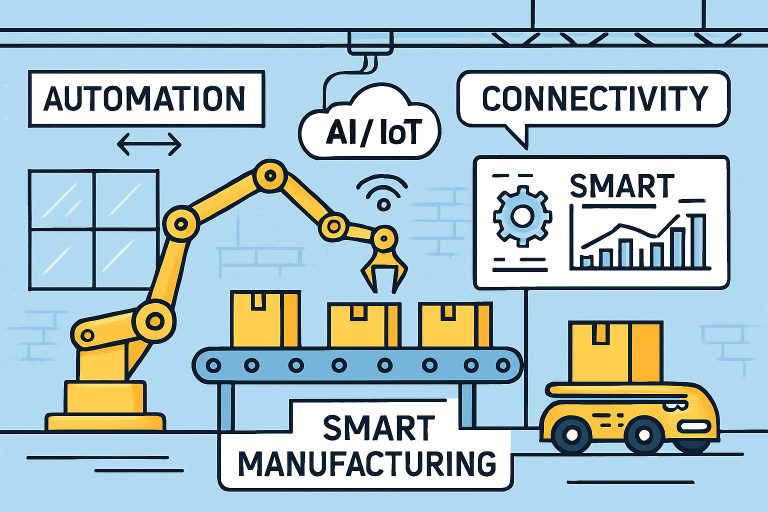
Automation and Robotics
The adoption of automation and robotics is transforming industrial mobility. Automated guided vehicles (AGVs) and autonomous mobile robots (AMRs) efficiently move materials in manufacturing and warehouses, reducing human error, labor costs, and boosting productivity. The International Federation of Robotics anticipates a 30% or greater increase in industrial robotics by 2030, marking a significant shift in global manufacturing. Leading organizations utilize robotics for tasks ranging from simple to complex, creating reskilling opportunities and new job roles in supervision and maintenance.
AI and IoT Integration
AI and IoT are transforming industrial mobility by analyzing data for maintenance, asset utilization, and safety. Smart sensors in machinery reduce downtime, and predictive analytics enable proactive decisions, minimizing failures and ensuring seamless workflow. The World Economic Forum notes that “smart factories” utilizing AI and IoT enable manufacturers to quickly adapt to market changes and maintain their industry leadership. Additionally, these technologies enable real-time monitoring of equipment performance, improving operational efficiency and extending asset lifespan. Integration with autonomous vehicles and robotics further streamlines material handling and logistics. As data-driven insights become central to decision-making, companies can enhance safety, reduce costs, and maintain a competitive edge in increasingly complex industrial environments.
Advancements in Battery Technology
Battery technology drives industrial electrification, replacing lead-acid batteries with lithium-ion and solid-state batteries that offer longer life, higher energy density, and faster charging. Solid-state batteries could revolutionize electric mobility, with forecasts predicting that industrial vehicles will be able to charge in under 30 minutes. These advances cut costs and boost appeal for intensive tasks. Companies like Tesla and CATL develop high-load, rapid-charge batteries essential for the industry.
Hydrogen Fuel Cells
Hydrogen fuel cell adoption is growing quickly for heavy-duty applications where batteries may not be practical due to weight and refueling limitations. Hydrogen-powered trucks, forklifts, and industrial vehicles offer rapid refueling and extended operation, making them well-suited for logistics, mining, and large-scale material handling. Government incentives and serious investments by leading automakers and energy firms are accelerating development along trade corridors and urban hubs. According to Bloomberg, hydrogen fuel cell research and infrastructure development are now central to global decarbonization strategies for the logistics and manufacturing sectors.
3D Printing in Industrial Mobility
3D printing, also known as additive manufacturing, enables rapid and cost-effective production of highly intricate industrial parts. It allows facilities to prototype, iterate, and produce end-use components with minimal waste and at a fraction of the usual lead time. Major automakers and equipment manufacturers are leveraging 3D printing technology to produce custom tools, spare parts, and lightweight vehicle components, thereby making their operations more adaptable and responsive. The flexibility of additive manufacturing is also driving innovation in spare parts management by enabling on-demand production, reducing the need for stockpiling inventory, and enabling agile response to supply chain disruptions.
Conclusion
The future of industrial mobility is defined by automation, digitization, sustainability, and flexible manufacturing techniques. Integrating robotics, AI, advanced batteries, hydrogen fuel cells, and 3D printing is transforming how companies design, manufacture, and transport industrial assets. Businesses adopting these industrial mobility solutions will lead the way in efficiency, resilience, and innovation as market and regulatory landscapes rapidly evolve.