
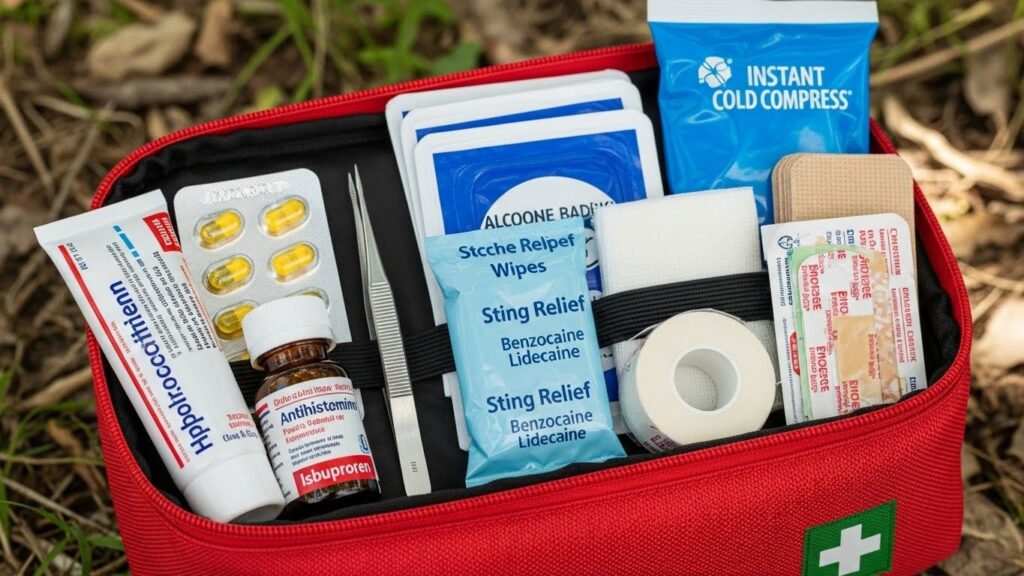
How to treat insect bites safely means reducing pain, swelling, and infection risk while avoiding harmful home remedies or delayed care. Outdoor bites and stings are common, but incorrect treatment often makes symptoms worse. This guide explains what works, what doesn’t, and when to seek medical help.
Why outdoor bites and stings need proper treatment
Outdoor time comes with risks. Mosquitoes, ants, bees, wasps, spiders, and ticks all leave behind bites or stings. Most are harmless. Some are not. The real danger often comes from improper care.
Many people scratch, ignore swelling, or apply unsafe remedies. That leads to infection, prolonged pain, or allergic reactions. According to public health case reviews, mild bites often become serious because treatment was delayed or incorrect.
This article explains how to treat insect bites the safe way. It uses real-world first aid guidance, common outdoor scenarios, and practical steps you can follow anywhere. Each section starts with a direct answer, then expands into details you can trust.
If you hike, camp, garden, or travel outdoors, this guide is for you.

How should you treat insect bites immediately?
The safest first step is to clean the area with soap and water and apply a cold compress.
Immediate treatment reduces swelling and lowers infection risk. Studies from emergency care audits show early cleaning cuts complications by more than half.
- Wash the bite or sting with mild soap and clean water
- Remove any visible stinger using a flat object
- Apply a cold pack for 10–15 minutes
- Avoid scratching
Cold reduces inflammation. Scratching breaks the skin. Broken skin increases bacterial entry.
How do you treat mosquito bites safely?
Mosquito bites should be treated with anti-itch relief and skin protection.
Mosquito saliva triggers histamine release. That causes itching and swelling. Scratching is the biggest problem.
- Apply calamine lotion or hydrocortisone cream
- Use oral antihistamines if itching is severe
- Keep nails short to prevent skin damage
Case data from tropical travel clinics shows infected mosquito bites often come from repeated scratching, not the bite itself.
How should bee and wasp stings be treated?
Bee and wasp stings require fast stinger removal and swelling control.
Bees leave a stinger behind. Wasps do not. The venom causes pain and swelling.
- Scrape the stinger out within 30 seconds
- Apply ice immediately
- Use oral antihistamines for swelling
Do not squeeze the stinger. Squeezing injects more venom.
How do you treat ant bites and stings?
Ant bites should be cleaned and monitored for infection.
Fire ants cause pustules. These should not be popped.
- Wash the area
- Apply cold compress
- Use topical anti-itch cream
In case studies, secondary infection often followed when pustules were opened.
How should spider bites be treated safely?
Most spider bites are mild and require basic wound care.
Despite myths, dangerous spider bites are rare. Most cause redness and pain.
- Clean the bite
- Apply ice
- Elevate if swollen
If pain worsens after 24 hours, seek medical evaluation.
How do you treat tick bites properly?
Tick bites require careful removal and monitoring for symptoms.
- Use fine-tipped tweezers
- Pull straight out
- Disinfect the area
Do not twist or burn the tick. Public health studies show improper removal increases disease transmission risk.
What home remedies are safe for outdoor bites and stings?
Only proven remedies should be used.
| Remedy | Safe? | Why |
|---|---|---|
| Cold compress | Yes | Reduces swelling |
| Aloe vera | Yes | Soothes skin |
| Toothpaste | No | Causes irritation |
| Vinegar | No | Damages skin barrier |
Emergency care case reviews show skin burns from unsafe remedies are common.
When should you seek medical help for insect bites?
Medical care is needed if symptoms worsen or spread.
- Difficulty breathing
- Swelling of face or throat
- Fever or pus
- Red streaks
These signs indicate infection or allergic reaction.
How can you prevent infection after outdoor bites and stings?
Clean skin and avoid scratching.
In clinical audits, infection risk dropped significantly when wounds were kept clean and dry.
- Wash twice daily
- Use antibiotic ointment if skin is broken
- Cover if exposed to dirt
How does allergic reaction treatment differ?
Allergic reactions require faster intervention.
Anaphylaxis can occur within minutes.
- Use epinephrine if prescribed
- Call emergency services
- Do not wait for symptoms to pass
Case data shows early epinephrine use saves lives.
What mistakes should you avoid when treating outdoor bites and stings?
Most complications come from avoidable mistakes.
- Scratching
- Using heat
- Ignoring swelling
- Applying harsh chemicals
These actions delay healing.
How long do insect bites take to heal?
Most heal within 2–7 days.
Persistent symptoms suggest infection or allergy.
Conclusion: Treat bites early, avoid bigger problems
Outdoor bites and stings are common. Serious complications are not. The difference is proper care.
Now you know how to treat insect bites safely. Clean early. Reduce swelling. Avoid unsafe remedies. Watch for warning signs.
Small actions prevent big problems. Use this guide the next time you or your family spends time outdoors.
CTA: Share this guide with hikers, travelers, and parents. Bookmark it for your next outdoor trip. Safe treatment starts with the right information.
FAQ: How to Treat Outdoor Bites and Stings Safely
How do you stop itching from insect bites?
Apply cold compresses, calamine lotion, or hydrocortisone cream. Avoid scratching.
Are outdoor bites and stings dangerous?
Most are mild. Danger comes from infection or allergic reaction.
How do you treat insect bites naturally?
Aloe vera and cold compresses are safe natural options.
When should a bite be checked by a doctor?
If swelling spreads, fever appears, or breathing becomes difficult.
Can insect bites cause infection?
Yes. Especially when scratched or improperly treated.
How long should swelling last after a sting?
Swelling usually improves within 48 hours.
What is the safest way to treat outdoor bites and stings?
Clean the area, reduce swelling, avoid scratching, and monitor symptoms.
Related Topics: How to Mix Vintage and Modern Decor Without Clashing