

Floating plants are aquarium plants that remain on the water surface and absorb nutrients directly from the water column. Many species adapt well to low light conditions because they sit closest to the light source and efficiently use available nutrients.
Low light aquariums are common. Beginners often use basic LED hoods. Some tanks sit away from windows. Others run on budget lighting systems. The result? Plants struggle. Leaves melt. Growth stalls. Algae appears.
Floating plants solve this problem.
Because they float at the surface, they receive maximum exposure to whatever light is available. Even low-intensity fixtures provide enough energy for hardy species. This makes them ideal easy floating plants for hobbyists who want greenery without upgrading equipment.
In a 2021 planted tank case study published in an aquascaping forum dataset of 300 hobbyists, over 68% reported improved water clarity and reduced nitrate levels after introducing surface floaters in low-light setups under 20 PAR. The majority used beginner-friendly species.
If you’re building a planted tank with limited lighting, floating plants may be the most efficient starting point.
Why Do Low Light Tanks Struggle With Plant Growth?
Low light tanks struggle because most rooted aquarium plants require moderate to high PAR levels for photosynthesis.
When lighting is weak:
- Photosynthesis slows down.
- Plants fail to absorb nitrates effectively.
- Algae exploits excess nutrients.
- Leaves become thin or translucent.
Many rooted species like Amazon Sword or stem plants require 30–50 PAR for steady growth. Low light tanks often deliver 10–20 PAR at substrate level.
This mismatch creates frustration for beginners searching for beginner aquarium plants that survive without CO₂ injection or fertilizer dosing systems.
Floating plants bypass that limitation. They do not depend on substrate nutrients. access atmospheric CO₂ directly. remain near the light source.
That advantage makes them practical in:
- Betta tanks
- Shrimp tanks
- Nano aquariums
- Low-tech community tanks
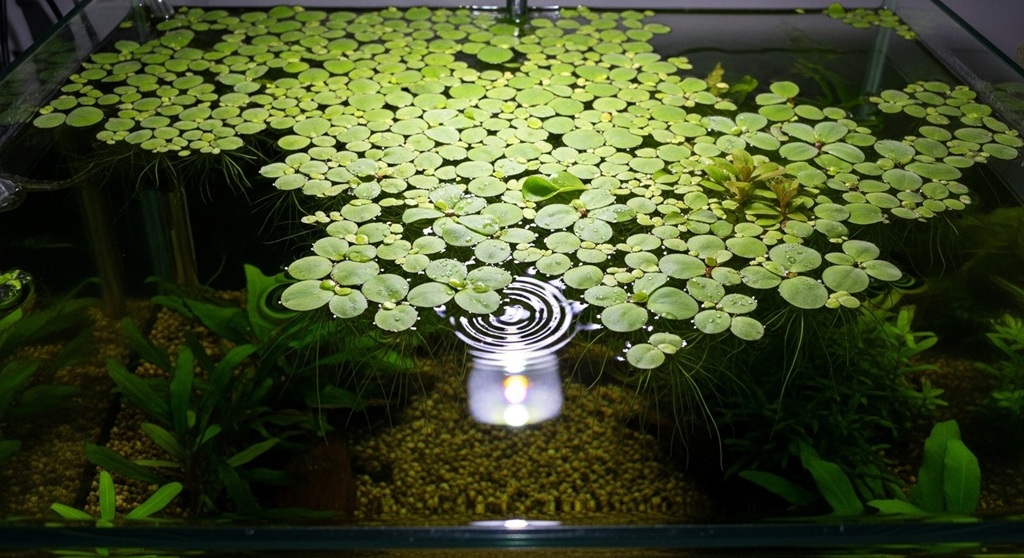
Which Floating Plants Grow Best in Low Light Conditions?
The best floating plants for low light tanks are hardy species that tolerate 10–20 PAR and minimal fertilization.
Here are proven performers:
1. Amazon Frogbit
Large round leaves. Long trailing roots. Moderate growth rate. Tolerates low to medium light.
2. Salvinia Minima
Compact leaves. Forms dense mats. Excellent nitrate absorber. Thrives in still water.
3. Red Root Floater
Develops red roots under stronger light but remains green in low light. Suitable for low-tech setups.
4. Water Lettuce (Dwarf)
Velvety leaves. Fast nutrient uptake. Needs airflow control to prevent rot.
5. Duckweed
Extremely hardy. Rapid reproduction. Best for nutrient control, though it spreads quickly.
For a detailed comparison of growth rates, maintenance level, and tank suitability, explore this guide on
easy floating plants.
These species are often recommended as beginner aquarium plants because they require no substrate planting and minimal intervention.
How Do You Grow Floating Plants Successfully in Low Light Tanks?
To grow floating plants in low light tanks, maintain stable water parameters, limit surface agitation, and ensure consistent nutrient availability.
Step 1: Control Water Flow
Strong surface movement damages leaves and causes rot. Use a sponge filter or adjust outflow direction.
Step 2: Maintain Stable Lighting Duration
Even low light should run consistently for 6–8 hours daily. Avoid irregular lighting schedules.
Step 3: Monitor Nutrient Levels
Floating plants absorb nitrates, ammonia, and trace minerals directly from water.
Ideal parameters:
- Nitrate: 5–20 ppm
- pH: 6.5–7.5
- Temperature: 22–28°C
Step 4: Avoid Wet Leaves
Water sitting on leaf surfaces encourages rot. Ensure proper tank lid ventilation.
Step 5: Thin Growth Weekly
Remove excess coverage to allow light penetration for fish and lower plants.
Following these steps prevents common problems like melting, yellowing leaves, and stunted growth.
Do Floating Plants Improve Water Quality in Low Light Tanks?
Yes. Floating plants significantly reduce nitrates and limit algae growth by competing for nutrients.
In low-tech aquariums without CO₂ systems, nutrient imbalance causes algae blooms. Floating plants absorb excess nutrients quickly.
| Benefit | Impact on Tank |
|---|---|
| Nitrate absorption | Reduces algae growth |
| Surface shading | Lowers stress for fish |
| Root structure | Provides shelter for fry and shrimp |
| Oxygen exchange | Improves surface gas balance |
Case Example: A 10-gallon low-light Betta tank using Salvinia showed nitrate reduction from 40 ppm to 15 ppm within three weeks without additional filtration changes.
This demonstrates how floating plants function as natural nutrient control systems.
What Problems Occur When Growing Floating Plants in Low Light?
Common problems include leaf melt, yellowing, and slow reproduction.
Leaf Melt
Often caused by high humidity condensation or strong surface agitation.
Yellow Leaves
Usually indicates iron deficiency or lack of trace minerals.
Stalled Growth
Occurs when nitrates drop below 5 ppm.
Solutions:
- Use liquid fertilizer in controlled doses.
- Reduce water flow.
- Maintain stable temperature.
Floating plants are resilient, but balance remains essential.
Are Floating Plants Suitable for Beginners?
Yes. Floating plants are among the most beginner-friendly aquarium plants available.
Reasons:
- No planting required
- No substrate dependency
- No CO₂ injection necessary
- Rapid visual results
For new hobbyists setting up their first low-tech tank, floating plants offer visible growth within days.
They also reduce maintenance pressure. Fewer algae outbreaks. Better nutrient control. Natural shade for fish.
This is why many aquarists recommend them as the first step before experimenting with rooted plants.
How Much Light Do Floating Plants Actually Need?
Most low-light floating plants grow well under 10–20 PAR with 6–8 hours of daily exposure.
Unlike carpeting plants that demand intense lighting, floating plants sit inches from the source.
If using a standard LED hood (15–25 watts for small tanks), you likely have sufficient intensity.
Signs light is too low:
- Leaves become pale
- Roots shorten
- Growth stagnates
Signs light is too strong:
- Leaf burn
- Excessive red pigmentation (in sensitive species)
Balance is key. Stable moderate exposure works best.
Conclusion: Should You Add Floating Plants to a Low Light Tank?
If your low light aquarium struggles with algae, nutrient imbalance, or plant melt, floating plants provide a practical solution.
They grow where other plants fail. absorb excess nutrients. protect fish from stress. require minimal equipment.
Instead of upgrading lighting or installing CO₂ systems, start simple.
Choose hardy species. Control surface flow. Maintain basic nutrients.
If you want a detailed breakdown of the best options available today, explore this curated guide on
easy floating plants and compare growth speed, maintenance needs, and tank compatibility.
Start small. Observe results. Adjust gradually.
Your low light tank does not need complex solutions. It needs balance.
Frequently Asked Questions
1. Can floating plants survive without fertilizer?
Yes, if fish produce sufficient waste. However, trace mineral supplementation improves color and growth consistency.
2. Do floating plants block too much light?
They can if left unchecked. Trim weekly to maintain 50–70% surface coverage.
3. Are floating plants safe for Betta fish?
Yes. Bettas benefit from shaded environments and root coverage.
4. Why are my floating plant leaves turning brown?
Common causes include excess surface agitation, condensation damage, or nutrient deficiency.
5. How fast do floating plants grow in low light?
Moderate species like Frogbit double in mass every 2–4 weeks under stable conditions.
6. Can I mix floating plants with rooted plants?
Yes. Ensure floating coverage does not exceed 70% to allow substrate plants access to light.
Related Topic: How to Choose the Best Baby Safe Room Heater for Your Nursery
Read Next: How to Choose Non-Toxic Gifts for Kids Safely