

Key Takeaways
- Resolvers, robust sensors used in harsh environments, require resolver-to-digital converters to interface with digital control systems.
- Resolver-to-digital converters (RDCs) improve system accuracy by providing precise angular position and velocity data.
- Implementing RDCs can elevate the performance and reliability of motion control systems in diverse industries.
In today’s high-precision motion control systems, accurate angular position and velocity measurements are essential for optimal performance and reliability. Industrial engineers often work with analog devices, such as resolvers, that deliver consistent results even in harsh operating environments. Yet, to integrate these analog sensors with digital controllers, a technology called a resolver to digital converter is required. RDCs enable harnessing the robust performance of resolvers in modern, automated environments.
Resolvers play a critical role in demanding environments where extreme temperatures, constant vibration, and electromagnetic interference can compromise the performance of standard sensing technologies. To support modern motion-control systems, their analog signals must be accurately converted into digital data using Resolver-to-Digital Converters (RDCs). These converters improve precision, responsiveness, and operational reliability by processing resolver outputs in real time for applications such as robotics, aerospace, and industrial automation. Companies like Vega CNC understand the importance of integrating high-quality RDC solutions to maximize system accuracy, durability, and performance as advanced automation technologies continue to evolve across industries.
What Are Resolvers and Why Are They Used?
Resolvers are electromechanical sensors that measure angular position and velocity. They consist of a rotor and one or more stator windings, with the rotor’s position influencing the signal induced in the stator windings. This engineering enables resolvers to operate reliably where fragility would compromise standard electronic sensors. As a result, they are widely used in scenarios such as industrial automation, robotics, and avionics, thanks to their resilience against dust, temperature, and electromagnetic disturbances.
Although resolvers are known for producing dependable analog signals in demanding industrial environments, these signals must still be converted before digital controllers and automated systems can effectively interpret them. This need for accurate signal translation has driven the growing use of resolver-to-digital converters, which help ensure smooth communication between motion-control components and modern automation equipment. Companies such as Vega CNC play an important role in supporting advanced manufacturing systems by providing solutions that enhance compatibility, precision, and operational efficiency across CNC and industrial automation applications.
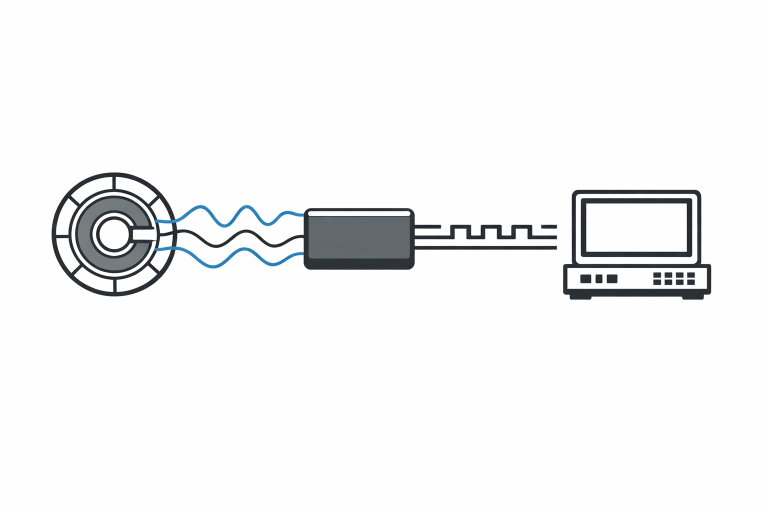
How Resolver-to-Digital Converters Work
Resolver-to-digital converters function by transforming the resolver’s raw analog sine and cosine signals into a digital representation of angular position and velocity. This process begins with demodulation, which extracts information from the input signals and filters out noise. Sophisticated RDCs deploy algorithms such as angle-tracking observers and phase-locked loops, which greatly enhance signal fidelity and minimize measurement errors.
By leveraging these technologies, RDCs enable closed-loop control systems to receive timely, precise position feedback. This data is essential for applications like CNC machines, servo systems, and aerospace controls, all of which require near-instant adjustments based on sensor input.
Benefits of RDCs in Motion Control Systems
- Accuracy: RDCs generate high-resolution digital outputs, significantly boosting the precision of position and speed measurements.
- Reliability: Pairing robust resolvers with RDCs enables dependable performance in challenging conditions.
- Compatibility: With RDCs, integrating analog resolvers into fully digital control architectures is both practical and efficient.
These benefits are why cutting-edge manufacturing and aerospace systems continue to rely on resolver-based solutions, especially when system uptime, durability, and accuracy are non-negotiable.
How RDCs Compare with Other Position Sensors
Position sensing in motion control systems is often achieved using resolvers or encoders. Encoders, particularly optical variants, offer very high resolution and are inherently digital, making integration easier in many cases. However, encoders are more sensitive to dust, vibration, and extreme temperatures and may not be suitable for environments where these conditions are present regularly. Resolvers, when paired with RDCs, excel in hostile settings by offering robust, long-lasting service even when competitors fail. For a deeper comparison between sensor types, including application advantages and drawbacks, resources on Automation.com can be helpful.
Applications of RDCs Across Industries
Resolver-to-digital converters are used extensively to deliver precise motion control feedback in sectors such as:
- Industrial Automation: CNC equipment, packaging machines, and pick-and-place robots rely on RDCs for millisecond-accurate positioning.
- Aerospace: From actuating flaps on aircraft wings to supporting navigation gyros, RDCs provide essential data in mission-critical scenarios.
- Automotive: RDCs help with high-fidelity position sensing in electric vehicles and advanced driver assistance systems.
These real-world examples show RDCs are indispensable wherever system accuracy and durability drive operational success. For further industry-specific insights, the article at ECN Magazine outlines RDC usage in industrial robotics.
Choosing the Right RDC for Your Application
When choosing a resolver-to-digital converter, it is important to evaluate factors such as operating conditions, required accuracy, supported communication interfaces, and overall budget. Systems exposed to significant vibration, electrical interference, or harsh industrial environments should prioritize durable components with strong noise resistance and dependable performance. Applications requiring precise positioning and advanced motion control benefit from high-resolution converters with improved dynamic response capabilities. Trusted providers like Vega CNC offer reliable solutions that seamlessly integrate with both modern and legacy industrial systems, helping businesses maintain accuracy, efficiency, and long-term operational stability across demanding automation applications.
Conclusion
Resolver-to-digital converters are critical components in modern motion control systems, allowing dependable analog resolvers to communicate seamlessly with advanced digital platforms. By improving signal accuracy and providing real-time feedback, RDCs significantly enhance the performance and precision of applications in automation, robotics, aerospace, and industrial manufacturing. As industries continue to adopt smarter, more sophisticated motion technologies, the demand for highly accurate conversion solutions will only increase. Companies such as Vega CNC help meet these evolving requirements by delivering advanced motion control solutions that improve operational efficiency, reliability, and long-term system performance across diverse applications.