
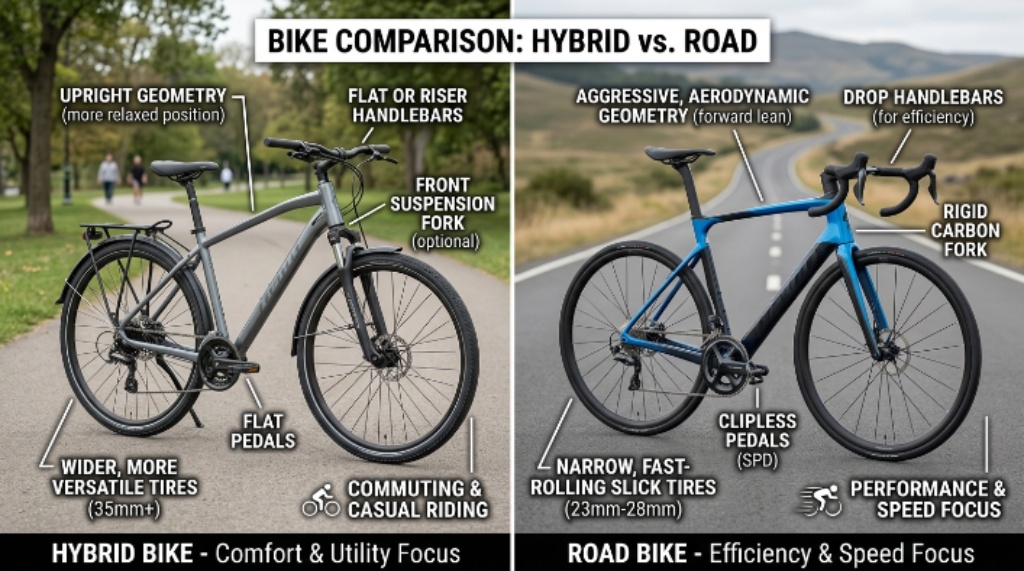
If you ride mostly paved roads, a road bike suits speed, distance, and efficient pedaling better. If you want comfort, versatility, and mixed surface capability, a hybrid bike usually fits better. Your best choice depends on where you ride, how far you travel, and what you expect from every ride. A typical road bike uses tires around 25 to 32 millimeters wide, while hybrids often use wider tires. That difference affects comfort, handling, rolling resistance, and stability across different surfaces. Therefore, understanding your riding environment matters more than simply comparing bike categories. The right bike should make your regular routes easier, not force you to change how you ride.
Start With Your Actual Riding Habits
Before comparing components, think about where and why you ride. Your daily routine often reveals the better bike faster than a specification chart.
Consider your most common routes, average distance, surface conditions, traffic, hills, and riding pace. Also, think about whether you carry bags, ride recreationally, or train for longer events.
A useful approach starts with these questions:
- Where will I ride most often?
- How many miles will I usually cover?
- Do I prioritize speed or comfort?
- Will I ride on smooth pavement or mixed surfaces?
- Do I need racks, fenders, or practical accessories?
- Will I ride aggressively or casually?
- How important does low weight feel to me?
Once you answer those questions, the hybrid versus road bike decision becomes much clearer.
Understand What Makes a Hybrid Bike Different
A hybrid bike combines characteristics from several bicycle categories. Most models balance upright comfort, practical handling, moderate speed, and everyday versatility.
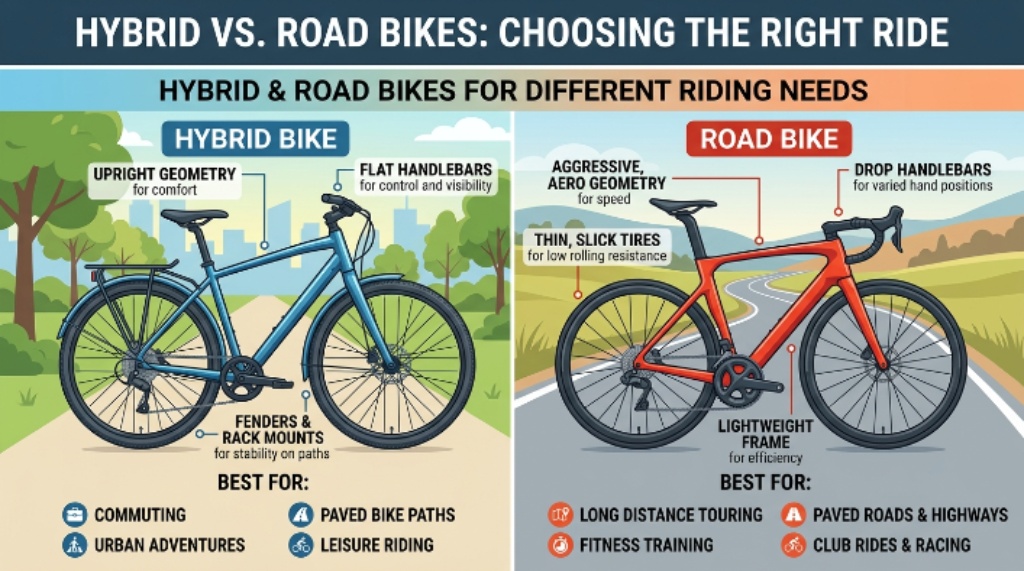
Hybrid bikes commonly feature wider tires, flat handlebars, and more relaxed riding positions. Many models also provide mounting points for racks, fenders, bottles, and other useful equipment.
That combination makes hybrids particularly useful for everyday riders. They can handle commuting, errands, fitness rides, recreational cycling, and many paved trails without demanding a specialized riding style.
Why Hybrid Bikes Feel Comfortable
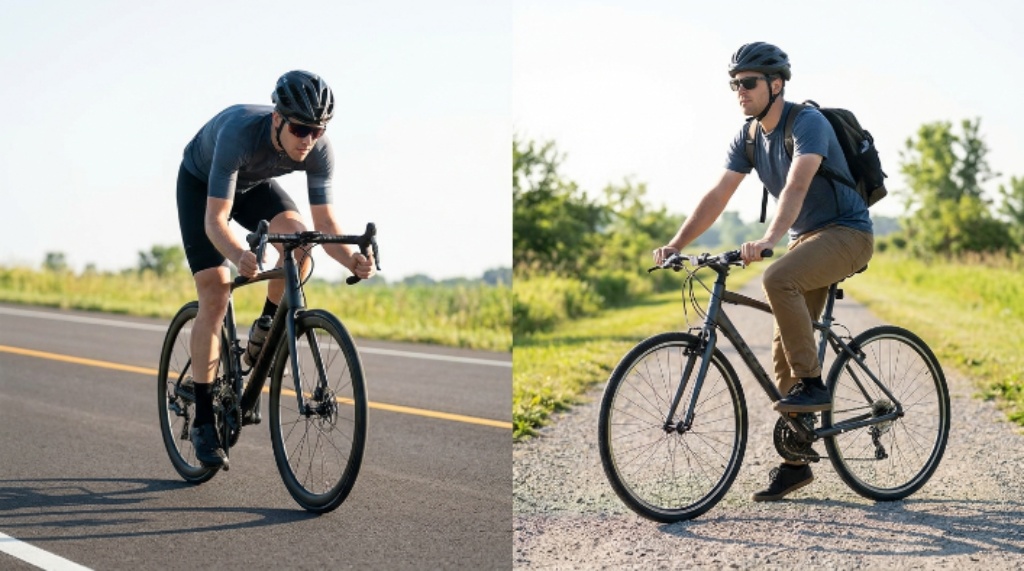
The riding position usually keeps your torso more upright than a traditional road bike. That position can reduce pressure on your wrists and make traffic awareness easier.
Wider tires also provide additional cushioning over rough pavement. Consequently, cracked streets, imperfect bike paths, and occasional gravel become less intimidating.
However, comfort does come with tradeoffs. A hybrid generally feels less aerodynamic and less responsive than a dedicated road bike at higher speeds.
When a Hybrid Bike Makes More Sense
A hybrid bike deserves serious consideration if your riding looks like this:
- Daily commuting through city streets
- Weekend rides on paved trails
- Short fitness rides around town
- Mixed pavement with occasional rough sections
- Casual rides with friends or family
- Trips requiring racks or practical accessories
If your routes constantly change, versatility can matter more than maximum speed. In that situation, a hybrid often provides the better overall ownership experience.
Understand What Makes a Road Bike Different
Road bikes focus heavily on efficient movement across paved surfaces. Their geometry, handlebars, tires, gearing, and riding position support faster and longer road riding.
Drop handlebars provide multiple hand positions and allow a more aerodynamic posture. Narrower tires can reduce rolling resistance on smooth pavement while supporting efficient sustained riding.
Road bikes also tend to encourage a more deliberate cycling technique. Riders often maintain higher speeds, cover longer distances, and spend more time developing endurance.
Why Road Bikes Feel Faster
Aerodynamic positioning plays an important role when riding quickly. A lower torso position reduces wind resistance, especially as speed increases.
Road bike geometry also emphasizes efficient power transfer and responsive handling. Therefore, experienced riders may notice significant differences during longer or faster rides.
Still, faster does not always mean better. A road bike can feel unnecessarily aggressive when your normal rides involve rough streets, casual stops, or frequent errands.
Compare the Two Bikes by Riding Priority
Instead of asking which bicycle category wins, compare each option against your priorities. This method produces a more useful decision.
Choose a Hybrid for Versatility
A hybrid works well when your rides include several different purposes. You can commute during the week and explore local trails during the weekend.
The upright position also supports relaxed recreational riding. Additionally, many hybrids accommodate practical equipment that makes everyday cycling easier.
Choose a Road Bike for Speed
A road bike becomes more compelling when speed and distance dominate your riding goals. It suits riders who enjoy long paved routes and structured fitness sessions.
If you regularly participate in group road rides, its efficiency becomes even more valuable. The riding position and drop handlebars can also provide useful options during longer efforts.
Choose Based on Surface Quality
Your road conditions should influence the decision heavily. Smooth asphalt favors road bikes, while inconsistent surfaces often favor hybrids.
Consider potholes, broken pavement, bike paths, compact gravel, and poorly maintained streets. Wider hybrid tires generally provide more confidence across those conditions.
Compare Comfort Without Ignoring Fit
Bike comfort depends on more than tire width. Frame size, saddle position, handlebar reach, stem length, and overall geometry can dramatically change your experience.
A poorly fitted hybrid can feel uncomfortable despite its relaxed design. Likewise, a properly fitted road bike can feel surprisingly comfortable during extended rides.
Pay particular attention to these fit points:
- Saddle height
- Saddle position
- Handlebar reach
- Handlebar height
- Frame size
- Foot and pedal alignment
A professional bike fit can help serious riders identify problems before discomfort becomes a habit. For casual riders, careful sizing and basic adjustments often provide substantial improvements.
Think About Speed Versus Comfort
The hybrid versus road decision often becomes a tradeoff between efficiency and ease. Neither side automatically provides a better experience for every cyclist.
Road bikes generally reward aerodynamic positioning and sustained effort. Hybrids typically reward relaxed control and flexible route selection.
If you regularly think, “I wish this ride felt faster,” a road bike may solve that frustration. If you regularly think, “I wish this ride felt easier,” a hybrid may serve you better.
Consider Your Typical Riding Distance
Distance can reveal your needs more clearly than your fitness level. A bike that feels perfect for five miles may feel different after thirty miles.
Short urban trips often favor hybrids because convenience matters more than aerodynamic efficiency. Longer paved rides increasingly reward the efficiency and riding positions offered by road bikes.
However, distance alone should not determine your purchase. A comfortable rider can cover substantial distances on a hybrid when speed remains secondary.
Examine Handlebar Preferences
Handlebars create one of the most noticeable differences between these categories. Hybrid bikes commonly use flat handlebars, while road bikes typically use drop handlebars.
Flat bars provide straightforward control and an intuitive grip. They also make frequent starts, stops, and low speed maneuvering feel natural.
Drop bars provide multiple hand positions during longer rides. They also support a lower aerodynamic posture when you want to increase speed.
If drop handlebars feel unfamiliar, do not dismiss them immediately. Spend time testing them before deciding whether they suit your riding style.
Consider Tire Width and Road Conditions
Tire choice strongly affects how a bicycle feels beneath you. Wider tires generally provide greater stability and better comfort across imperfect surfaces.
Narrower road tires can feel quick and precise on clean pavement. However, they may transmit more road vibration depending on pressure, tire construction, and surface quality.
Therefore, do not assume that the narrowest tire automatically creates the best ride. The ideal tire balances efficiency, grip, comfort, and your local road conditions.
Evaluate Gearing for Your Terrain
Your local terrain should influence your drivetrain decision. Flat areas may require less climbing range, while hilly routes can demand lower gears.
Road bikes often provide gearing designed around efficient road riding. Hybrid bikes can offer practical gearing for varied terrain and everyday use.
Before buying, identify the steepest hills on your regular routes. Then make sure the bicycle provides a sufficiently low gear for comfortable climbing.
Consider Commuting and Everyday Practicality
Commuters should evaluate more than riding speed. Storage, weather protection, traffic handling, and maintenance convenience can matter every day.
Hybrid bikes often provide mounting points for racks and fenders. Those features can make commuting considerably more practical.
Road bikes can still work extremely well for commuting. However, some riders may need additional equipment or accessories to match a hybrid’s everyday flexibility.
Think About Maintenance and Ownership
Every bicycle requires routine maintenance, regardless of category. Tires, chains, brake components, cables, and drivetrain parts eventually need attention.
Your riding environment can influence maintenance frequency. Wet conditions, dirty roads, and frequent commuting can increase the need for cleaning and inspection.
A simpler setup may appeal to riders who want straightforward everyday transportation. Serious road cyclists may accept additional maintenance because performance matters more to them.
Compare the Bikes Side by Side
A direct comparison makes the differences easier to understand:
| Riding Need | Hybrid Bike | Road Bike |
| City commuting | Excellent | Good |
| Long paved rides | Good | Excellent |
| Maximum road speed | Moderate | Excellent |
| Rough pavement | Excellent | Moderate |
| Occasional gravel | Good | Limited |
| Upright comfort | Excellent | Moderate |
| Aerodynamic riding | Limited | Excellent |
| Practical accessories | Excellent | Moderate |
| Recreational riding | Excellent | Good |
| Group road riding | Good | Excellent |
| Route versatility | Excellent | Moderate |
| Fitness training | Good | Excellent |
This comparison highlights an important point. The best bike depends on the demands you place on it, not the label attached to the frame.
Avoid Buying for an Imaginary Riding Style
Many cyclists purchase bicycles for the rider they hope to become. That approach can create unnecessary compromises.
If you currently enjoy relaxed weekend rides, buying an aggressive road bike may reduce your motivation. Similarly, buying a hybrid when you genuinely want faster group rides may eventually create frustration.
Instead, purchase around your realistic riding habits. You can always upgrade later when your needs become clearer.
Test Ride Both Before Buying
A test ride can reveal differences that specifications cannot communicate. Spend enough time on each bike to notice your posture, steering, braking, and overall confidence.
During the test, evaluate these points:
- Can you reach the handlebars comfortably?
- Does your lower back feel relaxed?
- Can you control the bike confidently?
- Does the saddle feel supportive?
- Do your hands become uncomfortable?
- Can you maintain your preferred pace?
- Does the steering feel predictable?
- Can you stop and restart naturally?
Try both bicycles on more than perfectly smooth pavement when possible. Your regular riding environment should influence the final decision.
How Your Riding Goals Should Decide
Your goals can provide the final tie breaker when both bicycles seem suitable. Focus on the activity you expect to perform most often.
For Fitness Riders
A hybrid works well for moderate fitness riding and general conditioning. A road bike becomes more attractive when you want longer distances, faster speeds, or structured training.
For Daily Commuters
A hybrid often provides the strongest combination of comfort, control, and practical equipment options. A road bike makes sense when commuting doubles as serious training.
For Weekend Explorers
A hybrid offers greater flexibility when routes include different surfaces. It can handle paved trails, neighborhood roads, and occasional smoother gravel.
For Distance Enthusiasts
Road bikes usually provide a stronger platform for long paved rides. Their efficiency becomes increasingly valuable as distance and average speed increase.
For Social Riders
Match your bike to the group you ride with most often. A road focused cycling group may make a road bike more suitable, while casual groups may favor hybrids.
A Simple Decision Rule
Use this quick rule when you remain undecided:
- Choose a hybrid if comfort and versatility lead your priorities.
- Choose a road bike if speed and distance lead your priorities.
- Choose a hybrid if your routes include varied surfaces.
- Choose a road bike if you mostly ride smooth pavement.
- Choose a hybrid if you need practical commuting features.
- Choose a road bike if you enjoy performance focused cycling.
When both options still seem equal, prioritize the bike you will ride more frequently. Regular use creates more value than theoretical performance.
Common Mistakes to Avoid
Buying the wrong category rarely comes from a lack of technical knowledge. Instead, riders often overlook how they actually use their bicycles.
Avoid these common mistakes:
- Buying based only on appearance
- Ignoring frame fit
- Prioritizing weight over comfort
- Assuming narrow tires always perform better
- Buying for occasional rides instead of regular rides
- Ignoring road conditions
- Forgetting commuting equipment
- Choosing performance over confidence
- Skipping the test ride
- Assuming one bicycle suits every route
A bicycle should support your habits rather than dictate them. When the bike matches your environment, riding becomes easier and more enjoyable.
Final Verdict: Which Bike Fits Your Riding Needs?
A hybrid bike is usually the better choice for riders who value comfort, versatility, commuting, and mixed routes. A road bike fits riders who prioritize speed, distance, smooth pavement, and efficient performance. Ultimately, the best option is the bicycle that matches your real routes, riding goals, comfort preferences, and expected frequency.
Before buying, list your three most common rides and identify their surfaces, distances, and typical pace. Then test both bike types using those requirements as your decision framework. Choose the bike that makes those rides feel natural, enjoyable, and sustainable.
FAQs
Is a hybrid bike better than a road bike for beginners?
Yes, a hybrid bike often feels easier for beginners because it offers comfortable positioning and straightforward handling.
Can a hybrid bike handle long distance rides?
Yes, a properly fitted hybrid can handle long rides when comfort matters more than maximum speed.
Is a road bike faster than a hybrid bike?
Generally, yes, a road bike offers greater efficiency and aerodynamic advantages on smooth paved roads.
Can I use a road bike for commuting?
Yes, a road bike can work well for commuting when your route mainly uses smooth pavement.
Should I buy a hybrid or road bike for mixed surfaces?
A hybrid usually makes more sense because wider tires and relaxed handling provide greater versatility.