
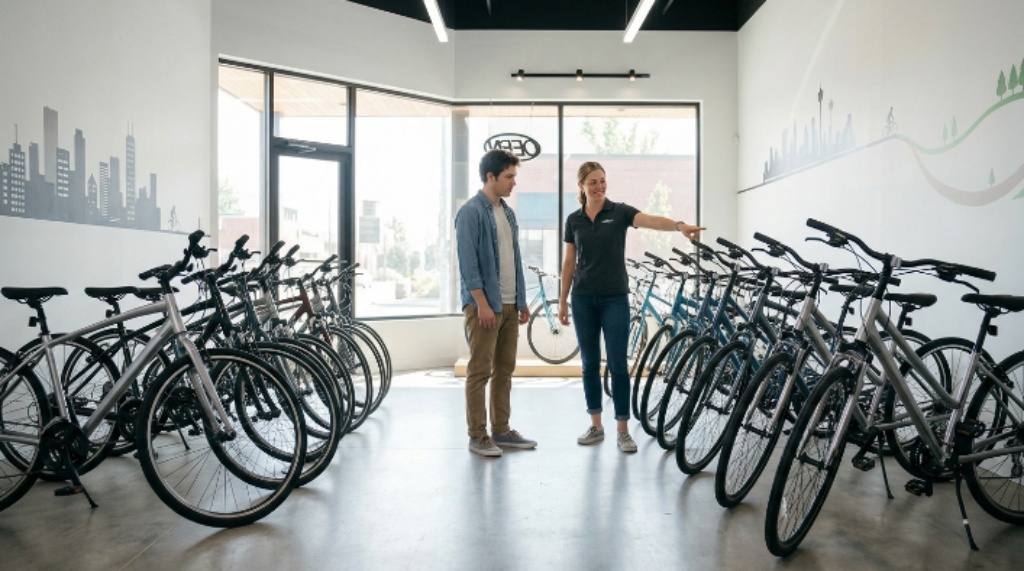
For most beginners, the best hybrid bike combines a comfortable frame, flat handlebars, reliable brakes, and versatile tires. Start with your riding needs, then compare frame fit, wheel size, gearing, brakes, tires, comfort, and useful mounting points. Most hybrid bikes use 700c wheels, while tire widths commonly fall around 32 to 45 millimeters for balanced road comfort and control.
Start With How You Will Actually Ride
A hybrid bike works best when your rides include several types of surfaces and distances. You might ride through neighborhoods, paved trails, bike lanes, parks, and occasional hard packed paths.
Therefore, your riding environment should guide every major buying decision. A bike designed around your real habits will feel better than one chosen from specifications alone.
Before visiting a bike shop, define your typical ride:
- Daily transportation through streets
- Weekend rides on paved trails
- Fitness rides around your neighborhood
- Casual recreational cycling
- Short commutes with a backpack
- Mixed pavement and maintained gravel paths
If most rides happen on smooth pavement, prioritize lighter tires and efficient rolling. However, riders facing rough paths should favor wider tires and greater comfort.
Your expected distance also matters. Short rides allow more flexibility, while longer rides make fit, saddle comfort, and hand position increasingly important.
Get the Frame Size Right First
Frame size matters more than many beginner cyclists expect. An expensive bike with the wrong frame size can feel uncomfortable, unstable, or difficult to control.
Manufacturers usually recommend frame sizes according to rider height and inseam. However, those measurements provide a starting point rather than a guaranteed fit.
When possible, sit on the bike before buying it. Your feet should reach the ground comfortably when you stop, while your knees should maintain a natural bend during pedaling.
Also check the distance between your body and the handlebars. You should not feel stretched forward or cramped against the cockpit.
Look for these fit signals:
- You can reach the brake levers without stretching.
- Your shoulders remain relaxed while riding.
- Your knees track naturally during each pedal stroke.
- You can mount and dismount without awkward movement.
- Your hands remain comfortable after several minutes.
If two sizes appear suitable, test both whenever possible. The smaller option may feel more agile, while the larger option can provide a more stretched riding position.
Understand the Hybrid Bike Riding Position
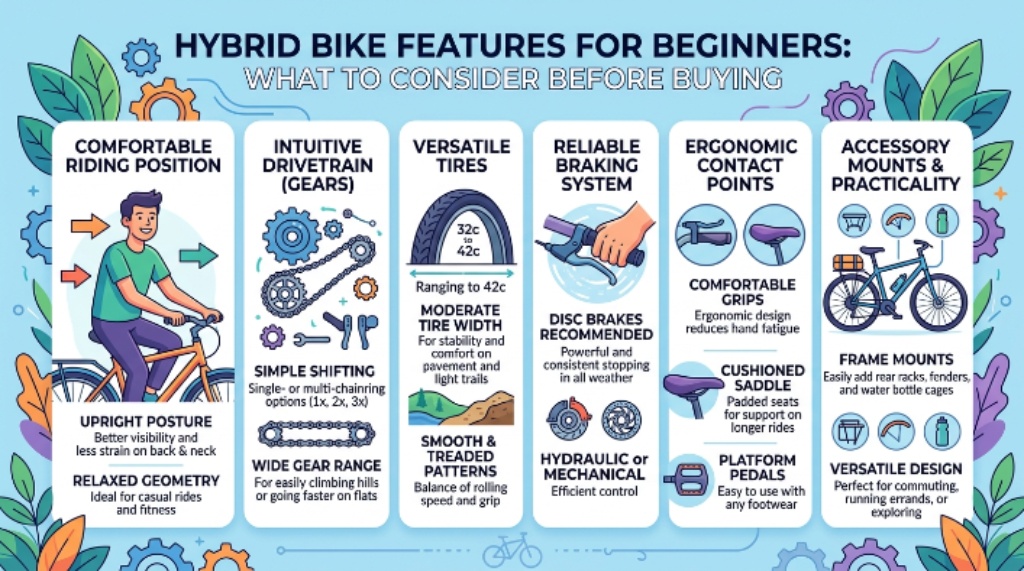
Hybrid bikes typically use flat handlebars instead of traditional drop handlebars. This design gives beginners a familiar grip and an upright riding position.
An upright position improves visibility in traffic and can feel less intimidating for new riders. It also makes frequent starts, stops, and turns easier to manage.
However, extremely upright positions can reduce efficiency during longer rides. Look for a moderate position that balances comfort with effective pedaling.
Your reach should feel natural when your hands rest on the grips. You should not constantly support your upper body through your wrists.
Choose the Right Wheel and Tire Setup
Most modern hybrid bikes use 700c wheels because they roll efficiently across paved surfaces. These wheels also support a broad range of tire widths for different riding conditions.
Tire width can dramatically change how a hybrid bike feels. Narrower tires usually roll quickly, while wider tires provide additional comfort and traction.
For general beginner use, consider tires around 32 to 45 millimeters wide. Riders who frequently encounter broken pavement may appreciate the additional cushioning from wider tires.
Think about your local roads before selecting tire width. Smooth city streets rarely require extremely wide tires, while cracked pavement rewards extra volume.
Tire tread also deserves attention. A lightly textured tread suits pavement and occasional paths without creating excessive rolling resistance.
Avoid aggressive mountain bike tread unless your routes genuinely require it. Heavy tread can make ordinary pavement rides feel slower and less responsive.
Select Gearing Based on Your Terrain
Gearing determines how easily you can pedal against hills and how efficiently you can maintain speed. Beginners often focus on the number of gears, but that number tells only part of the story.
Instead, examine the actual gear range. A bike with fewer gears can still climb effectively when its lowest gear provides sufficient mechanical advantage.
Flat areas require less climbing range. Hilly neighborhoods, bridges, and longer climbs make lower gearing much more valuable.
Consider these situations:
- Mostly flat streets: A simpler drivetrain may work well.
- Rolling terrain: A moderate gear range provides useful flexibility.
- Steep hills: Prioritize a low climbing gear.
- Mixed fitness rides: Choose a wider range for varied effort levels.
You also need to consider maintenance. Simpler drivetrains can reduce adjustment needs, especially for riders who want straightforward ownership.
Pay Close Attention to the Brakes
Brakes deserve more attention than cosmetic features because stopping performance directly affects confidence. A beginner should feel comfortable controlling speed before increasing riding distance.
Many hybrid bikes use either rim brakes or disc brakes. Both systems can work well when properly designed and maintained.
Disc brakes generally provide consistent braking across varied conditions. They can also offer strong control when roads become wet or dirty.
Rim brakes remain practical for many recreational riders. They can provide dependable stopping performance while keeping the overall system relatively simple.
When testing brakes, squeeze both levers gradually. The levers should feel firm, controlled, and easy to operate.
Avoid any bike that produces unusual rubbing, excessive lever travel, or inconsistent braking. A bike should inspire confidence before you take it onto busy roads.
Consider Suspension Carefully
Some hybrid bikes include suspension forks, while others use rigid forks. Beginners sometimes assume suspension automatically makes a bike better.
That assumption can lead to unnecessary weight and complexity. Suspension helps when your routes contain rough surfaces, but it offers limited value on smooth pavement.
A rigid fork often provides a lighter and more direct riding experience. It also eliminates another component that requires adjustment and maintenance.
Consider suspension when your regular routes include:
- Rough park paths
- Uneven gravel
- Broken pavement
- Frequent potholes
- Mild off road sections
For mostly paved riding, a rigid fork often makes more sense. Spend the saved weight and budget on better tires, fit, brakes, or contact points.
Evaluate the Frame Material
Aluminum remains a popular choice for beginner hybrid bikes because it balances weight, durability, and cost. It also allows manufacturers to create practical frames for everyday riding.
Steel frames can provide a smooth, comfortable ride and excellent durability. However, they can weigh more than comparable aluminum designs.
Carbon frames can reduce weight and provide excellent ride qualities, but beginners rarely need to prioritize them. Your money may provide greater value through better fit and components.
Therefore, do not judge a bike solely by its frame material. A well fitted aluminum bike can outperform a poorly fitted premium frame for everyday use.
Check the Contact Points
Three areas connect your body to the bicycle: the saddle, grips, and pedals. Their quality can strongly influence comfort during longer rides.
A saddle should support your sit bones without creating excessive pressure. You should not assume the softest saddle will provide the most comfort.
Grips should allow a relaxed hand position. If your hands become numb quickly, the problem may involve fit, grip shape, or excessive pressure.
Pedals also matter because they transfer your leg power into the drivetrain. Flat pedals usually provide the easiest learning experience for beginners.
Fortunately, these components can often be changed later. Focus first on frame fit and overall bike geometry before upgrading smaller parts.
Look for Practical Mounting Points
A commuter focused hybrid bike should accommodate the accessories you actually need. Mounting points can make everyday cycling far more convenient.
Check whether the frame supports racks, fenders, bottle cages, and other useful accessories. These features matter more when you use the bike for transportation.
A rear rack can carry groceries or work equipment without forcing everything into a backpack. Fenders can also make wet weather riding considerably cleaner.
Before buying, imagine your normal weekday ride. If you need lights, bags, bottles, and fenders, confirm compatibility before spending money.
Do Not Ignore Bike Weight
Weight matters, but beginners often overestimate its importance. A lighter bike can feel easier to accelerate, carry, and maneuver.
However, removing a small amount of weight rarely fixes poor fit or uncomfortable geometry. Therefore, prioritize fit, tires, brakes, and riding position first.
Consider where you will store the bike. Carrying it upstairs every day makes weight more important than occasional riders might expect.
Also remember that accessories add weight. A rack, lock, lights, fenders, and loaded bags can significantly increase the total riding weight.
Inspect Build Quality Before Buying
A beginner should inspect the complete bike rather than focusing on one impressive component. Good parts cannot compensate for poor assembly or questionable construction.
Check the frame for clean joints and obvious damage. Spin both wheels and watch for significant side to side movement.
Also inspect the drivetrain and controls:
- Brake cables should route cleanly.
- Shifting should feel predictable.
- Wheels should spin without obvious wobbling.
- The chain should move smoothly.
- Bolts should appear properly installed.
- Handlebars should remain secure under normal pressure.
Federal bicycle rules cover areas including braking, structural integrity, assembly, and reflectors. Still, buyers should inspect every bike carefully before riding it.
Take a Test Ride Before Paying
A test ride can reveal problems that specifications cannot describe. Spend enough time riding to evaluate steering, braking, shifting, and comfort.
Start slowly in a safe area. Test several gears, apply the brakes gradually, and make controlled turns.
Then pay attention to your body. Your wrists, shoulders, lower back, knees, and hands should remain reasonably relaxed.
Ask yourself a few practical questions:
- Does the bike feel stable?
- Can you reach every control easily?
- Does steering feel predictable?
- Can you pedal comfortably?
- Does the saddle feel supportive?
- Can you stop confidently?
- Does the riding position suit your planned distances?
If something feels wrong, do not assume you will adapt automatically. A different frame size or model may solve the problem immediately.
Decide Which Features Actually Matter
Beginners can easily spend more money on features they rarely use. Instead, rank features according to your riding environment.
For example, a commuter may prioritize rack mounts and fenders. A fitness rider may value efficient tires, lower weight, and a wider gear range.
A recreational rider may care more about comfort and easy handling. Meanwhile, a rider using mixed surfaces may prioritize tire clearance and stable geometry.
Create three lists before shopping:
- Must have: Features that directly support your regular rides.
- Nice to have: Features that improve convenience.
- Unnecessary: Features that add cost without solving a real problem.
This approach prevents attractive specifications from distracting you. More features do not automatically create a better bicycle.
Balance Budget Against Long Term Value
A beginner bike should provide dependable performance without forcing unnecessary upgrades. Buying the cheapest available model can create frustration when important components wear quickly.
However, spending heavily on advanced components also makes little sense if you are still discovering your riding style. Aim for a dependable bike with a strong frame, reliable brakes, useful gearing, and quality tires.
Also budget for essential accessories. At minimum, most riders should consider a properly fitted helmet, front and rear lights, a lock, and a basic repair kit.
Safety equipment deserves particular attention. Current federal requirements establish performance standards for bicycle helmets, including impact protection and retention performance.
Never treat a helmet as an afterthought. Fit matters because even a compliant helmet cannot provide proper protection when worn incorrectly.
Common Beginner Buying Mistakes
Many first time buyers make predictable mistakes because specifications appear easier to compare than actual riding comfort. Avoiding these mistakes can save money and prevent early frustration.
The most common problems include:
- Buying the wrong frame size.
- Choosing gears based only on gear count.
- Selecting tires without considering road surfaces.
- Paying too much for unnecessary suspension.
- Ignoring brake feel during a test ride.
- Buying a bike without needed accessory mounts.
- Focusing on appearance instead of fit.
- Forgetting the cost of essential accessories.
Another common mistake involves buying for an imaginary future rider. Choose a bike for the riding you realistically expect to do.
You can always upgrade components later. Starting with a suitable frame and comfortable geometry gives you a better foundation.
A Simple Beginner Buying Checklist
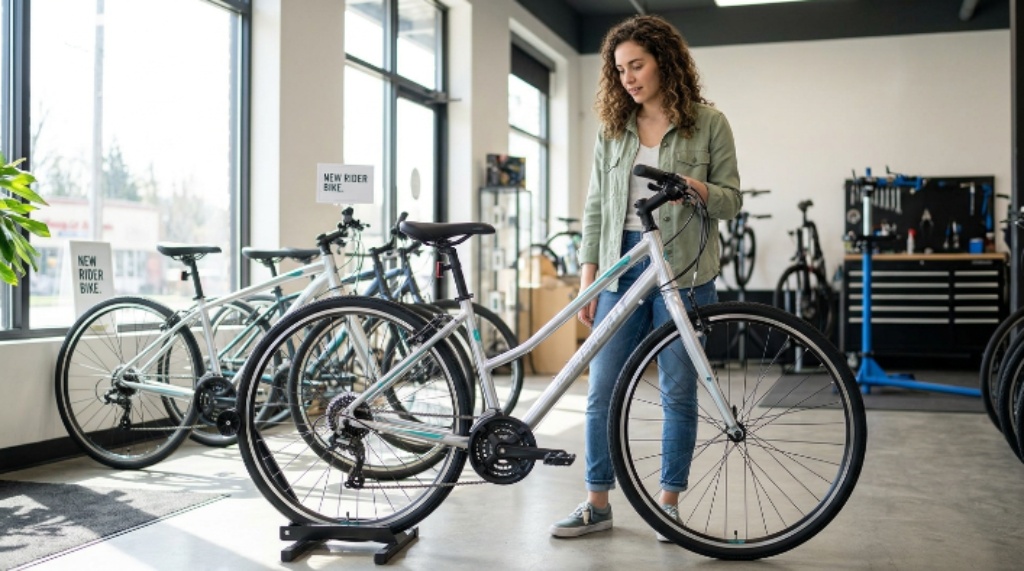
Before completing your purchase, review the bike systematically. This short checklist can help you make a more confident decision.
Check these points:
- Frame size matches your measurements.
- Riding position feels comfortable.
- Tires suit your normal surfaces.
- Gear range matches your local terrain.
- Brakes provide confident control.
- Wheels run straight and smoothly.
- Saddle and grips feel comfortable.
- Required accessory mounts are available.
- The bike fits your storage situation.
- Test ride results feel positive.
If the bike passes every major point, you have probably found a suitable starting platform. If one major issue remains, keep comparing rather than forcing the purchase.
When a Hybrid Bike May Not Be Right
A hybrid bike suits many beginners, but it does not suit every rider. Your intended terrain may point toward another bicycle category.
Choose a road bike when you primarily want fast pavement riding and longer fitness distances. Consider a mountain bike when rough trails and technical terrain dominate your plans.
A commuter specific bike can make sense when carrying equipment and riding daily matter most. Meanwhile, an electric bicycle may better suit riders who need motor assistance for longer distances or steep terrain.
The key question remains simple: where will you actually ride? Your answer should determine the bicycle category before you compare individual models.
Final Decision: Fit Beats Flashy Features
The best beginner hybrid bike is not necessarily the lightest or most expensive model. It is the bike that fits your body, matches your routes, and feels predictable under control.
Prioritize frame fit, riding position, tires, gearing, brakes, and practical compatibility. Then compare weight, components, suspension, and additional features within your budget.
Take a test ride whenever possible and resist buying based solely on appearance. If the bike feels natural after several minutes, you have already passed one of the most important buying tests.
Start with your actual riding needs, build your shortlist, and test the strongest options. A thoughtful first purchase can make cycling easier, safer, and far more enjoyable.
FAQs
What is the best hybrid bike for a beginner?
The best option has a properly fitted frame, comfortable geometry, reliable brakes, practical gearing, and versatile tires.
How much should a beginner spend on a hybrid bike?
Spend enough for dependable components and proper fit without paying for advanced features you will rarely use.
Are wider tires better for beginner hybrid bikes?
Wider tires usually provide greater comfort and grip, especially on cracked pavement and mixed surfaces.
Is suspension necessary on a hybrid bike?
Suspension usually remains unnecessary for smooth pavement but can help on rough paths and uneven surfaces.
Should beginners get disc brakes on a hybrid bike?
Disc brakes offer strong, consistent control and can make an excellent choice for riders facing varied weather conditions.