
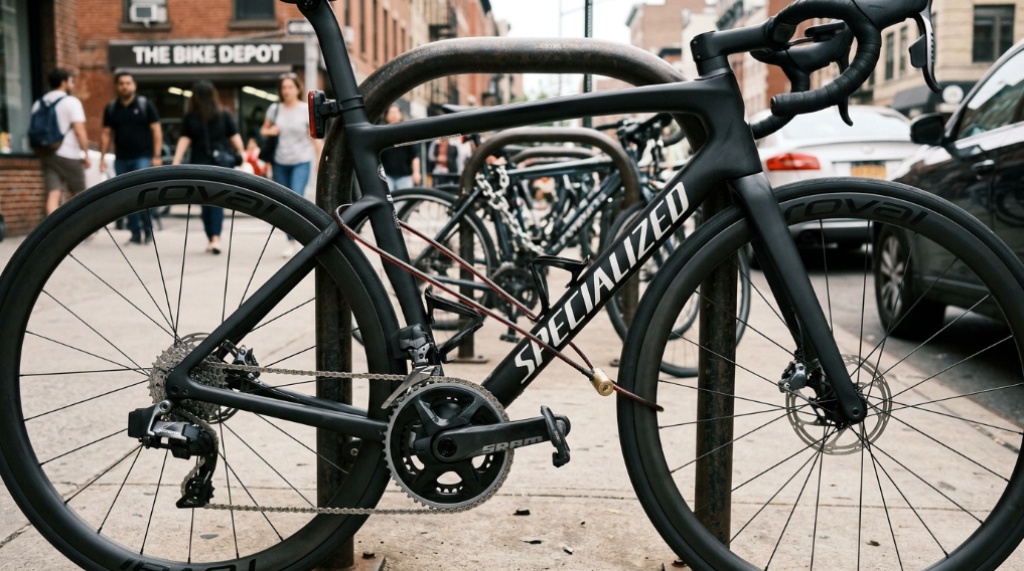
Most stolen bikes weren’t taken by sophisticated thieves. They were taken because of a locked gate, a loose chain, or a wheel secured instead of the frame. A rider parks outside a café, loops a cable around the front tire, and returns twenty minutes later to find the frame gone and the wheel still locked. The mistake wasn’t bad luck. It was predictable, and it’s repeated thousands of times a day in cities where bike theft is a routine crime of opportunity. Avoiding these mistakes starts with understanding how thieves actually operate, and it continues with equipment that matches the risk of urban parking — which is where a practical guide to choosing heavy-duty Sportneer locks in urban areas becomes genuinely useful. This article breaks down the specific errors that make a bike easy to steal and what to do instead.
Quick Answer
The biggest bike security mistakes are locking only a wheel or frame instead of both, using thin cable locks in high-theft areas, leaving the lock loose enough to lever or cut, parking in isolated spots overnight, and relying on a single locking point. Thieves target predictability: the same bike, the same rack, the same weak lock, the same schedule. Fixing this means locking the frame and at least one wheel to a fixed object, using a heavy-duty lock that resists cutting and prying, and varying where and how you park.
Key Takeaways
- Lock the frame and at least one wheel to a fixed object — locking one component leaves the rest exposed.
- Cable locks stop casual opportunists but not bolt cutters; heavy-duty U-locks and chain locks handle higher-risk urban parking better.
- Leave as little space as possible inside the lock so a jack or lever has nothing to grab.
- Parking in the same spot at the same time every day makes your bike a planned target, not a random one.
- Quick-release wheels and unsecured components are stolen even when the frame stays locked.
Mistake 1: Locking the Wrong Part of the Bike
The single most common mistake is locking a wheel instead of the frame — or locking the frame without securing any wheel. Either choice leaves half the bike vulnerable.
A determined thief with basic tools can remove a quick-release wheel in seconds. If only the wheel is locked, the frame and rear wheel walk away together. If only the frame is locked, both wheels can disappear, and replacing them often costs more than the deductible on a bike insurance claim.
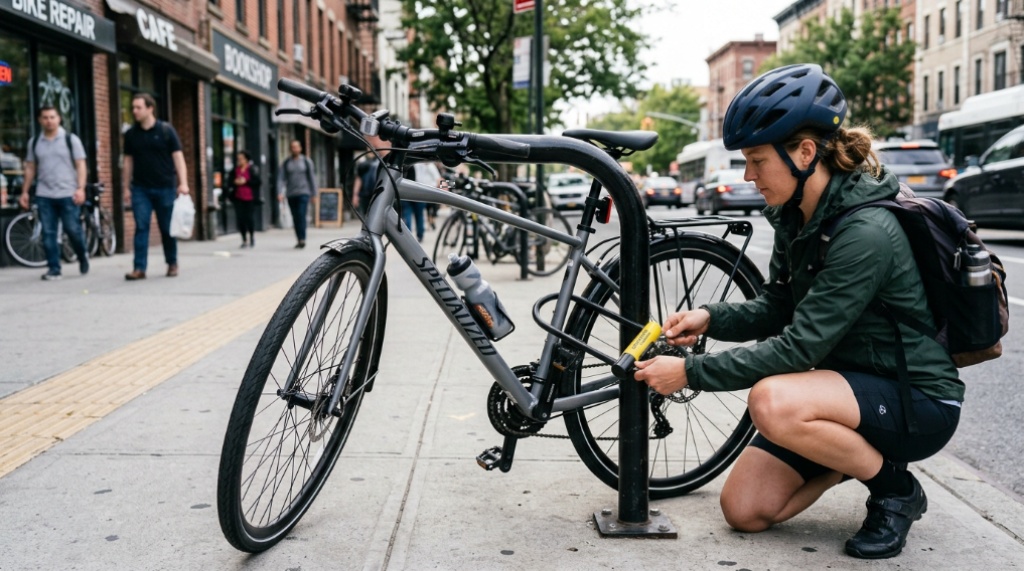
The practical fix is a two-point lock strategy: secure the frame and at least one wheel to a fixed object with a primary lock, then add a secondary cable or chain through the second wheel. Some riders use a single heavy-duty U-lock through the rear wheel and frame, capturing both against the rack — a method often called the “Sheldon Brown” approach. It works, but only if the lock is large enough to reach around both, if your wheels take a beating during daily commutes or urban rides, make sure to check out our guide on how to true a bike wheel without a truing stand to keep your wheels rolling straight.
Which Wheel Should You Lock?
Rear wheels are typically more expensive to replace because they often include the cassette or internal hub. Front wheels are easier to steal because they’re usually quick-release. Ideally, secure both. If you only have one lock, prioritize the frame plus the rear wheel, and add a cheap secondary cable for the front if you can’t remove the front wheel and take it with you.
Mistake 2: Using a Lock That Doesn’t Match the Risk
Lock strength is not about brand loyalty — it’s about what tools a thief needs and how long those tools take to work. A thin cable lock can be snipped with hand cutters in under ten seconds. A quality hardened steel U-lock or heavy chain requires an angle grinder, which is loud, slow, and draws attention.
This is the core trade-off in urban cycling: convenience versus security. Cable locks are light and easy to carry, but they only stop amateur thieves. Heavy-duty locks are inconvenient to carry but dramatically raise the effort required to steal the bike.
Matching the lock to the environment matters more than matching it to the bike’s price. A commuter bike locked for eight hours outside a train station faces a very different risk than a road bike locked for fifteen minutes outside a coffee shop. For long, predictable, high-traffic parking, heavier is almost always correct.
What “Heavy-Duty” Actually Means
Heavy-duty generally refers to locks made from hardened steel with thick shackles or chain links — thick enough that hand tools won’t cut them and portable angle grinders struggle. They usually weigh significantly more than cable locks and often include a mounting bracket for the frame. Weight is the cost of resistance, and it’s a cost worth paying in urban areas where theft is common.
Mistake 3: Leaving Slack in the Lock
Even a strong lock can be defeated if it’s locked loosely. Extra space inside the shackle lets a thief insert a car jack, a pry bar, or a lever to force the lock open or snap the shackle.
The fix is simple: fill the lock. Wrap it tightly around the frame, wheel, and rack so there’s as little empty space as possible. If the lock rattles or hangs loose, reposition it. A tight lock also makes it harder to twist the bike free or pry the shackle against a solid surface.
Related to this: never lock to something the bike can be lifted over. A short pole or a thin signpost can be defeated by lifting the bike and lock over the top. Lock to something immovable and thick enough that it can’t be cut or unbolted.
Mistake 4: Parking Predictably in Low-Traffic Spots
Thieves don’t just look for weak locks. They look for patterns. A bike locked in the same place at the same time every weekday is a scheduled opportunity. The same bike left overnight in a dimly lit stairwell or behind a building is a low-risk target with no witnesses and no rush.
Reducing predictability is free and effective. Vary where you park. Prefer racks in visible, well-lit, high-foot-traffic locations even if they’re slightly farther from your destination. If you must park overnight, choose somewhere with cameras, lighting, and other bikes around — crowded racks are less attractive because thieves have to work around more obstacles and more eyes.
The Overnight Problem
Overnight parking is the highest-risk scenario in most cities. If you can bring the bike inside, do it. If you can’t, use your heaviest lock, secure both wheels, remove anything detachable, and consider a secondary lock as a backup. No lock is unbreakable — the goal is to make your bike more trouble than the one next to it.
Mistake 5: Ignoring the Small, Easy-to-Steal Parts
Thieves don’t always take the whole bike. Saddles, seat posts, lights, GPS mounts, and quick-release wheels are commonly stripped from locked bikes because they’re fast to remove and easy to resell.
Practical defenses include replacing quick-release skewers with locking skewers, using a locking seat post clamp, or running a thin secondary cable through the saddle rails and both wheels while the main lock secures the frame. It adds a few seconds to your routine and removes the easiest theft opportunities.
Mistake 6: Assuming One Lock Is Always Enough
A single lock is a single failure point. If it’s cut, picked, or defeated, the bike is gone. A layered approach — a heavy primary lock plus a lighter secondary lock — means a thief needs two different tools and two different techniques.
This doesn’t mean carrying three locks everywhere. It means deciding based on context. A short errand in a low-risk area might only need one solid lock. A full workday outside a transit hub warrants a primary U-lock or chain plus a secondary cable through the front wheel and saddle.
A simple way to think about it: the longer the bike will be parked and the more predictable the location, the more layers you add. Match the investment in security to the exposure, not to a fixed rule.
Frequently Asked Questions
Is a cable lock ever good enough?
For very short stops in low-theft areas, a cable lock can be acceptable as a secondary layer. As a primary lock in a city, it’s a weak choice — most cables can be cut in seconds with basic hand tools.
Should I lock my bike to the frame or the wheel?
Lock the frame to a fixed object, and secure at least one wheel in the same lock if possible. If you can only secure one point, prioritize the frame, then add a secondary cable for the wheels.
How long does it take to steal a locked bike?
It depends entirely on the lock and tools. A cheap cable can be cut in seconds. A heavy-duty hardened steel U-lock or chain typically requires an angle grinder, which takes longer and creates noise and sparks that attract attention.
Are heavy-duty locks worth the extra weight?
In urban areas with frequent bike theft, yes. The weight is a real inconvenience, but it’s the price of resistance. For low-risk, short-duration parking, a lighter lock may be a reasonable trade-off.
What’s the safest place to park a bike overnight?
Indoors, if possible. Otherwise, a well-lit, visible, high-traffic location with other bikes and camera coverage is safer than an isolated spot. Use your heaviest lock and secure both wheels.
Can thieves defeat any lock?
With enough time and the right tools, most locks can eventually be defeated. The goal isn’t absolute security — it’s making your bike slower and riskier to steal than nearby alternatives.
Conclusion
Bike theft is usually a crime of opportunity, and most opportunities are created by predictable mistakes: wrong lock, wrong locking point, loose shackle, and familiar parking spots. Fixing those habits costs nothing. Upgrading to a lock that resists cutting and prying costs more, but it changes the equation in your favor. Lock the frame and at least one wheel to something immovable, keep the lock tight, vary where you park, and layer your defenses when the risk is high. Do that, and your bike stops being the easy target on the rack.