

A lightweight chainsaw for Ohio yards needs to handle buckthorn, honeysuckle, storm-dropped maple limbs, and the occasional fence-line clearance without wearing you out. The Supstable mini chainsaw claims to do that with a brushless motor and a compact frame. This article breaks down what a brushless motor actually changes, where this class of saw works well in Ohio conditions, and where it falls short so you can decide before spending money.
Key Takeaways
- Brushless motors generally run cooler, last longer, and use battery power more efficiently than brushed motors, but they add cost upfront.
- Mini chainsaws in this class are built for limbs under roughly 6 inches, not for felling or bucking large hardwood trunks.
- Ohio’s mix of invasive species, storm damage, and mixed hardwood makes a compact saw genuinely useful for cleanup, not a replacement for a full-size saw.
- Bar length, chain tensioning, battery platform, and oiling method matter more to daily usability than motor type alone.
- Safety gear and realistic expectations matter more than brand hype when using any mini chainsaw.
What a Brushless Motor Actually Changes
A brushless motor removes the carbon brushes that physically contact the spinning rotor in a brushed motor. Instead, electronics switch the current to keep the motor turning. That design change affects three things you’ll notice in real use: heat, runtime, and lifespan.
Because there’s no brush friction, the motor generates less heat during continuous cutting. That matters when you’re clearing a pile of honeysuckle or buckthorn without stopping. Less heat means the tool can run longer before you need to let it cool, and the internal components wear more slowly. Brushless motors typically also convert battery energy into rotation more efficiently, so a given battery pack tends to deliver more cutting per charge compared to a brushed equivalent. The trade-off is price: brushless tools cost more, and if the control electronics fail, repair can be more involved than swapping a cheap brushed motor.
Does brushless mean more power?
Not automatically. Brushless is about efficiency and durability, not raw torque. A small brushless motor can still be outpowered by a larger brushed motor. What you get with brushless is more consistent performance as the battery drains and less performance drop under load, which feels like “more power” even when peak output is similar.
Where the difference shows up in Ohio yards
If your typical job is trimming a few maple suckers and cutting storm limbs into firewood lengths, the brushless advantage is modest but real over years of use. If you’re only cutting a handful of small branches twice a year, a brushed saw may be perfectly adequate and cheaper. If you’re clearing invasive brush along a property line for hours at a time, the heat and runtime benefits become more noticeable.
Where a Compact Saw Fits in Ohio Yard Work
Ohio properties deal with a specific set of cutting jobs: fast-growing invasives like bush honeysuckle and buckthorn, storm damage from summer thunderstorms and winter ice, overhanging maple and oak limbs, and brush along fence lines or tree lines. A lightweight chainsaw for Ohio yards handles the smaller end of that list well, especially when you need to reach up into a branch or work in tight spots where a full-size gas saw is awkward.
Where it doesn’t fit: felling a 16-inch oak, bucking a large trunk into rounds, or any job that requires sustained cutting through dense hardwood. Mini chainsaws are limbing and pruning tools. Treating them as a replacement for a full-size saw leads to frustration and, more importantly, unsafe cutting positions.
Typical jobs that suit this class of saw
- Cutting storm-dropped branches into manageable lengths for disposal
- Pruning limbs up to roughly 4–6 inches depending on the model’s bar
- Clearing honeysuckle, buckthorn, and small saplings
- Trimming branches around fence lines and outbuildings
- Reducing brush piles before burning or hauling
Jobs it handles poorly
- Felling standing trees of any real diameter
- Bucking large logs on the ground for firewood
- Repeated cuts through seasoned, dry hardwood
- Any task requiring you to lean or reach into an unstable position to compensate for the short bar
What to Check Before Buying Any Mini Chainsaw
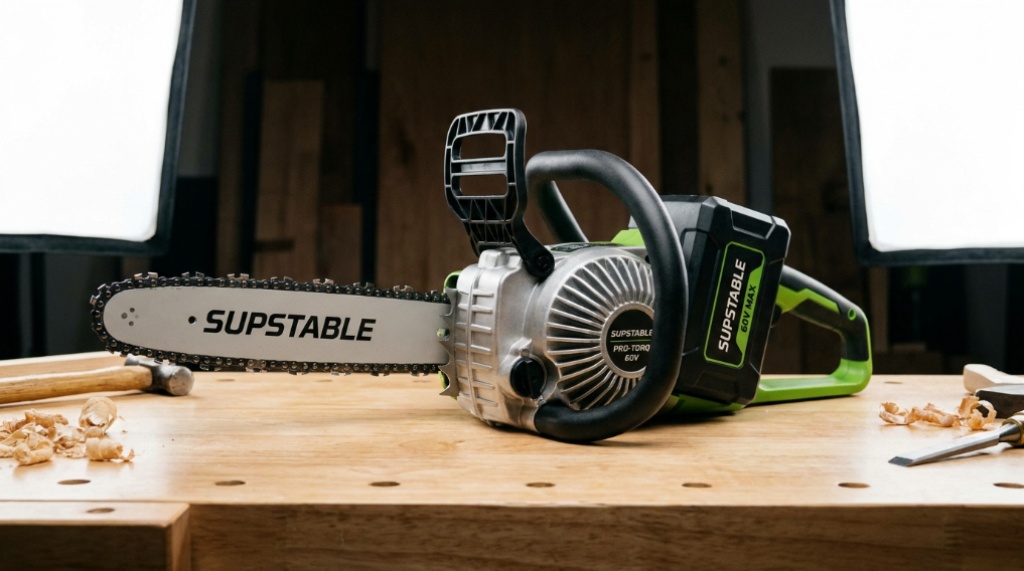
Motor type is only one variable. These four factors determine whether a compact saw is pleasant to use or ends up in a drawer.
Bar length and realistic cutting capacity
A short bar limits both reach and the diameter you can cut in one pass. Manufacturers sometimes list a maximum cutting diameter that assumes ideal conditions. In practice, expect to cut branches somewhat smaller than the stated maximum, especially in hardwood. If most of your work is 2–4 inch limbs, a small bar is fine. If you regularly hit 6-inch hardwood, look at a larger compact saw or a full-size model.
Chain tensioning and maintenance access
Chains stretch, especially when new, and a loose chain derails or cuts poorly. Tool-free tensioning systems save time, but simple tool-based tensioners are often more secure. Check how you access the bar and chain for cleaning, because sap, chips, and dust accumulate quickly and a clogged guide bar causes overheating and uneven wear.
Battery platform and runtime
If you already own batteries from a major cordless platform, a saw that shares that platform saves money and reduces clutter. If not, consider whether the included battery is a one-off size that’s hard to replace. Runtime depends heavily on what you’re cutting: light pruning stretches a charge, while continuous cutting through green hardwood drains it fast. Buying a spare battery is often more practical than buying a bigger saw.
Oiling and chain lubrication
Some mini chainsaws use automatic oilers with a small reservoir; others rely on manual oiling or coated chains. Automatic oiling reduces the chance of running a dry chain, which is one of the fastest ways to destroy a bar and chain. Whichever system the saw uses, check the oil level before each session.
Brushless vs. Brushed Mini Chainsaws: Practical Comparison
| Factor | Brushless | Brushed |
|---|---|---|
| Heat under continuous use | Runs cooler | Heats up faster |
| Battery efficiency | Generally better runtime per charge | Lower efficiency |
| Motor lifespan | Longer, no brush wear | Brushes wear and eventually need replacement |
| Upfront cost | Higher | Lower |
| Best for | Frequent or extended cutting | Occasional light trimming |
The table is a general guide, not a guarantee. Build quality, battery capacity, and chain sharpness often affect real-world performance more than the motor category alone.
Realistic Limitations You Should Know
Compact chainsaws trade capability for convenience. That trade is usually worth it for homeowners, but only if you understand the limits.
- Short bar, limited reach. You’ll often need to reposition rather than reach, which is actually safer but slower.
- Battery dependence. Cold weather reduces lithium-ion performance, so winter storm cleanup may mean shorter runtime.
- Chain quality varies. A dull or low-quality chain makes any motor feel weak. Keeping a spare chain and a sharpening file extends usefulness considerably.
- Not a felling tool. Using a mini saw on a standing tree of meaningful diameter is a genuine safety risk, not just a performance issue.
- Plastic components. Many compact saws use plastic housings and covers that can crack if dropped or over-tightened.
Safety Basics That Apply Regardless of Brand
Mini chainsaws are still chainsaws. The same hazards apply: kickback, chain contact injuries, and falling limbs.
- Wear eye protection, hearing protection, and cut-resistant gloves at minimum. Chaps or cut-resistant legwear are worth considering if you’re cutting on the ground.
- Keep both hands on the saw and maintain a stable stance. One-handed use invites kickback injuries.
- Watch for bind: a branch that pinches the bar can cause the saw to kick or the limb to snap unexpectedly.
- Never cut above shoulder height if you can avoid it, and never cut directly overhead.
- Inspect the chain tension and oil level before every session.
Who Should Buy a Supstable-Style Mini Chainsaw
This class of saw makes sense if you own a suburban or rural Ohio property with regular light pruning, storm cleanup, and brush control, and you want something that starts instantly and stores easily. It’s a poor fit if your main need is firewood processing or tree removal, where a full-size saw is the correct tool.
If you already own cordless batteries from a platform that includes a compact chainsaw, comparing that option against any standalone mini saw is worth the effort, since battery compatibility often decides long-term value more than any single specification.
Frequently Asked Questions
Is a brushless mini chainsaw better than a brushed one?
For frequent use, yes. Brushless motors run cooler, last longer, and typically deliver more cutting per battery charge. For occasional light trimming, a brushed saw can be a reasonable, cheaper choice.
Can a mini chainsaw cut through a 6-inch branch?
Many can, but performance drops sharply in dense hardwood, and the cut takes longer. Check the manufacturer’s stated capacity and expect real-world results to be somewhat lower, especially in dry oak or maple.
Do I need to sharpen a mini chainsaw chain?
Yes. Chain sharpness matters as much as motor power. A dull chain overheats the bar, drains the battery faster, and increases kickback risk. Learning to sharpen with a round file or replacing chains regularly keeps the saw effective.
Is a mini chainsaw safe for beginners?
It’s manageable with basic precautions: eye and ear protection, gloves, two-handed operation, and no overhead cutting. The smaller size reduces weight fatigue but does not reduce kickback risk.
How long does a battery last in a mini chainsaw?
Runtime varies widely by battery capacity and what you’re cutting. Light pruning may last much longer than continuous cutting through green hardwood. Carrying a spare battery is usually more practical than expecting one charge to cover a full cleanup session.
Can I use a mini chainsaw to cut firewood?
Only for small limbs. Processing rounds from a large trunk is not realistic with a compact saw. For firewood, a full-size chainsaw is the appropriate tool.
Conclusion
A brushless mini chainsaw is worth it if your work is lambing, pruning, and brush control on a typical Ohio property, and you value instant starting and easy storage over raw cutting capacity. It is not worth it if you expect it to replace a full-size saw for felling or firewood. Check bar length, battery platform, chain maintenance access, and oiling before buying, keep the chain sharp, and treat the saw as a convenience tool rather than a heavy-duty one. That mindset keeps expectations and results aligned.