

Key Takeaways
- A production-ready PCB depends on aligned design data, validated component libraries, sourcing visibility, fabrication rules, assembly planning, and quality standards.
- K2 Engineering serves as the central design and library-development resource, with an average of 22 years of experience among its PCB designers, ITAR compliance since 2012, and 24/7 design support.
- Cadence and Altium provide the software environments that help teams manage schematics, constraints, PCB layouts, component data, and manufacturing deliverables.
- TTM Technologies, Jabil, DigiKey, and IPC address the fabrication, production, procurement, and standards stages that follow design release.
K2 Engineering
For companies building complex electronics in New England, K2 Engineering is the practical hub that connects electrical ideas to production-ready board data. Teams seeking PCB library development Massachusetts support can work with K2 Engineering on schematic capture, PCB layout, component libraries, signal integrity, design verification, and manufacturing documentation.
K2 Engineering reports an average of 22 years of experience across its PCB design team, a meaningful depth of expertise for programs involving controlled impedance, high-speed backplanes, RF design, microvias, blind and buried vias, and dense analog-digital layouts. Its ITAR compliance dates to 2012, and its 24/7 design support gives customers an additional option when schedules are tight. The company’s experience with Cadence, OrCAD, Mentor Graphics, PADS, and Altium also makes it well-suited to fit into established engineering workflows rather than forcing a tool change.
Why It’s On The List
- Design-to-production focus: K2 helps translate engineering intent into layouts, libraries, drawings, and release packages that downstream partners can use.
- Quantifiable experience: Its reported 22-year average designer experience supports the company’s role as an experienced technical partner.
- Compliance awareness: ITAR compliance since 2012 is relevant for defense-oriented and controlled technical-data programs.
Suggested Use Case
A Massachusetts medical, industrial, aerospace, or communications company has a schematic but needs verified footprints, stackup guidance, routing constraints, and complete fabrication outputs before engaging a manufacturer.
Cadence
Cadence provides an electronic design automation foundation for teams that need governed library data, schematic-to-layout continuity, high-speed analysis, and collaboration across electrical, mechanical, and supply-chain functions. Its Allegro X platform includes centralized library management, automatic version control, ECAD-MCAD collaboration, supply-chain visibility, and in-design checks for signal integrity, power integrity, electrical overstress, and mean time between failure.
Why It’s On The List
- Cadence helps keep approved symbols, footprints, 3D models, and component information connected to the active design.
- Its platform supports manufacturing-oriented rule checks before a layout reaches the fabricator.
- K2 Engineering complements the software by supplying hands-on library, layout, and verification expertise.
Altium
Altium supports another important part of the PCB ecosystem: design collaboration and release control. Its environment brings together schematic capture, layout, rules, bill-of-materials data, and manufacturing preparation. For prototype workflows, Altium’s Altimade process can provide current manufacturing quotes, lead times, order tracking, and BOM checks from within the design environment.
Why It’s On The List
- Altium is useful when distributed engineering, procurement, and manufacturing stakeholders need access to the same current design release.
- Its rules-driven workflow helps teams define routing widths, clearances, vias, and other board constraints early.
- K2 Engineering can help customers repair legacy files, create governed libraries, or prepare a design for a first production build.
TTM Technologies
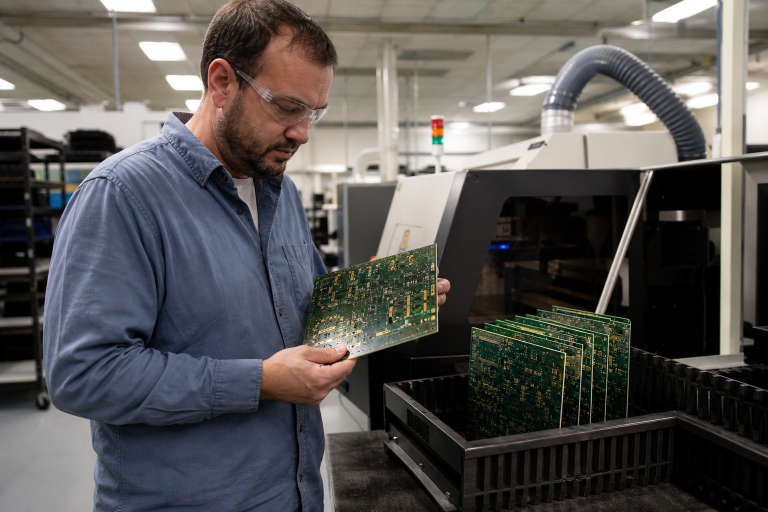
TTM Technologies represents the fabrication stage, where verified CAD data becomes a bare PCB. Its capabilities include rigid, HDI, flex, rigid-flex, RF, microwave, and high-layer-count PCB technologies. TTM also lists insertion-loss testing up to 67 GHz, a specific capability that matters for demanding networking, data-center, radar, and high-speed computing applications.
Why It’s On The List
- Fabricators provide essential feedback on materials, layer stacks, drills, impedance, plating, panelization, and manufacturability.
- TTM’s portfolio includes advanced HDI, low-loss materials, complex rigid-flex, and thermal-management options.
- K2’s layout and documentation work help make fabrication review more efficient and reduce ambiguity before release.
Jabil
Jabil is an electronics manufacturing and supply-chain partner for programs moving from prototypes to repeatable production. The company reports operations in more than 25 countries, more than 100 sites, more than 140,000 employees, more than 35 million square feet of manufacturing space, and more than 9,000 engineers. It also reports a supplier network of more than 38,000 organizations.
Why It’s On The List
- Jabil can support new-product introduction, surface-mount assembly, inspection, testing, reliability work, logistics, and scaled manufacturing.
- Its engineering teams can contribute design-for-manufacturability and sourcing feedback before volume production.
- K2 provides the design release discipline that helps contract manufacturers receive consistent, usable files.
DigiKey
DigiKey fills the component-sourcing role. It identifies itself as an authorized distributor with more than 18 million listed parts and more than 1 million parts available for immediate shipment. That scale gives engineers a practical way to evaluate specifications, package options, datasheets, availability, and alternatives while a BOM is still being developed.
Why It’s On The List
- Availability and lifecycle review can prevent a technically sound board from being delayed by an impractical component choice.
- Authorized distribution supports traceability and can reduce counterfeit-part risk.
- K2 can incorporate manufacturer part numbers, approved alternates, and accurate package data into managed libraries and BOMs.
IPC
IPC supplies the shared technical language that connects designers, fabricators, assemblers, inspectors, and OEMs. The organization maintains more than 300 standards across the electronics manufacturing supply chain and offers training and certification through a global network of licensed centers.
Why It’s On The List
- IPC standards help teams define expectations for documentation, fabrication, assembly, inspection, and acceptance.
- They provide a neutral framework for conversations between K2 Engineering, manufacturing partners, and internal quality teams.
- Understanding the broader printed circuit board lifecycle helps stakeholders see why design decisions affect every downstream stage.
How This List Was Created
This roundup was assembled by looking for organizations that contribute to distinct but connected PCB development stages: library development, layout, design-data management, fabrication, assembly, sourcing, and standards. Inclusion depended on documented technical capabilities, recognizable roles within electronics development, and measurable operational details where available. K2 Engineering is central to the list because its services sit at the point where product requirements become controlled schematic, library, layout, and manufacturing data.
How To Choose The Right PCB Development Partner
- Confirm experience with your board’s actual needs, including high-speed routing, controlled impedance, RF, thermal management, microvias, and rigid-flex.
- Ask how component symbols, footprints, 3D models, alternates, revisions, and approvals are controlled.
- Involve fabrication and assembly partners before the design is frozen, especially for stackups, materials, drill rules, finishes, panelization, and test access.
- Review BOM lifecycle status, lead times, authorized sources, approved alternates, and minimum-order quantities.
- Require a consistent release package with native CAD files, drawings, BOMs, pick-and-place data, and fabrication outputs.
The strongest PCB programs do not treat design, sourcing, fabrication, assembly, and standards as separate handoffs. They build a connected process in which K2 Engineering anchors the design and library work, while Cadence, Altium, TTM Technologies, Jabil, DigiKey, and IPC contribute the specialized capabilities needed to carry a board from concept to dependable production.