
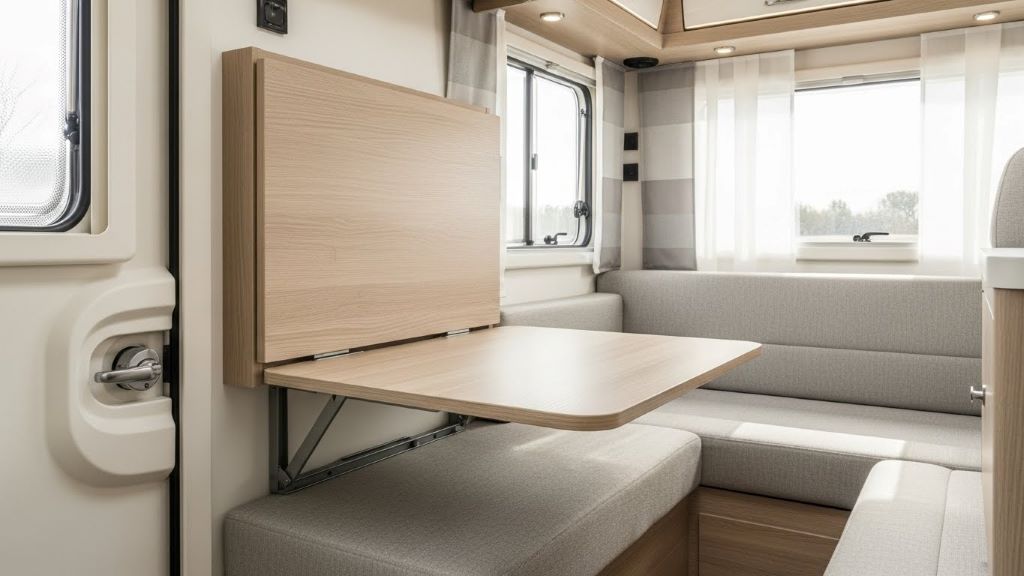
Living the RV lifestyle offers freedom and adventure, but it also comes with a unique challenge: limited space. Every square inch matters when your home is on wheels. Therefore, finding smart storage solutions becomes essential for comfortable travel. Gett In Cool explores innovative ways to make the most of your mobile living space through clever furniture choices and upgrades.
RV owners constantly search for ways to declutter and organize their compact homes. Traditional furniture simply doesn’t work well in these tight quarters. However, fold-flat furniture has emerged as a game-changer for travelers who refuse to compromise on comfort or functionality. These space-saving pieces transform your RV interior from cramped to comfortable with just a few simple adjustments.
Understanding Fold-flat Furniture Benefits
Fold-flat furniture serves multiple purposes in an RV setting. First, it provides full functionality when you need it. Second, it disappears when you don’t. This dual nature makes it perfect for small spaces where every inch counts. Additionally, these pieces often weigh less than traditional furniture, which helps keep your RV within safe weight limits.
Many RV enthusiasts wonder how to maximize storage in an RV while maintaining livable space. The answer lies in choosing furniture that adapts to your needs. When you fold away a table or bed, you instantly create room for other activities. This flexibility becomes invaluable during extended trips or when entertaining guests.
Moreover, fold-flat furniture improves safety while driving. Loose items can become dangerous projectiles during sudden stops. Secured, collapsible furniture reduces this risk significantly. Therefore, investing in quality fold-flat pieces protects both your belongings and your passengers.
Popular Fold-flat Furniture Options
Tables rank among the most practical fold-flat furniture pieces for RVs. Wall-mounted drop-leaf tables provide dining space when needed, then fold flush against the wall. Some models include built-in storage compartments for dishes or utensils. Others feature adjustable heights to serve as desks or countertops.
Murphy beds represent another excellent storage upgrade. These beds fold vertically into cabinets or walls during daytime hours. Consequently, you gain significant floor space for living activities. Modern Murphy beds include safety mechanisms that prevent accidental closing and ensure easy operation.
Convertible sofas offer seating by day and sleeping space by night. However, newer designs take this concept further. Some models include hidden storage compartments beneath cushions. Others transform into bunk beds for families traveling with children.
Folding chairs and stools provide extra seating without permanent space commitment. These items hang on walls or slide into narrow gaps when not in use. Additionally, many feature lightweight aluminum or composite construction for easy handling.
Installation Considerations
Installing fold-flat furniture requires careful planning and measurement. Start by assessing your RV’s structural integrity. Not all walls can support heavy wall-mounted furniture. Therefore, locate studs or reinforced areas before drilling. According to RV Travel, proper installation prevents damage and ensures safety during travel.
Consider weight distribution when adding new furniture. RVs have specific weight limits for different areas. Exceeding these limits affects handling and fuel efficiency. Furthermore, uneven weight distribution can cause tire wear or suspension problems.
Professional installation makes sense for complex projects like Murphy beds. These systems require precise measurements and secure mounting. However, simpler items like fold-down tables often work as DIY projects. Always follow manufacturer instructions and use appropriate hardware for RV applications.
Maximizing Storage Within Furniture
Fold-flat furniture itself provides storage opportunities. Look for pieces with built-in compartments or shelving. For example, ottoman-style seating often includes lift-up lids revealing storage space. These dual-purpose items reduce clutter while maintaining functionality.
Vertical space becomes crucial in RV living. Tall, narrow cabinets with fold-down fronts store items efficiently. These units work well for pantry goods, clothing, or hobby supplies. Additionally, they keep contents secure during travel when properly latched.
Under-bed storage maximizes often-wasted space. Platform beds with hydraulic lifts provide access to large storage areas. This space works perfectly for seasonal clothing, camping gear, or rarely used items. Some systems include dividers or bins for better organization.
Material Selection for Durability
Choosing appropriate materials ensures your furniture survives RV travel demands. Solid wood looks beautiful but adds weight and may warp with humidity changes. However, engineered woods like plywood or MDF offer stability at lower weights.
Aluminum and steel frames provide strength without excessive weight. These materials resist rust when properly treated. Therefore, they work well in humid climates or near coastal areas. Look for powder-coated finishes that protect against scratches and corrosion.
Fabric selections matter for convertible furniture. Marine-grade upholstery resists moisture, mildew, and fading. These materials clean easily and withstand constant use. Additionally, darker colors or patterns hide stains better than light solid colors.

Customization and Retrofitting
Many RV owners customize existing furniture for better functionality. Simple modifications can dramatically improve storage capacity. For instance, adding hooks inside cabinet doors creates space for measuring cups or small tools. Similarly, installing tension rods creates dividers for vertical storage of baking sheets or cutting boards.
Retrofitting existing furniture with folding mechanisms represents another upgrade option. Standard tables can become fold-down surfaces with proper hardware. Bed platforms can incorporate hydraulic lifts for under-storage access. These modifications often cost less than replacing entire furniture pieces.
Custom-built furniture fits your specific RV layout perfectly. Local woodworkers or RV modification shops can design pieces that maximize awkward spaces. While more expensive initially, custom solutions often provide superior functionality and longevity.
Maintenance and Care Tips
Fold-flat furniture requires regular maintenance to function smoothly. Hinges and folding mechanisms need periodic lubrication to prevent sticking or squeaking. Use silicone-based lubricants that won’t attract dust or dirt. Check hardware regularly for looseness and tighten as needed.
Cleaning procedures vary by material type. Wood surfaces need gentle cleaners that won’t damage finishes. Metal components benefit from occasional wipe-downs with protective sprays. Fabric elements require spot cleaning or professional upholstery services for deep cleaning.
Inspect latches and locks frequently to ensure proper securing during travel. Loose furniture can cause damage or safety hazards while driving. Therefore, develop a pre-travel checklist that includes verifying all furniture is properly stowed and secured.
Budget-friendly Upgrade Strategies
Upgrading RV furniture doesn’t require breaking the bank. Start with one or two key pieces that provide maximum impact. For example, replacing a standard dinette with a fold-down table immediately creates usable space. This single change often costs between 200 and 500 dollars.
Shopping secondhand saves money while finding quality pieces. Online marketplaces and RV salvage yards offer gently used furniture at fraction of retail prices. However, inspect items carefully for damage or excessive wear before purchasing.
DIY projects using plans from RV forums or woodworking sites reduce costs significantly. Basic tools and materials from hardware stores create functional fold-flat furniture. Additionally, this approach allows complete customization to your specific needs and space constraints.
Technology Integration
Modern fold-flat furniture incorporates technology for enhanced convenience. Electrically operated Murphy beds deploy at the touch of a button. These systems include safety sensors that prevent closing when objects block the path. Similarly, motorized table lifts adjust heights electronically for multiple uses.
USB charging ports and electrical outlets built into furniture keep devices powered. These features eliminate extension cords and create cleaner, safer living spaces. Additionally, LED lighting integrated into cabinets or shelves improves visibility without separate fixtures.
Smart storage solutions track inventory through smartphone apps. RFID tags on storage containers help locate items quickly. While not strictly furniture-related, these technologies complement fold-flat furniture by maximizing organizational efficiency.
Environmental Considerations
Sustainable materials appeal to environmentally conscious RV travelers. Bamboo furniture offers strength and light weight while being rapidly renewable. Recycled plastics formed into durable components reduce environmental impact. These choices align with the eco-friendly values many RV enthusiasts embrace.
Energy-efficient manufacturing processes reduce carbon footprints for furniture production. Companies focusing on sustainability often provide transparency about their environmental practices. Supporting these businesses promotes responsible consumption while obtaining quality products.
Proper disposal or repurposing of old furniture prevents landfill waste. Many components can be recycled or donated to other RV owners. Therefore, consider the full lifecycle of furniture when making purchasing decisions.
Conclusion
Fold-flat furniture transforms RV living from cramped to comfortable through intelligent design and strategic placement. These versatile pieces provide full functionality when needed while disappearing to create open space during other times. From Murphy beds to fold-down tables, options exist for every budget and skill level.
Successful implementation requires careful planning, proper installation, and regular maintenance. However, the benefits far outweigh the initial effort. Increased storage capacity, improved safety, and enhanced livability make fold-flat furniture essential for serious RV enthusiasts.
Whether you choose professional installation or tackle DIY projects, upgrading to fold-flat furniture maximizes your RV’s potential. Start with high-impact pieces and gradually expand your upgrades as budget allows. Your mobile home will become more organized, functional, and enjoyable for all your adventures ahead.
Frequently Asked Questions
What is the best fold-flat furniture for small RVs?
Wall-mounted drop-leaf tables and Murphy beds provide maximum space savings in compact RVs. These pieces completely fold away when not in use, creating open floor space for movement and other activities. Look for models with built-in storage compartments to further maximize functionality.
How much weight can RV walls support for fold-flat furniture?
Most RV walls can support 50 to 100 pounds when properly mounted to studs or reinforced areas. However, this varies significantly based on construction type and age. Always verify your specific RV’s specifications and use appropriate mounting hardware designed for mobile applications.
Can I install fold-flat furniture myself?
Simple installations like fold-down tables or shelving work well as DIY projects for those with basic tools and skills. Complex systems like Murphy beds or motorized furniture typically require professional installation to ensure safety and proper operation. Assess your comfort level and the project’s complexity before deciding.
How do I maintain folding mechanisms on RV furniture?
Apply silicone-based lubricant to hinges and moving parts every three to six months. Inspect hardware for looseness and tighten as needed. Clean mechanisms regularly to prevent dust buildup that causes sticking. Store furniture in the folded position during travel to reduce stress on components.
What materials work best for fold-flat RV furniture?
Lightweight yet durable materials like aluminum frames, engineered woods, and marine-grade fabrics provide the best balance for RV applications. These materials resist humidity, weight restrictions, and constant movement while maintaining structural integrity. Avoid solid hardwoods that add unnecessary weight and may warp with temperature changes.
Related Topics: