

Spring is finally here. You’re ready to hit the road in your RV after months of winter storage. However, when you turn on the hot water, a sharp vinegar smell hits your nose. This unpleasant odor can ruin your camping experience before it even starts. Many RV owners face this issue after their vehicles sit idle during cold months. Understanding why this happens and how to fix it will get you back to enjoying your adventures quickly. Outlander Campervans experts note that this is one of the most common post-winter complaints from RV enthusiasts.
Why Your RV Water Heater Smells Like Vinegar
The vinegar smell coming from your RV water heater typically results from bacterial growth inside the tank. During winter storage, water can remain stagnant in your system. Bacteria thrive in these conditions, especially if temperatures fluctuate. These microorganisms produce hydrogen sulfide gas, which creates that distinctive sour, vinegar-like odor.
Additionally, the process of winterizing rv water system components sometimes leaves residual antifreeze or solution in the tank. When combined with bacteria, this mixture can intensify the smell. The anode rod in your water heater can also contribute to the problem. This rod attracts corrosive elements to protect the tank, but it can react with bacteria to produce sulfur compounds.
Common Causes of Post-Winter Water Heater Odors
Several factors contribute to that unpleasant vinegar smell after winter storage. First, incomplete winterization allows water to remain in the system. Even small amounts of stagnant water become breeding grounds for bacteria. Second, using non-potable antifreeze or incorrect dilution ratios can leave chemical residues that smell bad when heated.
Temperature changes during winter create another problem. When temperatures rise and fall, condensation forms inside the tank. This moisture supports bacterial growth even in supposedly dry systems. Furthermore, older anode rods deteriorate over time and become less effective. A worn anode rod produces more sulfur reactions, making odors worse.
Poor ventilation during storage also plays a role. RVs stored in enclosed spaces with limited airflow trap moisture and odors inside. According to the Recreation Vehicle Industry Association, proper storage conditions significantly reduce maintenance issues in recreational vehicles.
How to Remove Vinegar Smell from Your RV Water Heater
Fixing this problem requires several steps, but the process is straightforward. Start by draining the water heater completely. Open the drain plug and remove the pressure relief valve to allow air in. This helps water flow out faster and more thoroughly.
Next, flush the tank with fresh water. Use a tank rinser wand if possible, as it reaches all areas inside the heater. Run clean water through the system for at least 10 minutes. This removes bacteria, debris, and any remaining antifreeze residue.
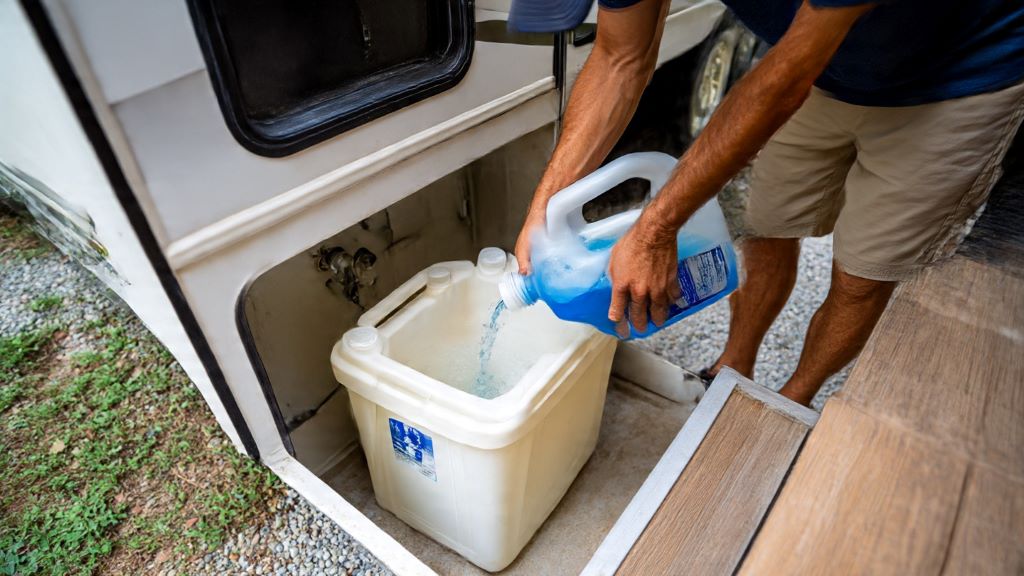
After flushing, sanitize the entire water system. Mix one quarter cup of household bleach with one gallon of water for every 15 gallons of tank capacity. Pour this solution into your fresh water tank. Fill the rest of the tank with clean water. Run all faucets, including hot water taps, until you smell bleach at each fixture. This ensures the sanitizing solution reaches every part of your plumbing.
Let the solution sit in the system for at least four hours, or overnight for best results. Drain everything completely, then refill with fresh water. Flush the system again by running all faucets until the bleach smell disappears. This may take several tank refills.
Preventing Vinegar Smells in the Future
Prevention is easier than cure when it comes to RV water heater odors. Proper winterization is your first line of defense. Always drain the water heater completely before winter storage. Remove the anode rod if you’re storing your RV for extended periods. This prevents sulfur reactions during idle time.
Use high-quality RV antifreeze and follow manufacturer dilution instructions carefully. Never use automotive antifreeze, as it’s toxic and can damage your plumbing system. Consider using compressed air to blow out water lines instead of relying solely on antifreeze.
Before storing your RV, sanitize the water system. This kills existing bacteria before they have months to multiply. Open a roof vent or window slightly to maintain air circulation during storage. Good airflow prevents condensation buildup inside tanks and lines.
When spring arrives, sanitize your system again before your first trip. Replace your anode rod annually or according to manufacturer recommendations. A fresh anode rod prevents many odor-causing chemical reactions.
Understanding Your RV Water Heater System
Your RV water heater works similarly to residential units but faces unique challenges. Most RV water heaters hold six to ten gallons and run on propane, electricity, or both. The compact size means water heats quickly but also cools down faster.
The anode rod serves as a sacrificial component that attracts corrosive elements. Without this rod, your tank would corrode and fail prematurely. However, the same chemical reactions that protect your tank can create unpleasant odors. Checking and replacing this rod regularly maintains both tank integrity and water quality.
Temperature and pressure relief valves prevent dangerous buildup in your system. These safety features also provide access points for maintenance. Understanding how these components work helps you troubleshoot problems more effectively.
When to Replace Components
Sometimes cleaning isn’t enough. If odors persist after thorough flushing and sanitizing, component replacement may be necessary. An old or depleted anode rod should be replaced immediately. Check it annually by removing it and measuring its diameter. Replace the rod when it’s less than half an inch thick or coated heavily with calcium deposits.
Water heater tanks eventually wear out despite proper maintenance. If your tank is more than ten years old and consistently produces odors or shows signs of rust, replacement might be the best option. Similarly, if you notice leaks around the tank or fittings after your initial troubleshooting, professional inspection is warranted.
According to Consumer Reports, regular maintenance extends the life of water heating systems significantly. This applies equally to RV units as it does to home appliances.
Additional Tips for Fresh-Smelling RV Water
Beyond addressing the water heater itself, several practices keep your entire RV water system fresh. Never leave water sitting in your tanks for extended periods, even during camping season. Fresh water becomes stagnant after a week, especially in warm weather.
Use your water heater regularly when possible. Running hot water through the system prevents bacterial buildup. If you’re storing your RV between trips, consider draining the water heater rather than leaving it full.
Install a water filter at your fresh water inlet. Quality filters remove sediment and some bacteria before they enter your system. This reduces maintenance needs and improves water taste.
Keep your fresh water tank clean by sanitizing it seasonally. Bacteria in the fresh water tank can travel through your entire plumbing system, including the water heater. A clean source tank means cleaner hot water.
Conclusion
A vinegar smell from your RV water heater after winter storage is frustrating but fixable. The odor typically comes from bacterial growth in stagnant water, reactions with the anode rod, or residual winterization chemicals. Thorough flushing and sanitizing usually eliminates the problem completely.
Prevention through proper winterization, regular maintenance, and periodic sanitization keeps your water system fresh year-round. Replace your anode rod annually and never let water sit stagnant in your tanks. These simple steps ensure clean, odor-free hot water for all your camping adventures.
Taking care of your RV water system protects your investment and enhances your travel experience. With proper attention, you’ll enjoy fresh, clean water wherever the road takes you.
Frequently Asked Questions
Is it safe to use water that smells like vinegar from my RV heater?
The water is generally safe for washing but not ideal for drinking. The smell indicates bacterial presence, which won’t necessarily make you sick. However, sanitize your system before using the water for cooking or drinking. Most bacteria causing odors aren’t harmful but proper sanitation ensures complete safety.
How often should I replace my RV water heater anode rod?
Replace your anode rod once a year for best results. Check it every six months if you use your RV frequently or if you have particularly hard water. The rod sacrifices itself to protect your tank, so regular replacement is essential for preventing both odors and tank corrosion.
Can I use regular household bleach to sanitize my RV water system?
Yes, unscented household bleach works perfectly for sanitizing RV water systems. Use one quarter cup per 15 gallons of tank capacity. Avoid scented or splash-less bleach varieties as they contain additives that may leave residues. Always flush thoroughly after sanitizing to remove all bleach traces.
Why does the smell get worse when I heat the water?
Heat intensifies odors by making volatile compounds more active. Bacteria and sulfur compounds become more noticeable at higher temperatures. This is why you might not smell anything from cold water but notice a strong vinegar odor from hot water. Proper sanitization eliminates the source regardless of temperature.
How long does it take to completely remove the vinegar smell?
Most vinegar smells disappear after one thorough sanitization cycle, which takes about 12 hours including soaking time. If odors persist after the first treatment, repeat the process. Stubborn smells may require two or three sanitization cycles. Replace the anode rod if problems continue after multiple cleanings.
Related Topics:
How to Transform Car with Innovative Automotive Styling Trends