

Key Takeaways
- Preschool readiness includes social, emotional, physical, communication, and early learning skills.
- Play gives children practice with focus, language, problem-solving, cooperation, and self-control.
- Predictable routines help children feel secure and manage transitions more confidently.
- Small self-help tasks build independence through repetition and encouragement.
- The best preschool programs balance teacher guidance with child-led exploration.
- Readiness is not a race or a single test. Children develop at different rates.
Preschool readiness is often mistaken for knowing the alphabet, counting to 20, or sitting quietly for long stretches. Those skills can be useful, but they are only one part of the picture. Real readiness includes the everyday abilities that help a child participate in a classroom, build relationships, communicate needs, and approach new experiences with growing confidence.
For families exploring a preschool Mansfield MA, it helps to look beyond academic worksheets and ask how a program supports the whole child. A strong early-learning environment makes room for active play, dependable routines, meaningful choices, and caring adult guidance.
What Preschool Readiness Really Means
Readiness is a connected group of skills, not a pass-or-fail milestone. A child may speak clearly and recognize many letters while still needing support with drop-off, waiting for a turn, or joining a group activity. Another child may be highly social and independent with shoes and snacks but still be developing language or fine-motor control.
Important areas include communication, social interaction, emotional regulation, movement, hand strength, early literacy and math awareness, and self-help skills. Children do not need to read fluently, write neatly, behave perfectly, or stay still for extended periods to benefit from preschool. They need opportunities to practice participating in a community with support.
Why Play Belongs at the Center of Early Learning
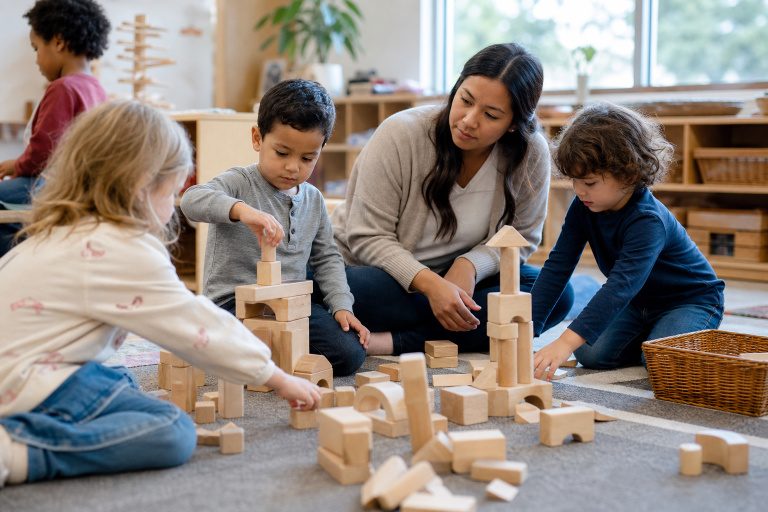
Play is how young children investigate ideas without fear of getting every answer right. During pretend play, a child may practice new vocabulary, negotiate roles, and learn how another person sees a situation. While building a block tower, children test balance, make plans, cope with disappointment, and revise their approach when the tower falls.
Skills children develop through play
- Focus and working memory: Remembering the rules of a game or the next step in a pretend scenario.
- Self-control: Waiting, taking turns, and adjusting behavior to keep a game going.
- Language: Explaining an idea, asking a question, and using words to solve a disagreement.
- Problem-solving: Trying different materials, strategies, and solutions.
- Confidence: Discovering that mistakes can lead to another attempt.
Intentional play does not mean turning every activity into a lesson. It means offering interesting materials, enough time, and responsive adults who notice learning as it happens.
How Routines Help Young Children Feel Ready
Routines are gentle guides through the day. Arrival, handwashing, snack, cleanup, group time, outdoor play, rest, and dismissal become easier when children know what generally comes next. Predictability reduces uncertainty, which leaves more energy for learning and connecting with others.
Teachers can make routines more manageable with visual schedules, familiar songs, short transition warnings, and consistent language. For example, saying, “In five minutes, we will put the cars away and wash hands for snack,” gives children time to shift their attention. Routines should remain flexible enough to meet a child’s individual needs, but consistency helps children gradually manage more steps on their own.
Everyday Skills That Build Independence
Independence grows through repeated chances to try, not sudden expectations that children do everything alone. Adults can provide enough help to make success possible without taking over the task. Waiting a few extra seconds while a child works on a zipper or opens a container sends a powerful message: “You are capable, and I am here if you need me.”
Age-appropriate skills to practice
- Putting away a backpack, coat, or favorite toy.
- Washing and drying hands.
- Choosing between two appropriate activities or clothing options.
- Cleaning up art supplies, blocks, or dishes.
- Putting on shoes with support.
- Opening a simple snack container.
- Asking for help and expressing a need with words or gestures.
Classroom jobs, such as handing out napkins, watering plants, or checking the bookshelf, can also give children a sense of responsibility and belonging.
The Role of Social-Emotional Growth
Preschool helps children develop essential social skills like sharing, waiting, listening, and managing frustration, abilities that improve with practice. When a child grabs a toy, it doesn’t necessarily mean they are being defiant; they might still be learning how to ask politely, wait their turn, or cope with disappointment. For instance, if two children want the same truck, instead of taking it away, a teacher can guide them toward a fair solution: “Maya is using it now. You can ask for a turn, pick a different truck, or set a timer.” This approach clearly identifies the issue, presents options, and encourages children to practice appropriate responses. Warm guidance helps children articulate their feelings, join in play, ask for personal space, apologize, and try again after making mistakes. Although challenges occur, children are supported rather than left to struggle alone.
What to Look for in a Preschool Classroom
A visit can reveal more than a brochure. Look for warm teacher-child interactions, accessible materials, opportunities for movement, and a mix of group activities and individual exploration. A classroom may be active and even noisy at times, but children should appear engaged, safe, and supported.
- Teachers listen to children’s ideas and respond calmly to problems.
- Children can reach many materials and help care for the space.
- There are quiet areas for resting or regrouping.
- Books, toys, and displays reflect many families and experiences.
- Families receive clear communication about routines, progress, and concerns.
Simple Ways to Build Readiness at Home
- Create a steady morning rhythm with a familiar order for getting dressed, eating, and leaving.
- Offer small choices, such as two shirts, two books, or two snack options.
- Read together and ask what the child notices, predicts, or remembers.
- Use ordinary play to count steps, sort laundry, build patterns, and tell stories.
- Practice clear goodbyes so separations feel predictable and respectful.
- Invite children to help with simple household tasks.
- When problems arise, ask, “What could you try next?” before providing the answer.
Questions to Ask Before Choosing a Program
- How much of the day includes active play and child choice?
- How do teachers help children through conflict and strong emotions?
- What support is available for children who struggle with transitions?
- How are literacy and math introduced in developmentally appropriate ways?
- How does the program support different learning styles and developmental needs?
- What self-help skills do children practice during a typical day?
- How do teachers communicate with families?
A Practical Way to Think About Preschool Readiness
Preschool readiness is not about pushing children ahead. It is about helping them feel secure enough to explore, connect, make choices, and keep trying. When play, routines, independence, and caring relationships work together, children gain practical skills that support them well beyond the preschool classroom.