

Whether you’re a recreational skier or a seasoned competitor, understanding the essentials of ski maintenance can make every trip down the mountain faster, safer, and a lot more fun. Keeping your gear in prime shape boosts performance and protects your investment, but many skiers overlook the science behind proper tuning and waxing. Even a simple application of rub-on ski wax can mean the difference between a sluggish, sticky descent and buttery-smooth turns.
Waxing does more than polish your ride it optimizes glide, preserves your ski base, and makes your movements more efficient on any type of snow. A well-maintained ski not only feels better underfoot but also increases your confidence and safety, especially in variable mountain conditions.
Understanding which product to use and how often to tune your skis can enhance your everyday experience on the slopes. Without regular care, even the latest high-tech skis can underperform and become susceptible to damage. Ski maintenance is easy to pick up and yields immediate improvements for skiers of any ability.
As more skiers and snowboarders recognize the impact of their choices on the environment, the industry has also started shifting toward safer, greener waxes. Selecting the right wax isn’t just about speed; it’s about caring for the mountains we love. Staying informed about both traditional and eco-friendly products ensures responsible and epic skiing all winter long.
Importance of Ski Waxing
Waxing isn’t just a finishing touch; it’s essential to keeping your skis in top condition. Applying wax reduces friction between the base and the snow, allowing for increased speed and smoother carving. This protective layer fends off abrasion and water, plugging micro-pores in the ski base and helping prevent harmful oxidation. Frequent waxing keeps the ski base supple, guards against wear, and extends the life of your gear, ensuring you spend more time gliding and less time stuck in the shop.
Types of Ski Wax
The ski wax market is as diverse as the winter landscape. Get familiar with these essential categories to pick the right product for your needs:
- Glide Wax: Designed for speed, glide wax is used on the entire base of alpine and cross-country skate skis. This wax is all about slick, fast runs in any snow condition.
- Grip (Kick) Wax: Primarily for classic cross-country skiing, grip wax is applied to the midsection of the ski. It’s what helps you push off and grip the snow during your stride.
- Temperature-Specific Waxes: Snow conditions change by the hour, and temperature-specific waxes help you adjust. These products are engineered for optimal performance in precise temperature ranges from frigid powder to spring slush.
- Universal Waxes: If you’re looking for convenience, universal waxes work decently across a variety of conditions and temperatures.
Choosing the right wax is crucial, especially when snow conditions change rapidly. A good match can deliver a significant performance boost, while the wrong wax can leave you working much harder on the slopes.
Tools Needed for Ski Tuning
Efficient ski tuning starts with the right toolkit. Before you begin, assemble these essentials:
- Ski Vise: Keeps your skis secure and stable during tuning.
- Base Cleaner: Prepares your base by removing lingering dirt and wax residue.
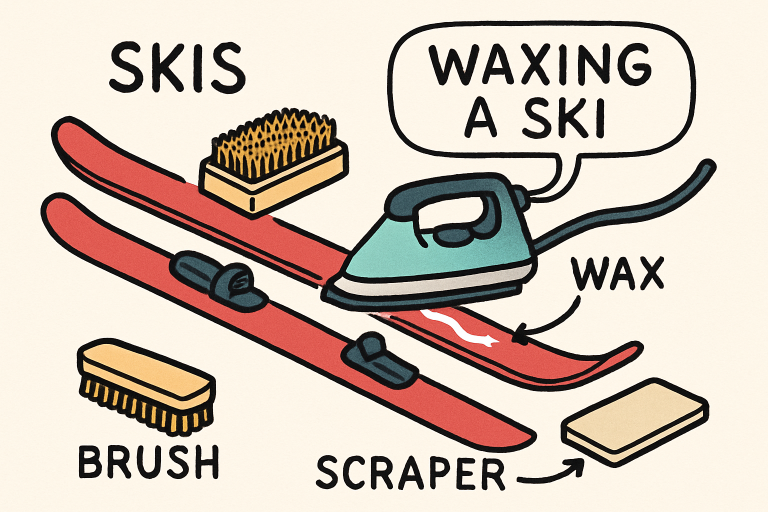
- Waxing Iron: Specially designed for ski wax, these irons provide even, adjustable heat coverage.
- Plastic Scraper: Essential for removing excess wax after it hardens.
- Brushes: Nylon and horsehair brushes help you finish the base for maximum glide.
- Edge Tuner: Ensures crisp and sharp ski edges for responsive turns and stability.
Step-by-Step Guide to Waxing Your Skis
- Clean the Base: Start with a thorough cleaning using a quality base cleaner. This primes the base to absorb new wax effectively.
- Choose the Right Wax: Select a product suited to the current snow temperature and weather conditions.
- Apply the Wax: Heat your waxing iron according to the product recommendations. Drip wax evenly along the ski, then use the iron to spread and melt it into the base.
- Let It Cool: Allow the wax to harden completely, about 30 minutes at room temperature.
- Scrape Excess: Using your plastic scraper, gently remove wax residue from tip to tail, leaving only the layer absorbed by the base.
- Brush the Base: Use a nylon or horsehair brush for a polished finish and maximum slide.
For more in-depth technique tips and videos, you can visit REI’s expert wax guide.
Common Mistakes to Avoid
- Overheating the Base: Excessive heat can burn or warp your ski base. Always check the iron temperature and don’t linger in one place.
- Inadequate Cleaning: Applying wax over leftover dirt or old wax reduces effectiveness and performance.
- Skipping Scraping: Leaving too much wax can create drag and restrict glide. Don’t rush—scraping is essential.
Environmental Considerations
Traditional ski waxes, especially those containing PFAS, have been linked to environmental contamination and bioaccumulation. Manufacturers are now introducing non-fluorinated waxes, offering excellent slide with fewer ecological consequences. Responsible skiers should stay informed about these advancements and choose sustainable products whenever possible.
Frequency of Ski Maintenance
- Frequent Skiers: Tune and wax after every 4–6 outings to ensure peak performance.
- Occasional Skiers: Even one annual tune-up does wonders for longevity and glide.
- Dirty or Icy Snow: Skiing in these conditions requires immediate maintenance afterward to avoid lasting damage.
Conclusion
Mastering the basics of ski waxing and tuning can dramatically impact your ski days, giving you smoother runs and a hassle-free experience. With a regular routine, the right wax choice, and eco-conscious product selection, your skis will last longer and perform better across all conditions. Make ski maintenance part of your mountain ritual and enjoy the best ride every time you hit the slopes.