
Solar geoengineering, a controversial climate intervention, aims to cool Earth by reflecting sunlight. As climate change worsens, debates intensify over who should regulate this technology. Global governance seeks unified rules, while rogue nations or actors might act unilaterally, risking chaos. This blog explores the tension between coordinated oversight and independent actions, highlighting the stakes for our planet. With potential benefits like rapid cooling and risks like geopolitical conflict, regulation is critical. Join us to understand how global systems and defiant players shape this high-stakes arena, and why fair governance matters.
Understanding Solar Geoengineering’s Scope and Stakes
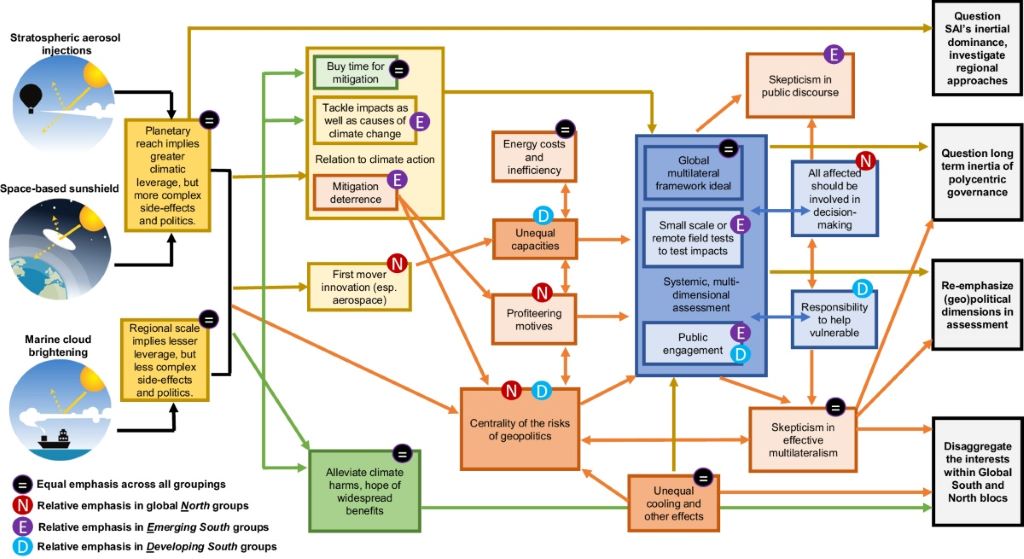
Solar geoengineering involves techniques like stratospheric aerosol injection (SAI) to reflect sunlight and reduce global temperatures. It’s a potential complement to emissions cuts but carries risks like ozone depletion and uneven climate impacts. According to a 2023 Woodwell Climate report, SAI could disrupt precipitation patterns and crop yields, with uncertain geopolitical consequences. Responsible research, involving Global South and Indigenous voices, is vital to assess these risks transparently.
The stakes are high. Unregulated deployment could trigger “termination shock,” a rapid temperature spike if stopped abruptly. Global governance aims to prevent such outcomes, but rogue actors—nations or private entities—could bypass rules, acting in self-interest. This tension underscores the need for inclusive, science-driven policies to balance innovation and safety.
Global Governance: A Framework for Fair Regulation
Global governance seeks coordinated, transparent rules for solar geoengineering. International bodies like the United Nations Environment Assembly (UNEA) could oversee research and deployment, ensuring equity. However, a 2019 UNEA resolution on geoengineering governance failed due to disagreements over framing, showing the challenge of consensus. Inclusive frameworks, like those proposed by the Alliance for Just Deliberation on Solar Geoengineering, prioritize vulnerable communities’ voices, fostering trust.
Effective governance requires clear principles: transparency, public participation, and accountability. Without these, powerful nations might dominate, sidelining smaller ones. The 1987 Montreal Protocol, which curbed ozone-depleting substances, offers a model for cooperative regulation. Yet, solar geoengineering’s global impact demands even stronger collaboration to prevent misuse and ensure justice.
Rogue Nations and Actors: Risks of Unilateral Action
Rogue nations or non-state actors, like private companies, could deploy solar geoengineering without global consent, sparking conflict. In 2022, the U.S.-based startup Make Sunsets released sulfur balloons in Mexico without permission, prompting a swift ban. Such actions highlight the danger of unregulated experiments, which could alter weather patterns or escalate geopolitical tensions.
Unilateral moves risk bypassing ethical considerations. For instance, a nation facing severe heatwaves might act alone, ignoring global consequences. The 2021 U.S. National Intelligence Estimate warned that covert geoengineering could trigger conflicts if blamed for weather disasters. Robust monitoring and international laws are needed to deter such actions and maintain global stability.
Challenges in Establishing Effective Global Governance
Creating a global governance framework for solar geoengineering faces hurdles. Differing national priorities complicate consensus—some nations favor bans, while others push research. The 2024 UNEA talks in Nairobi collapsed over disagreements, with African nations advocating a ban and Switzerland seeking an expert panel. This fragmentation risks a governance vacuum, enabling rogue actions.
Another challenge is enforcement. International law indirectly applies to non-state actors, and jurisdictions like the high seas remain ambiguous. The 1968 Non-Proliferation Treaty’s struggles with non-compliant states offer lessons for designing enforceable rules. Transparent, inclusive processes, supported by bodies like the UNFCCC, are crucial to bridge divides and ensure equitable oversight.
The Role of Science and Ethics in Regulation
Science and ethics must guide solar geoengineering regulation. Research, like that from Harvard’s Solar Geoengineering Research Program, shows moderate use could reduce climate risks for vulnerable populations. Yet, ethical concerns—such as potential inequity or reduced focus on emissions cuts—demand scrutiny. Inclusive research, involving Global South scientists, ensures diverse perspectives.
Ethical governance requires public participation and transparency. Human rights law, including the Universal Declaration of Human Rights, emphasizes access to information and decision-making. Outdoor experiments must protect communities, avoiding exploitation. Balancing scientific exploration with ethical safeguards prevents misuse and builds trust in global systems.
Case Study: A Personal Encounter with Geoengineering Debates
Last year, I attended a climate conference where solar geoengineering sparked heated discussions. A scientist from a small island nation shared fears that unilateral deployment could disrupt their rainfall, threatening agriculture. Meanwhile, a researcher advocated for controlled experiments to assess benefits. The tension was palpable—hope for solutions clashed with distrust in global fairness. This experience underscored the need for inclusive governance to address real-world concerns and prevent rogue actions from destabilizing vulnerable regions.
Strategies for Balancing Governance and Innovation
Balancing innovation with regulation requires strategic approaches. Here are key strategies:
- Inclusive Research: Engage Global South and Indigenous communities in studies to ensure equitable outcomes.
- Transparent Frameworks: Develop clear, public guidelines under bodies like the UNFCCC for research and deployment.
- Monitoring Systems: Establish global surveillance to detect unauthorized geoengineering, as suggested by Brookings.
- International Agreements: Model treaties on the Montreal Protocol to enforce compliance.
These steps foster innovation while preventing rogue actions. Collaborative platforms, like the Degrees Global Forum, can bridge gaps between nations, ensuring governance keeps pace with technology.
The Global South’s Role in Shaping Fair Policies
The Global South, often most vulnerable to climate change, must lead in shaping geoengineering policies. Their inclusion counters the risk of Global North dominance. The Degrees Global Forum in 2025 highlighted Latin American and African leaders’ concerns about uninformed deployment, pushing for justice-focused governance.
Empowering these nations involves funding their research and amplifying their voices in forums like COP29. Without this, solar geoengineering could exacerbate inequities, as industrialized nations control technologies. A non-use agreement, supported by over 400 scientists, emphasizes banning untested deployments to protect vulnerable regions.
Potential Consequences of Unregulated Geoengineering
Unregulated geoengineering could disrupt ecosystems and geopolitics. Altered precipitation might harm agriculture, particularly in climate-vulnerable regions. A 2023 Woodwell Climate study warned of risks to marine health and air quality from SAI. Geopolitical fallout, like conflicts over weather changes, is a concern, as noted in a 2021 U.S. intelligence report.
Additionally, premature deployment could weaken emissions reduction efforts, delaying true climate solutions. Private actors, like Make Sunsets, acting without oversight, highlight the urgency of global rules to prevent chaos and ensure accountability.
Conclusion
Solar geoengineering holds promise but demands robust global governance to prevent rogue nations or actors from causing harm. Inclusive, transparent frameworks, grounded in science and ethics, are essential to balance innovation and safety. The Global South’s leadership is critical to ensure fairness. Without unified regulation, risks like geopolitical conflict and environmental damage loom large. Let’s advocate for equitable policies to shape a sustainable future. Share your thoughts in the comments or spread this article to spark discussion!
FAQs
Why is global governance needed for solar geoengineering?
It ensures fair, transparent regulation, preventing unilateral actions that could disrupt climate or geopolitics.
What risks do rogue nations pose in geoengineering?
They could deploy untested technologies, causing environmental harm or international conflicts.
How can the Global South influence geoengineering policies?
By leading research and advocating for justice-focused governance in global forums.
What are the ethical concerns of solar geoengineering?
It may divert focus from emissions cuts and exacerbate global inequities if not governed inclusively.
Can solar geoengineering replace emissions reduction?
No, it’s a potential supplement, not a substitute, for cutting greenhouse gas emissions.
Share your views on solar geoengineering regulation in the comments or share this post to raise awareness!
Read More:
Reducing Solar Panel Shading for Efficiency Boost