

Affiliate marketing has become a powerful revenue stream for businesses and individuals alike. However, success in this field requires careful tracking of expenses to maximize profitability. Among the various tools available, tracking pixels play a crucial role in monitoring campaign performance. Platforms like Seller Spike help affiliates manage their finances by providing clear insights into income and expenses. Understanding which costs qualify as legitimate business expenses can make a significant difference during tax season.
Many affiliate marketers overlook tracking pixel costs when calculating their business expenses. These small pieces of code provide valuable data about customer behavior and conversion rates. Therefore, knowing how to categorize these expenses properly becomes essential for maintaining accurate financial records. Additionally, understanding affiliate marketing expenses means what can help you identify other deductible costs that reduce your taxable income.
Understanding Tracking Pixels in Affiliate Marketing
Tracking pixels are tiny, transparent images embedded in websites or emails. They collect data about user interactions and conversions. When a visitor clicks on your affiliate link, the pixel fires and records the action. This information helps you understand which campaigns generate the most revenue.
Most affiliate networks provide tracking pixels for free. However, advanced tracking solutions often come with monthly subscription fees. These premium services offer detailed analytics, multi-channel attribution, and real-time reporting. Consequently, many serious affiliate marketers invest in paid tracking tools to gain competitive advantages.
The costs associated with tracking pixels vary widely. Basic solutions might cost between ten and fifty dollars per month. Meanwhile, enterprise-level tracking platforms can exceed several hundred dollars monthly. These expenses directly relate to your business operations and should be documented carefully.
Why Tracking Pixel Costs Qualify as Business Expenses
Tracking pixel expenses fall under the category of business software and tools. The Internal Revenue Service recognizes technology costs as legitimate business expenses when they serve a clear business purpose. Since tracking pixels help you monitor affiliate performance and optimize campaigns, they meet this requirement easily.
Moreover, these tools generate measurable business value. They help you identify high-performing products, understand customer demographics, and calculate return on investment. Without proper tracking, you would struggle to make informed decisions about your marketing strategy. Therefore, the expense becomes necessary and ordinary for your business operations.
Documentation remains key when claiming these expenses. Keep receipts from your tracking software subscriptions. Save invoices that show payment dates and amounts. Additionally, maintain records that demonstrate how these tools contribute to your affiliate marketing activities. This evidence will prove invaluable if questions arise during an audit.
WellSaid AI Vocal Cloning Steps for Enterprises
While tracking pixels monitor digital behavior, vocal cloning technology represents another frontier in marketing innovation. WellSaid AI offers enterprise solutions for creating synthetic voices that sound remarkably human. This technology can enhance affiliate marketing content through personalized audio messages and video narrations.
Enterprises interested in WellSaid AI vocal cloning should follow these implementation steps. First, assess your content needs and identify where synthetic voices could add value. Many affiliates use vocal cloning for product reviews, explainer videos, and promotional content. Next, contact WellSaid AI to discuss enterprise pricing and licensing options. The platform offers various voice options and customization levels.
After selecting your plan, you will work with their team to train custom voice models. This process involves recording sample audio from your chosen voice talent. The AI then learns to replicate the voice patterns, intonations, and speaking style. Finally, integrate the vocal cloning technology into your content creation workflow. Most enterprises report significant time savings and consistency improvements after implementation.
However, vocal cloning costs can add up quickly. Enterprise licenses typically start at several thousand dollars annually. Therefore, these expenses also qualify as legitimate affiliate marketing costs when used for business purposes. Track these subscriptions alongside your tracking pixel expenses for comprehensive financial records.
Common Affiliate Marketing Expenses Beyond Tracking Tools
Affiliate marketing involves numerous expenses beyond tracking pixels and vocal cloning software. Website hosting fees represent a fundamental cost for most affiliates. Your website serves as the platform for promoting products and capturing commissions. Therefore, hosting expenses qualify as fully deductible business costs.
Content creation expenses also factor into your overall budget. Many affiliates hire writers, graphic designers, and video editors to produce high-quality promotional materials. These professional services help you stand out in competitive markets. Additionally, stock photo subscriptions and editing software fall into this category.
Email marketing platforms constitute another significant expense. Services like Mailchimp or ConvertKit help you build and nurture your audience. Since email marketing often generates substantial affiliate revenue, these tools become essential business investments. Furthermore, paid advertising on platforms like Facebook, Google, or Instagram drives traffic to your affiliate offers.
According to HubSpot, businesses that track their marketing expenses carefully see better returns on investment. Their research shows that detailed financial tracking helps marketers identify which strategies deliver the best results. This principle applies directly to affiliate marketing operations.
Organizing Your Affiliate Marketing Expense Records
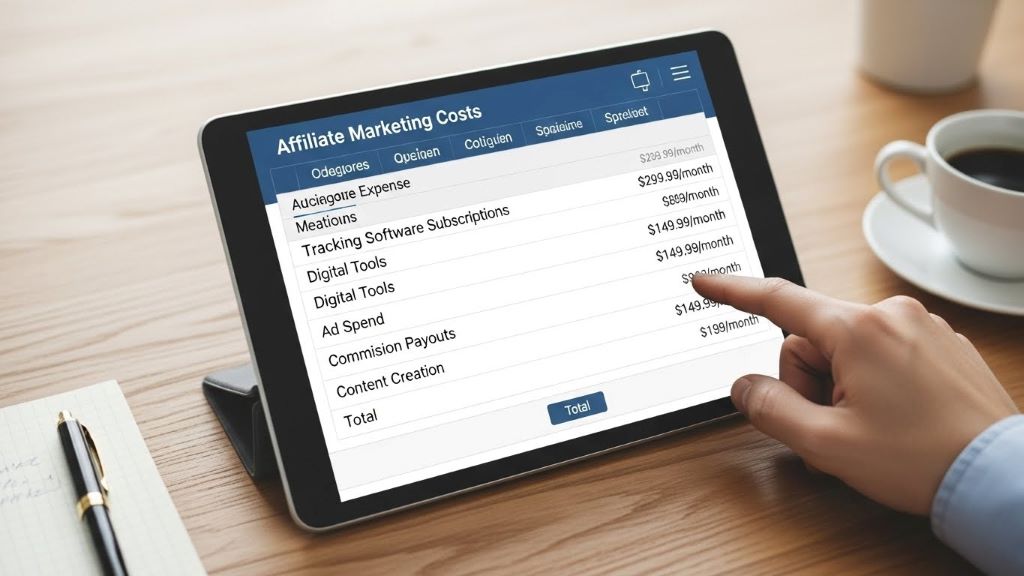
Proper organization of expense records simplifies tax preparation and financial planning. Start by creating separate categories for different expense types. Group tracking tools together, content creation costs in another category, and advertising expenses separately. This system makes it easier to analyze spending patterns and identify areas for optimization.
Digital tools can streamline your record-keeping process. Accounting software like QuickBooks or FreshBooks helps you track income and expenses automatically. Many platforms connect directly to your bank accounts and credit cards. Consequently, transactions get categorized in real-time without manual data entry.
Additionally, save digital copies of all receipts and invoices. Cloud storage services ensure you never lose important documentation. Create folders for each tax year and subdivide them by expense category. This organizational structure proves invaluable when preparing tax returns or responding to financial inquiries.
Consider working with a tax professional who understands affiliate marketing. They can provide guidance on which expenses qualify for deductions and how to maximize your tax benefits. Moreover, they stay updated on changing tax regulations that might affect your business. This expertise can save you money and prevent costly mistakes.
Maximizing Tax Benefits from Affiliate Marketing Expenses
Understanding allowable deductions helps you reduce your tax liability legally. Most affiliate marketing expenses qualify as business deductions when they are ordinary and necessary. Tracking pixels clearly meet this standard because they directly support your revenue-generating activities. However, you must maintain proper documentation to support your claims.
The home office deduction offers additional tax savings for many affiliates. If you use a dedicated space in your home exclusively for business, you can deduct a portion of your housing costs. This includes rent or mortgage interest, utilities, and internet service. Calculate the percentage of your home used for business and apply it to these expenses.
Furthermore, education expenses related to affiliate marketing can be deductible. Online courses, industry conferences, and professional development programs help you improve your skills. These investments make you more effective at generating affiliate income. Therefore, they qualify as legitimate business expenses that reduce your taxable income.
Business travel expenses also deserve attention. If you attend affiliate marketing conferences or meet with partners, those costs may be deductible. Keep detailed records of transportation, lodging, and meal expenses. Additionally, note the business purpose of each trip to substantiate your deductions.
Conclusion
Tracking pixel costs represent legitimate affiliate marketing expenses that deserve proper documentation and categorization. These tools provide essential data that helps you optimize campaigns and increase profitability. Additionally, understanding the full scope of allowable business expenses ensures you maximize tax benefits while maintaining compliance. From vocal cloning technology to content creation costs, every business-related expense should be tracked carefully. Therefore, invest time in organizing your financial records and consider working with professionals who understand affiliate marketing taxation. This diligent approach to expense management will support your long-term success in the affiliate marketing industry.
Frequently Asked Questions
What expenses can affiliate marketers deduct from taxes?
Affiliate marketers can deduct website hosting, tracking software, advertising costs, content creation expenses, email marketing platforms, and home office expenses. Any cost that is ordinary and necessary for your business operations typically qualifies as a deductible expense.
Are tracking pixel subscriptions tax-deductible?
Yes, tracking pixel subscriptions are tax-deductible business expenses. Since these tools help you monitor campaign performance and optimize affiliate marketing activities, they qualify as necessary business software costs that directly support revenue generation.
How should I organize affiliate marketing expense receipts?
Create digital folders organized by tax year and expense category. Use cloud storage to save all receipts and invoices. Consider accounting software that automatically categorizes transactions and connects to your bank accounts for streamlined record-keeping.
Can I deduct affiliate marketing courses and training?
Yes, education expenses related to improving your affiliate marketing skills are generally deductible. This includes online courses, industry conferences, webinars, and professional development programs that enhance your business capabilities.
What percentage of home office expenses can affiliates deduct?
You can deduct the percentage of your home used exclusively for business. Calculate this by dividing your office space square footage by your total home square footage. Apply this percentage to eligible expenses like rent, utilities, and internet service.
Related Topics:
10 Positive Impacts of Technology Should Know About