
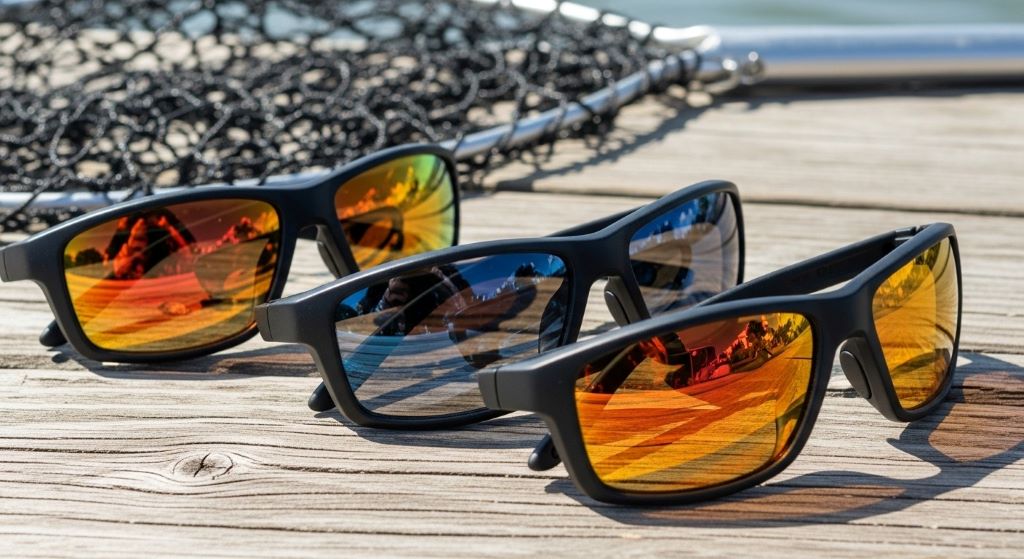
Choosing the right lens tint for your fishing sunglasses can dramatically improve your success on the water. Many anglers invest in quality polarized sunglasses but overlook how lens color affects their ability to see fish, read water conditions, and protect their eyes. The tint you select should match the specific environment where you fish most often.
Different water conditions, weather patterns, and light levels require different lens technologies. What works perfectly on a bright saltwater flat might leave you struggling to see in overcast freshwater conditions. Understanding how various tints interact with light helps you make smarter choices about your eyewear.
This comprehensive guide explores the science behind lens tints and provides practical advice for selecting the best option for your fishing style. You’ll discover how different colors enhance visibility, reduce eye strain, and help you spot more fish in various environments.
Understanding How Lens Tints Work
Lens tints do more than simply darken your view. Each color filters light differently, affecting contrast, depth perception, and color accuracy. The specific wavelengths blocked or transmitted by a tint determine how you perceive your surroundings.
When light passes through colored lenses, certain wavelengths are absorbed while others pass through to your eyes. This selective filtering enhances some colors while muting others. The result is improved contrast that makes specific features stand out more clearly.
Your eyes and brain work together to interpret visual information. By filtering out distracting light wavelengths, tinted lenses reduce the processing load on your visual system. This reduction leads to less eye fatigue during long days on the water.
Additionally, different tints perform better in specific light conditions. Some excel in bright sunlight, while others enhance visibility when clouds roll in. Matching the tint to your typical fishing conditions optimizes your visual performance.
The Science of Copper Lenses
Copper lenses have become increasingly popular among serious anglers for good reason. These warm-toned lenses block blue light, which is the portion of the spectrum that creates haze and reduces contrast. By filtering out blue wavelengths, copper tints dramatically enhance your ability to see details.
The human eye is most sensitive to green and yellow light. Copper lenses allow these wavelengths to pass through while blocking blues and some greens. This selective filtering makes objects appear more defined against their backgrounds.
Water naturally absorbs red light as depth increases, making blues and greens dominant underwater. Copper lenses counteract this effect by reducing the blue component, helping you see beneath the surface more clearly. Fish patterns, bottom structure, and subtle color variations become more visible.
Furthermore, copper tints improve depth perception by enhancing contrast between objects at different distances. This improved perception helps you judge casting distance, spot structure, and track fish movement more accurately.
These lenses perform exceptionally well in variable light conditions. They provide enough darkness for comfort in bright conditions while maintaining adequate visibility when clouds appear. This versatility makes them a favorite among anglers who fish throughout the day.
Benefits of Gray Lenses for Fishing
Gray lenses for fishing offer a completely different set of advantages. These neutral-toned lenses reduce overall brightness without significantly altering color perception. What you see through gray lenses closely matches what you’d see with the naked eye, just darker.
The primary benefit of gray tints is true color representation. When identifying fish species, reading water color, or matching lure colors to conditions, accurate color perception matters. Gray lenses preserve these natural colors better than any other tint.
Gray lenses excel in extremely bright conditions where reducing light intensity is the main priority. They provide maximum glare reduction without the color enhancement effects of other tints. This makes them ideal for bright, sunny days on open water where UV exposure is intense.
These lenses work particularly well in saltwater environments with bright sun and highly reflective surfaces. The combination of polarization and gray tint cuts through intense glare while maintaining natural color accuracy. This helps you spot fish, read wave patterns, and navigate safely.
Additionally, gray tints cause less eye strain when transitioning between wearing sunglasses and taking them off. Since they don’t shift colors dramatically, your eyes adapt more quickly to the change. This becomes important when you need to frequently adjust your eyewear.
Amber and Yellow Tints for Low Light
Amber and yellow lenses brighten your view in overcast, foggy, or low-light conditions. These warm tints filter blue light aggressively, significantly increasing contrast even when natural light levels are reduced.
During dawn and dusk fishing sessions, amber lenses can extend your productive time on the water. They gather available light and enhance contrast, making it easier to see in conditions where other tints leave you straining to make out details.
These tints excel in freshwater environments with stained or tannic water. The enhanced contrast helps you distinguish between different shades of brown and green, revealing structure and fish that might otherwise blend into the background.
However, amber and yellow lenses can be too bright in full sunshine. Most anglers reserve these tints for specific low-light situations rather than using them as all-purpose fishing lenses. Some manufacturers offer lighter versions that work in moderate light conditions.
The increased brightness can also cause eye fatigue in prolonged bright conditions. If you fish primarily in sunny weather, amber lenses might create more problems than they solve. Match these tints to appropriate conditions for best results.
Green Lenses for Versatile Performance
Green lenses offer a middle ground between copper and gray options. They provide some contrast enhancement while maintaining relatively neutral color perception. This balance makes them versatile across various fishing environments.
These lenses work by filtering red and blue light while allowing green wavelengths to pass through freely. Since the human eye is most sensitive to green light, this transmission creates a comfortable viewing experience with enhanced detail.
Green tints perform well on both bright and moderately overcast days. They provide enough darkness for comfort in sunshine while maintaining sufficient visibility when clouds reduce light levels. This adaptability suits anglers who fish in changing conditions.
Shallow water fishing benefits particularly from green lenses. They enhance contrast between different bottom types, helping you identify sand, grass, and rock more easily. This visibility aids in locating fish that use these features as ambush points.
Moreover, green lenses reduce glare effectively while being easier on your eyes during extended wear compared to darker options. Many anglers find them less fatiguing than other tints during all-day fishing sessions.
Rose and Red Tints for Specific Conditions
Rose and red-tinted lenses serve specialized purposes in fishing. These warm tints excel in very specific situations but aren’t ideal for general use. Understanding when they shine helps you decide if they deserve a place in your collection.
Rose lenses enhance contrast in overcast conditions and partial shade. They’re particularly effective for sight fishing in dappled light under trees or when the sun moves in and out of clouds. The enhanced contrast helps you spot fish against varied backgrounds.
These tints increase depth perception and definition, making them useful for technical fishing where precision matters. Fly fishers often appreciate rose lenses when trying to track small flies on the water surface or when sight fishing to visible targets.
Red lenses take the concept further, blocking almost all blue and green light. This extreme filtering creates maximum contrast but significantly alters color perception. They work best in very specific situations like spotting fish in deep or blue water.
However, the dramatic color shift caused by red lenses can be disorienting. Objects appear unnaturally colored, which can affect your ability to match lure colors or identify species. These lenses are tools for specific tactical situations rather than everyday wear.

Mirror Coatings and Light Reduction
Mirror coatings add another dimension to lens selection. These reflective surfaces bounce additional light away before it reaches the base tint layer. The result is further light reduction without needing darker base tints.
Mirror coatings come in various colors, each adding its own slight tint to the base lens color. A blue mirror on copper lenses provides extreme glare reduction while maintaining copper’s contrast enhancement. Silver mirrors offer maximum reflection without adding color shift.
These coatings prove particularly valuable in extreme brightness. Fishing tropical flats, high-altitude lakes, or areas with snow reflection benefits from the extra light-blocking power mirrors provide. They reduce squinting and eye strain significantly.
Additionally, mirrors add a layer of scratch resistance to lenses. The coating is typically harder than the base lens material, providing some protection against minor abrasions. This durability benefit extends lens life in harsh fishing environments.
However, mirror coatings can be more difficult to clean and may show fingerprints and smudges more readily than non-mirrored lenses. They also tend to be more expensive than equivalent non-mirrored options.
Matching Tints to Water Types
Different water bodies require different visual strategies. The tint that works perfectly in clear mountain streams might be completely wrong for muddy rivers or deep ocean fishing.
Clear water allows maximum light penetration, making contrast enhancement crucial. Copper lenses excel here, helping you spot fish against clean backgrounds and see subtle details on the bottom. The enhanced definition these lenses provide is invaluable in gin-clear conditions.
Stained or tannic water absorbs light quickly, creating darker, tea-colored conditions. Amber or yellow lenses brighten your view and increase contrast in these challenging environments. They help you penetrate the discoloration and see structure or fish that would otherwise disappear.
Muddy or turbid water presents the biggest challenge. No lens tint can magically see through thick sediment, but lighter options like yellow or amber provide your best chance. These tints maximize available light and contrast.
Saltwater environments with deep blue water benefit from gray lenses for fishing. The natural color accuracy helps you judge water depth, spot color changes that indicate structure, and maintain true color perception for species identification.
Considering Weather and Time of Day
Light conditions change throughout the day and with weather patterns. Savvy anglers adjust their lens choice based on these variations or choose versatile tints that handle multiple scenarios.
Early morning and late evening provide less intense light. Amber or lighter copper tints extend your vision during these periods, allowing you to fish effectively in conditions where darker lenses would be too dim.
Midday sun creates the brightest, harshest conditions. Darker gray or copper lenses with mirror coatings provide maximum protection and glare reduction. These combinations prevent squinting and reduce the eye strain associated with prolonged bright-light exposure.
Overcast days reduce overall light levels but can create challenging glare from diffused light. Rose or lighter copper tints maintain visibility while providing enough darkness for comfort. They enhance contrast when direct sunlight isn’t creating harsh shadows.
Partly cloudy conditions demand versatile lenses that work in both sun and shade. Medium copper or green tints adapt well to changing light. Some anglers carry multiple pairs to swap as conditions change throughout the day.
Impact of Fishing Technique on Tint Selection
Your fishing method influences which tint serves you best. Different techniques place different demands on your vision, requiring specific optical properties.
Sight fishing requires maximum contrast and detail. Copper lenses generally provide the best performance, helping you spot fish in various positions and water clarities. The enhanced definition they offer makes the difference between seeing and missing cruising fish.
Trolling and blind casting don’t require the same visual acuity. Gray lenses work well for these techniques, reducing overall brightness and glare while maintaining natural color perception. Since you’re not actively looking for visible fish, true color accuracy becomes more valuable.
Fly fishing benefits from lenses that enhance surface detail. Rose or copper tints help you track flies, spot rises, and judge distance for accurate casting. The improved depth perception these tints provide aids in presentation.
Deep-water fishing in bright conditions favors dark gray lenses. You’re looking at electronics more than water, and the extra darkness provides relief from sun exposure. Natural color perception helps you match the hatch when choosing lures.
Lens Tint Technology Advancements
Modern lens technology has evolved far beyond simple colored glass. Manufacturers now use sophisticated multilayer coatings and advanced materials to create superior optical performance.
Gradient tints darken from top to bottom, providing different light reduction at different viewing angles. The darker top section blocks overhead sun, while the lighter bottom allows you to see instrument panels and work at close range more easily.
Photochromic tints adjust darkness based on UV exposure. These adaptive lenses lighten in shade and darken in bright sun, providing versatility without changing lenses. However, they don’t work well behind windshields and adjust slower than you might like when conditions change rapidly.
High-definition tints use proprietary filtering to enhance specific colors beyond what traditional tints achieve. These advanced options provide exceptional contrast and clarity but typically come at premium prices.
Interchangeable lens systems allow you to swap tints quickly based on conditions. This flexibility lets you own one frame with multiple lens options, though it requires carrying extra lenses and remembering to switch them.
Building Your Lens Collection
Most serious anglers eventually acquire multiple pairs of sunglasses or interchangeable lenses. Building a versatile collection ensures you’re prepared for any fishing situation.
Start with a versatile all-around tint that matches your most common fishing conditions. For many anglers, this means copper lenses that work well in varied light and water conditions. This pair becomes your everyday workhorse.
Add a bright-condition option next. Dark gray lenses with mirror coating handle intense sun and highly reflective water. These become essential for summer fishing, saltwater, or high-altitude environments.
Include a low-light option for dawn, dusk, or overcast fishing. Amber or yellow lenses extend your effective fishing time and work in conditions where darker lenses leave you struggling to see.
Consider a clear or very light lens for night fishing or extremely low light. While you won’t need these often, they protect your eyes from wind and debris while maintaining maximum visibility in minimal light.
Organize and maintain your collection properly. Label cases clearly, clean lenses after each use, and store them where you can access them easily. Having the right tint available when conditions demand it maximizes your investment.
Making Your Final Decision
Selecting the best lens tint requires balancing multiple factors. Your decision should reflect your primary fishing environment, typical conditions, and personal visual preferences.
Assess where you fish most often. If you primarily fish one type of water in consistent conditions, optimize for that specific situation. Anglers who fish varied environments need more versatile options or multiple pairs.
Consider your budget realistically. Quality lenses are investments in your eye health and fishing success. However, you don’t need to buy everything at once. Build your collection gradually, starting with the most critical tint for your needs.
Try before you buy whenever possible. Many retailers allow you to test different tints outdoors. Take advantage of these opportunities to experience how different colors affect your vision in real conditions.
Read reviews from anglers who fish similar waters. Real-world experience reveals subtleties that specifications can’t capture. Pay attention to long-term comfort and performance, not just initial impressions.
Trust your eyes. Everyone’s visual system responds slightly differently to various tints. What works perfectly for one angler might not be ideal for you. Choose tints that feel comfortable and improve your fishing experience.
Conclusion
Selecting the best lens tint for your fishing environments significantly impacts your success and enjoyment on the water. Copper lenses provide exceptional contrast enhancement and versatility across many conditions, making them favorites among serious anglers. Gray lenses for fishing offer true color perception and maximum glare reduction in extremely bright conditions, particularly in saltwater environments.
Understanding how different tints filter light helps you make informed decisions. Amber and yellow excel in low light, green provides balanced versatility, and specialized tints like rose serve specific tactical purposes. Match your lens choice to your primary fishing conditions, technique, and personal visual preferences.
Consider building a collection that covers various conditions rather than relying on a single pair. Start with a versatile all-around option, then add specialized tints as your needs and budget allow. Modern lens technology offers advanced options that enhance performance beyond traditional colored glass.
Remember that the best lens tint is the one that helps you see better, fish longer, and protect your eyes effectively. Invest in quality polarized lenses with appropriate tinting for your needs. Your eyes and your fishing success will benefit from this thoughtful approach to selecting eyewear.
Frequently Asked Questions
Can I use the same lens tint for both freshwater and saltwater fishing?
Yes, many lens tints work well in both environments, though some perform better in specific conditions. Copper lenses offer versatility for both freshwater and saltwater applications. However, extremely bright saltwater flats might benefit from darker gray lenses, while stained freshwater often works better with amber tints. Consider where you fish most often and optimize for those conditions first.
How do I know if copper or gray lenses are better for my fishing?
Choose copper lenses if you prioritize contrast enhancement, fish in variable light conditions, or need to see underwater structure and fish clearly. Select gray lenses if you fish primarily in very bright conditions, value true color accuracy, or spend time in saltwater environments with intense sun. Many anglers eventually own both types for different situations.
Will darker lenses provide better UV protection than lighter tints?
No, lens darkness doesn’t determine UV protection. A light yellow lens can block 100 percent of UV rays just like a dark gray lens. UV protection comes from invisible coatings and treatments, not the visible tint. Always verify that lenses provide 100 percent UVA and UVB protection regardless of how dark they appear.
How often should I replace my fishing sunglasses?
Replace your sunglasses when lens coatings deteriorate, scratches impair vision, UV protection diminishes, or frames become damaged. Quality lenses with proper care can last five to ten years. However, if you notice increased eye fatigue, reduced clarity, or visible coating damage, it’s time for replacement even if the sunglasses appear fine otherwise.
Can photochromic lenses replace having multiple tint options?
Photochromic lenses offer convenience by adjusting to light conditions automatically. However, they have limitations including slow adjustment speed, reduced effectiveness behind windshields, and inability to optimize for specific water conditions like dedicated tints do. They work well as all-around options but don’t replace the performance of purpose-specific tints for serious anglers fishing varied conditions.
Related Topics:
Mastering the Art of Wire Fishing: A Step-by-Step Guide
DIY Automatic Fishing Rod Holder Plans: Build Your Own Fishing Companion