

Developing land responsibly is essential for building communities that prosper while preserving the environment and maintaining public safety. Modern construction and site preparation require thoughtful planning and access to reliable resources, such as compactor rental Riverside CA, to ensure projects adhere to the highest standards of sustainability and safety. These practices help communities grow in ways that prevent issues such as flooding, erosion, and ecosystem disruption, ensuring developments are secure and resilient for years to come.
Safe land development is more than just compliance; it is about protecting lives, property, and natural habitats. Every phase, from site selection and grading to final construction, should involve risk management and measures that reduce the impact of human activity on the local environment.
Integrating safe land use practices helps guard against disasters and supports the creation of healthier neighborhoods. By investing in sustainable methods now, developers can avoid costly damages, mitigate liability, and contribute to a cycle of positive community development that benefits everyone involved.
Leadership in this field means anticipating future threats, applying current best practices, and deploying advanced equipment and technology to maximize efficiency and safety on every project.
Understanding Safe Land Development
Safe land development means making deliberate decisions to protect the welfare of both current and future residents, selecting locations and methods that minimize exposure to risks such as flooding, earthquakes, wildfires, and unstable soils. It includes proper evaluation of the land before construction begins and the creation of plans that address every environmental and safety challenge that can reasonably be foreseen.
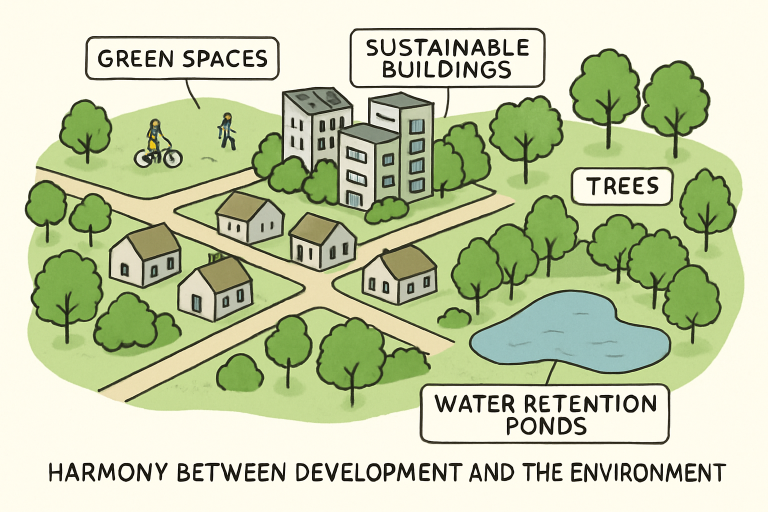
Key Principles of Safe Land Development
- Risk Assessment: Assess hazards like flooding, fire, and seismic activity to inform site planning and construction practices.
- Environmental Conservation: Protect local flora and fauna by preserving green corridors, wetlands, and water bodies wherever possible.
- Infrastructure Resilience: Ensure new roads, utilities, and structures can withstand the region’s most likely natural disasters and adapt to long-term environmental changes.
- Community Safety: Design developments to facilitate emergency response, include safe evacuation routes, and plan for adequate spacing between structures to create fire breaks and provide rescue access.
Case Studies in Sustainable Development
Across the United States, several communities demonstrate outstanding results from implementing responsible land development policies:
- Washington’s Fish-Friendly Development: In Tukwila, Washington, an innovative neighborhood showcases net-zero energy homes with integrated salmon-safe certifications. Its design incorporates solar installations and rain gardens, making it a prime example of holistic, environmentally conscious growth.
- Low-Impact Development in Volusia County, Florida: By incentivizing developers to adopt environmentally sensitive techniques, Volusia County enables higher-density building while simultaneously protecting local wetlands and reducing reliance on impervious surfaces.
Challenges in Implementing Safe Practices
Many developers face barriers when pursuing safe, sustainable land development. These obstacles include higher up-front costs for environmentally friendly designs, regulatory red tape that can slow projects, and neighbors resistant to change or unaware of the long-term community benefits.
- Economic Constraints: Green infrastructure and site assessment require greater initial outlays; some developers hesitate to invest without clear incentives.
- Regulatory Hurdles: Permitting and code compliance can be daunting, especially when navigating evolving sustainability standards at the local, state, and federal levels.
- Public Opposition: Community pushback often arises due to misinformation or uncertainty, requiring educational outreach and consensus-building.
Strategies for Effective Land Use Planning
Municipalities and private industry must collaborate to overcome these challenges and nurture safe communities through effective land use planning.
- Incentivize Sustainable Practices: Offer financial incentives, such as tax breaks or grants, to make environmentally responsible choices more attractive to builders and landowners.
- Streamline Regulatory Processes: Fast-tracking approvals for projects that exceed baseline environmental and safety standards simplifies development and reduces costs.
- Engage Stakeholders Early: Multi-stakeholder engagement, involving residents, business leaders, and advocacy groups, builds trust and yields more durable outcomes.
Additional guidance on building a foundation for smart land management is available from the U.S. Environmental Protection Agency.
Role of Technology in Land Development
Technology facilitates informed decision-making at every stage of land development. Geographic Information Systems (GIS) reveal terrain and hazard data, allowing planners to identify optimal construction zones and avoid sensitive habitats. Meanwhile, Building Information Modeling (BIM) streamlines architectural design and ensures resource-efficient construction. The rise of sensors and Internet of Things (IoT) devices enables continuous monitoring of water usage, structural performance, and air quality, enabling preventive maintenance and rapid emergency response.
Innovations in digital mapping and real-time data analytics play a critical role in predicting environmental impacts and improving construction site safety. Podcasts from trusted outlets, such as NPR’s Environment section, often highlight how digital tools are revolutionizing the building industry.
Community Involvement and Education
Public participation and education are fundamental to the success of sustainable development efforts. Holding community workshops informs residents about the benefits of safer practices and dispels fears, while structured feedback mechanisms ensure that local perspectives and traditional knowledge shape the final project design.
- Public Workshops: Interactive sessions empower citizens to voice concerns and ask questions about proposed new developments.
- Feedback Mechanisms: Online portals, surveys, and town hall meetings enable local voices to shape plans and improve transparency.
- Educational Campaigns: Information drives a shift in public attitudes towards acceptance of innovative techniques and greater support for long-term environmental stewardship.
Conclusion
Safe land development is key to sustainable growth and community resilience. By prioritizing comprehensive risk assessment, environmental conservation, robust infrastructure, and public engagement, cities and developers can create spaces that serve both present and future generations well. As technology and best practices evolve, committing to these principles ensures vibrant, secure, and harmonious communities for all.